
These little robots literally walk on water
HydroSpread, a breakthrough fabrication method, lets scientists build ultrathin soft robots directly on water. These tiny, insect-inspired machines could transform robotics, healthcare, and environmental monitoring.
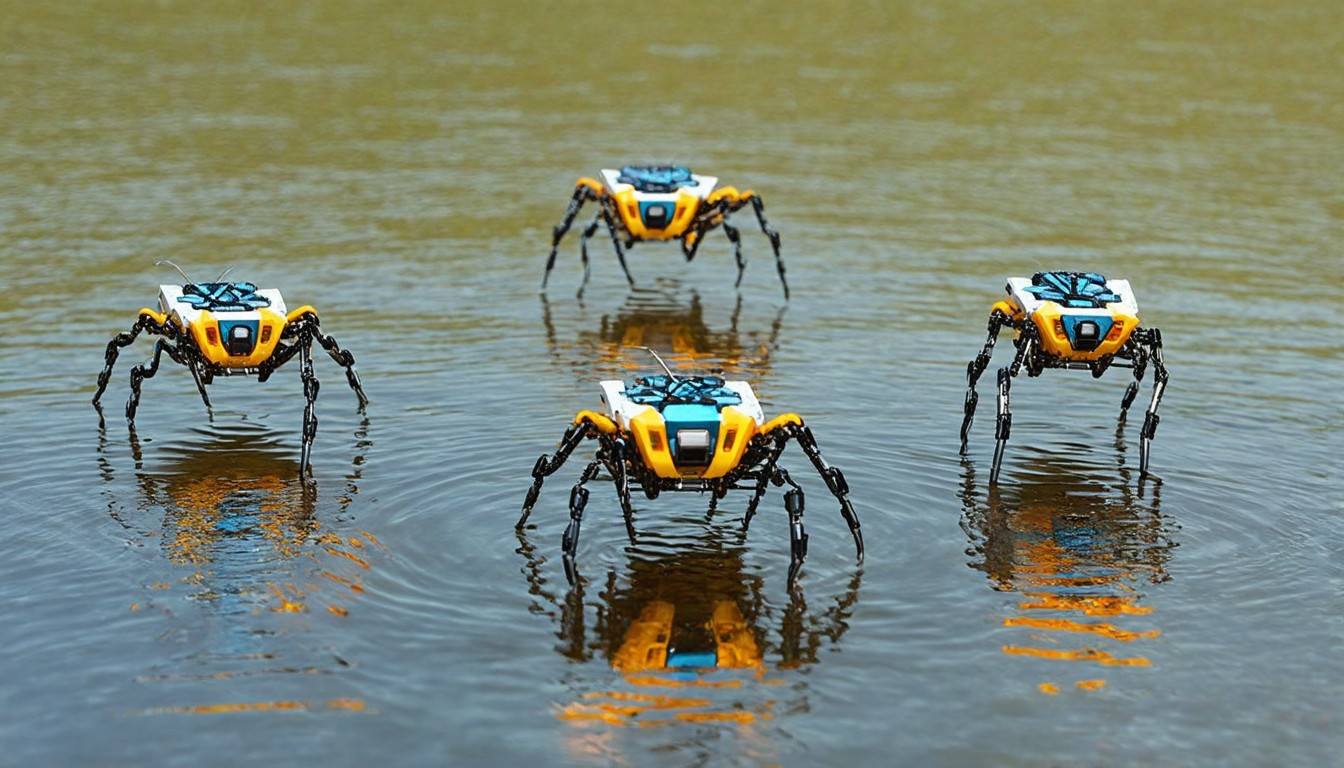
In a groundbreaking development that could reshape the future of robotics, scientists have unveiled HydroSpread, a revolutionary fabrication method that enables the creation of ultrathin soft robots directly on water. These tiny, insect-inspired machines, which can literally walk on water, hold immense potential to transform various fields, including healthcare, environmental monitoring, and beyond.
The concept of building robots on water might seem fantastical, but HydroSpread has made it a reality. The technology was developed by researchers at the University of California, Santa Barbara, who sought to overcome the challenges associated with traditional robot fabrication methods. Previously, creating robots that could operate on water surfaces required complex and often impractical setups, such as attaching them to buoys or other floating devices. HydroSpread, however, allows for the direct fabrication of these robots on water, eliminating the need for additional support structures.
The key to HydroSpread lies in its ability to create a thin, flexible layer of material that can sustain the weight of the robot while maintaining its buoyancy. The method involves spreading a thin film of a hydrophobic polymer, such as polydimethylsiloxane (PDMS), over the water's surface. This film acts as a natural platform for the robot, allowing it to move and function as if it were walking on solid ground. The robots are then built on top of this film, using standard soft robotics techniques.
These ultrathin soft robots are inspired by the way insects like water striders navigate water surfaces. By mimicking their natural ability to walk on water, the researchers have created machines that can traverse water with remarkable agility. The robots are small, typically measuring just a few centimeters in length, and are powered by simple mechanisms such as shape-shifting materials or pneumatic actuators.
The potential applications of these water-walking robots are vast and varied. In healthcare, they could be used to deliver drugs or medical equipment directly to patients in hard-to-reach areas, such as the human body's internal environments. For instance, they might be employed in targeted drug delivery systems or as microscopic surgical tools. In environmental monitoring, these robots could be deployed to assess water quality, detect pollutants, or monitor the health of aquatic ecosystems.
Moreover, the technology could find applications in disaster response and search and rescue operations. By navigating water surfaces, these robots could quickly assess the extent of flooding or help locate victims in waterlogged areas. Additionally, their ability to move on water could be leveraged in underwater exploration, enabling them to traverse the ocean's surface or subsurface layers with ease.
The development of HydroSpread is not without its challenges. Researchers are still refining the fabrication process to ensure that the robots can be produced efficiently and at a large scale. Furthermore, the long-term durability and reliability of these water-based robots need to be thoroughly tested under various environmental conditions.
Despite these hurdles, the potential benefits of HydroSpread are significant. By enabling the direct fabrication of soft robots on water, the technology opens up new frontiers in robotics that were previously inaccessible. As researchers continue to refine and expand upon this groundbreaking method, the possibilities for transforming industries and improving lives across the globe are virtually limitless.
In conclusion, HydroSpread represents a monumental leap forward in the field of robotics. By allowing scientists to build ultrathin soft robots directly on water, this innovative fabrication method has the potential to revolutionize healthcare, environmental monitoring, and numerous other fields. As the technology matures and overcomes its current limitations, the world of robotics will undoubtedly witness a new era of innovation and discovery.









