These four European car giants are going BIG in China as they look to grow a bigger foothold in world's biggest market
Chinese car makers are arriving in Europe thick and fast, and dominating. But what are European car makers doing to dominate on China's automotive home turf?
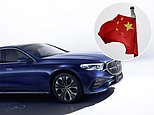
In recent years, the automotive landscape has been reshaped by the rapid rise of Chinese car manufacturers in Europe. These companies, once considered underdogs, are now challenging traditional European automakers in a global battle for market share. As Chinese brands like Geely, BYD, and NIO make their mark in Europe, the question on the minds of industry analysts and executives is clear: how are European car giants responding to this threat?
The answer lies in their strategic moves to strengthen their presence in China, the world's largest automotive market. Four European carmakers—Volkswagen, BMW, Mercedes-Benz, and Renault—are leading the charge in this quest for dominance. Each has developed unique strategies to navigate the complex Chinese market, where local competition is fierce and consumer preferences are rapidly evolving.
Volkswagen, the largest automaker in Europe, has been a pioneer in China for decades. The company's joint venture with local partner FAW (First Automobile Works) in 1984 marked the beginning of its journey in the country. Today, Volkswagen's Chinese operations are a significant driver of its global success. The brand has adapted its offerings to meet Chinese consumer demands, focusing on affordability and technology. Volkswagen has also invested heavily in electric vehicle (EV) production, recognizing the growing importance of sustainability in the Chinese market.
BMW, known for its premium luxury vehicles, has taken a different approach. The Bavarian automaker has prioritized building a strong brand image in China, leveraging its reputation for quality and innovation. BMW has been cautious in its expansion, focusing on high-margin segments such as SUVs and luxury sedans. The company has also partnered with local firms like Brilliance and Chongqing Changan Automobile to navigate regulatory hurdles and gain market insights.
Mercedes-Benz, another German luxury brand, has similarly focused on its premium positioning in China. The company has invested heavily in research and development to create models tailored to Chinese tastes, such as the compact A-Class and the larger EQC electric SUV. Mercedes-Benz has also been proactive in establishing partnerships with local technology companies, such as Huawei and Baidu, to enhance its connectivity and autonomous driving capabilities.
Renault, the French automaker, has taken a more aggressive approach in China. The company formed a joint venture with Dongfeng Motor in 1992, which has since become one of the largest automotive partnerships in the world. Renault has been successful in capturing a significant share of the Chinese market, particularly in the compact and midsize segments. The brand has also embraced the EV trend, launching models like the Zoe and the Twingo EV, positioning itself as a leader in sustainable transportation.
These four European carmakers are not only competing with each other but also with the very Chinese brands that are challenging their dominance in Europe. The stakes are high, as the Chinese market offers immense growth potential. However, the European automakers are not without their challenges. Navigating China's complex regulatory environment, understanding the rapidly changing consumer preferences, and adapting to the intense competition from local players are significant hurdles.
Despite these challenges, the European carmakers are committed to growing their presence in China. They recognize that the country's automotive market is not just a single market but a gateway to the entire Asia-Pacific region. By establishing a strong foothold in China, these companies can secure their future in an increasingly globalized automotive industry.
In conclusion, the European car giants—Volkswagen, BMW, Mercedes-Benz, and Renault—are taking bold steps to dominate China's automotive market. Each has developed a unique strategy to adapt to the local landscape, from Volkswagen's focus on affordability and EVs to Renault's aggressive joint venture with Dongfeng. As Chinese carmakers continue to make waves in Europe, these European automakers are proving that they are not only resilient but also capable of seizing new opportunities in the world's largest market. The battle for dominance in the automotive sector is far from over, and the stage is set for a global clash of titans.