
The US surged over 150 aircraft into Iran for a high-risk rescue and used deception to trick Iranian forces
Some of the aircraft involved were part of a deception plan to fool Iranian forces trying to find one of the airmen, Trump said Monday.
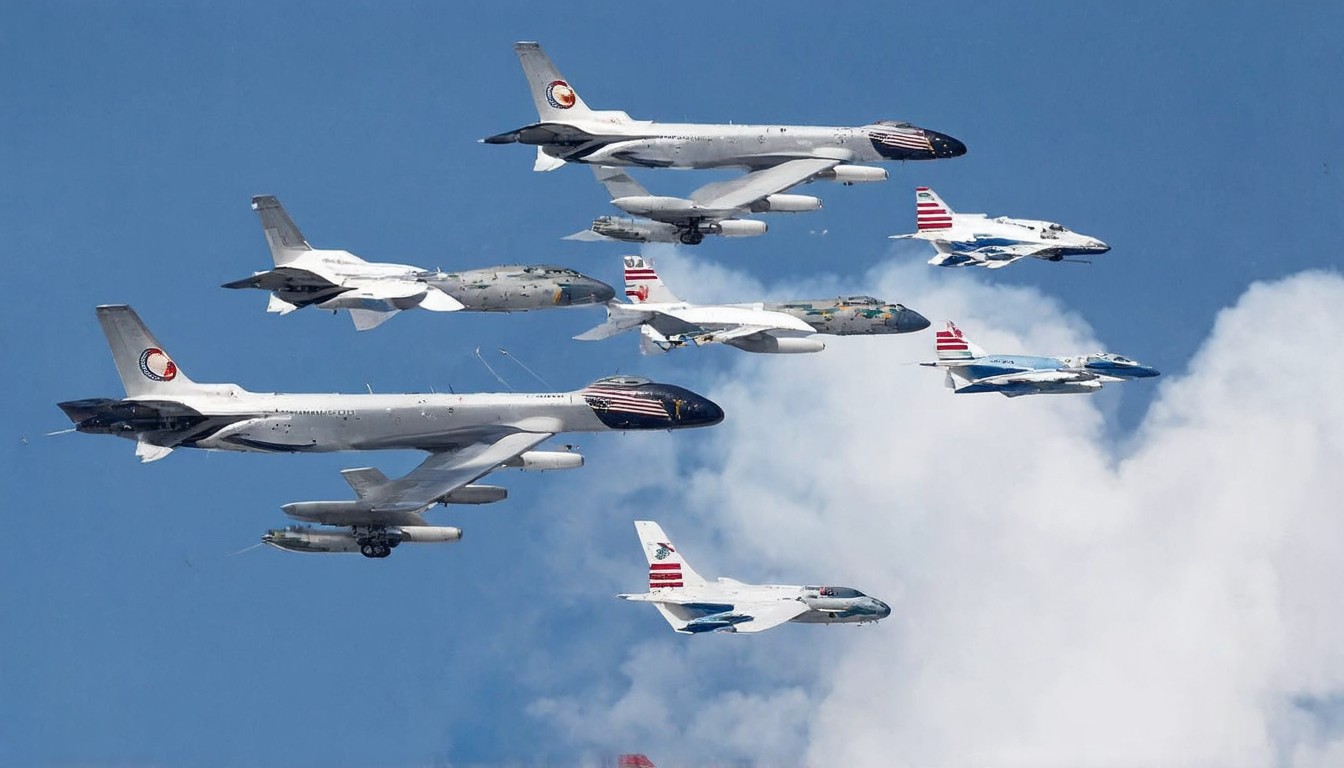
In a high-stakes operation that showcased the complexity and daring of modern military rescue missions, the United States deployed over 150 aircraft to retrieve two downed U.S. airmen stranded in Iran. President Donald Trump revealed details of the mission on Monday, highlighting the use of deception to confuse Iranian forces and the bravery of the airmen and their rescuers.
The mission began on Friday when an F-15E Strike Eagle was shot down by an Iranian-fired shoulder-launched missile, forcing both the pilot and the weapon systems officer to eject over hostile territory. The pilot was quickly located and rescued by a HH-60 Jolly Green II rescue helicopter, but the weapon systems officer landed miles away from the initial crash site and faced a perilous 48-hour ordeal as he evaded Iranian forces while treating his injuries.
Trump emphasized the urgency and difficulty of the situation, stating that the second airman had to climb into mountainous terrain to avoid a heavy Iranian presence in the area. To aid in locating the stranded officer, the U.S. employed a beeper-type technology that signaled his position, though the specifics of this system were not detailed by the president.
In response to the challenge, the U.S. military launched a massive operation, deploying 155 aircraft for the second rescue mission. This included four bombers, 64 fighter jets, and 87 support and transport aircraft, all working in concert to execute the complex plan. The scale of the operation underscored the determination of the U.S. to ensure the safety of its personnel, even in the face of significant risks and adversarial forces.
A key element of the mission was a deception campaign aimed at confusing Iranian forces about the location of the stranded airman. Some of the aircraft involved in the rescue were part of this ruse, designed to mislead Iranian military officials and buy time for the actual rescue operation to proceed. Trump mentioned this aspect of the mission, highlighting the innovative tactics employed to outmaneuver the enemy.
The rescue of the second airman was a testament to the meticulous planning and execution of the U.S. military. Despite the challenges posed by the Iranian forces and the harsh terrain, the operation was ultimately successful, with both airmen safely returned to U.S. custody. The mission demonstrated the critical role of airpower in modern military operations and the ability of the U.S. to adapt and respond to high-pressure situations.
The successful conclusion of this rescue mission also served as a reminder of the ongoing tensions between the United States and Iran, which had escalated in recent years. The shootdown of the F-15E Strike Eagle highlighted the dangers faced by U.S. personnel operating in contested airspaces and the need for robust contingency plans to ensure their safety.
In reflecting on the mission, Trump praised the bravery and professionalism of the airmen and the rescuers, emphasizing the importance of protecting U.S. service members. The operation also underscored the importance of technological innovation and adaptability in military strategy, as the U.S. leveraged advanced systems and deception tactics to achieve its objectives.
As the U.S. continues to navigate complex geopolitical challenges, the success of this rescue mission serves as a powerful example of the nation's capacity to act decisively and effectively in the face of adversity. It also underscores the ongoing need for robust military capabilities and the ability to execute complex, high-risk operations with precision and skill.









