
The US could still try to play the ethnic card in Iran
But past experience and current geopolitical realities show such a strategy is doomed to failure.
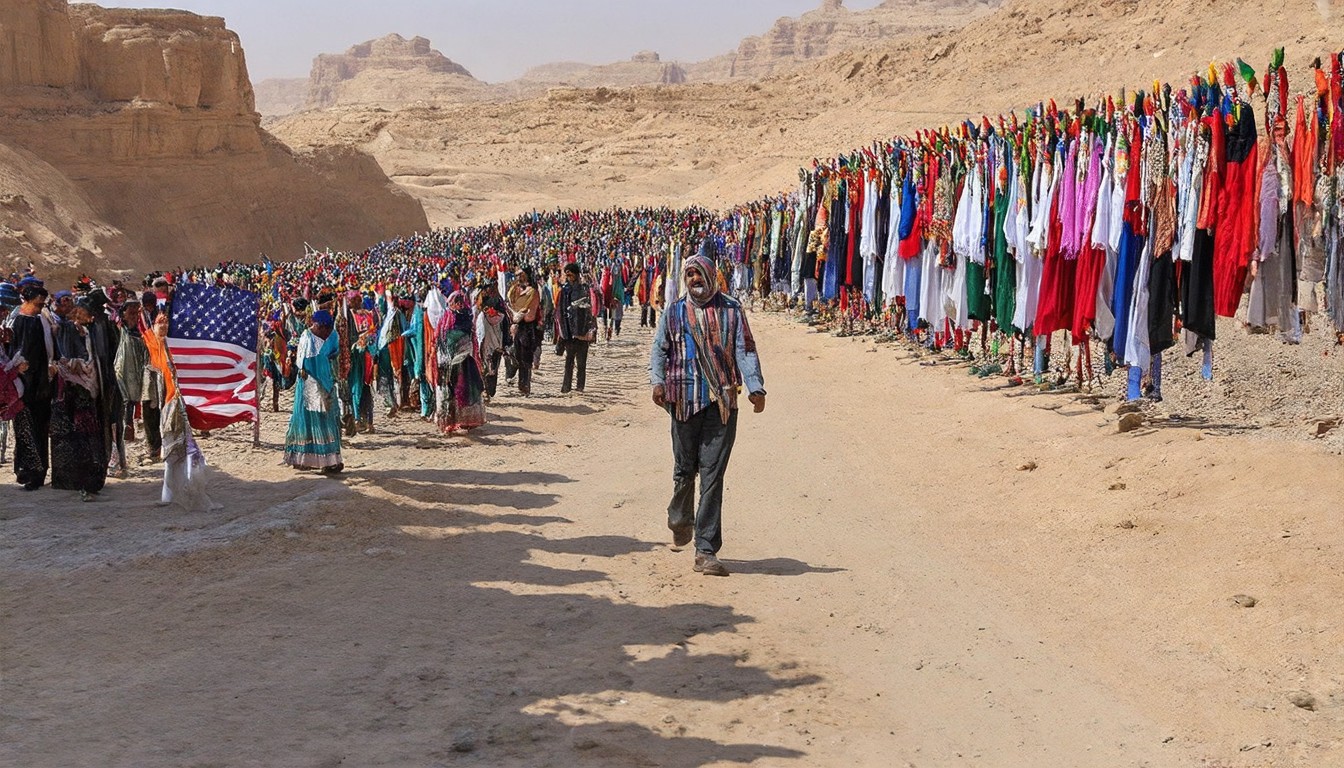
In recent years, the United States has increasingly looked to exploit ethnic divisions within Iran as a potential tool for influencing the country's internal dynamics. This strategy, rooted in the belief that leveraging regional or ethnic tensions could weaken the Islamic Republic's hold on power, has been a recurring theme in U.S. foreign policy discussions. However, a closer examination of historical precedents and the current geopolitical landscape reveals that such an approach is likely to fail, as it has done in the past.
The idea of playing the ethnic card in Iran is not new. The U.S. has previously attempted to support minority groups such as the Kurdish and Baloch populations, hoping to create fractures within the Iranian state. These efforts were often driven by the belief that by empowering these groups, the U.S. could destabilize the Iranian government and force it to the negotiating table. However, these strategies have consistently backfired, leading to increased tensions and a hardening of the Iranian regime's stance.
One of the primary reasons for the failure of such strategies lies in the nature of Iran's ethnic diversity. While Iran is home to several minority groups, including Kurds, Baloch, and Azeris, these communities are not uniformly opposed to the Iranian state. Many of these groups have historically coexisted with the central government, and their primary grievances are often related to economic disparities or political representation rather than outright opposition to the Islamic Republic.
Moreover, the Iranian government has been adept at managing these ethnic tensions. By providing limited autonomy and economic incentives to certain regions, Tehran has been able to mitigate unrest and maintain stability. This approach has been particularly successful in Kurdistan, where the central government has granted a degree of autonomy in exchange for loyalty. As a result, the Kurdish population has largely remained politically passive, and any external attempts to exploit their grievances have been met with skepticism.
Another critical factor that undermines the viability of the ethnic card strategy is the geopolitical realities of the region. Iran is deeply entwined with its neighbors, particularly through its support for various groups in Iraq, Syria, and Lebanon. This network of alliances and influence has created a complex web of interdependencies that makes it difficult for the U.S. to isolate Iran and exploit its internal divisions.
Furthermore, the U.S. has a history of failing to anticipate the consequences of its actions in the region. The 1953 coup that overthrew Iran's Prime Minister Mohammad Mossadegh, which was orchestrated by the CIA with British support, is a prime example of how such interventions can lead to unintended consequences. The coup not only strengthened the Shah's authoritarian regime but also sowed the seeds of discontent that eventually led to the Islamic Revolution of 1979.
In the current geopolitical landscape, the U.S. faces additional challenges in pursuing an ethnic card strategy. The rise of China as a global power and its growing influence in the region has shifted traditional alliances and power dynamics. This has made it more difficult for the U.S. to act unilaterally and has forced it to reconsider its approach to Iran.
Additionally, the U.S. must contend with the evolving nature of Iranian society. The country's youth, who make up a significant portion of the population, are increasingly disillusioned with the political status quo and are more open to change. However, this does not necessarily translate to support for external interference or the exploitation of ethnic divisions. Instead, many young Iranians are calling for political reform and greater freedoms, which could be more effectively addressed through diplomatic engagement rather than covert strategies.
In conclusion, while the idea of playing the ethnic card in Iran may seem appealing as a means to challenge the Islamic Republic, historical precedents and current geopolitical realities suggest that such a strategy is doomed to failure. The complex nature of Iran's ethnic diversity, the government's effective management of regional tensions, and the broader regional and global context make it unlikely that the U.S. will achieve its goals through this approach. Instead, a more nuanced and diplomatic strategy, one that acknowledges the complexities of Iranian society and the region's evolving dynamics, may be necessary to address U.S. concerns about Iran's nuclear program and regional influence.









