
The three steps on America’s ladder of military escalation
Could America be dragged back into another Middle East war?
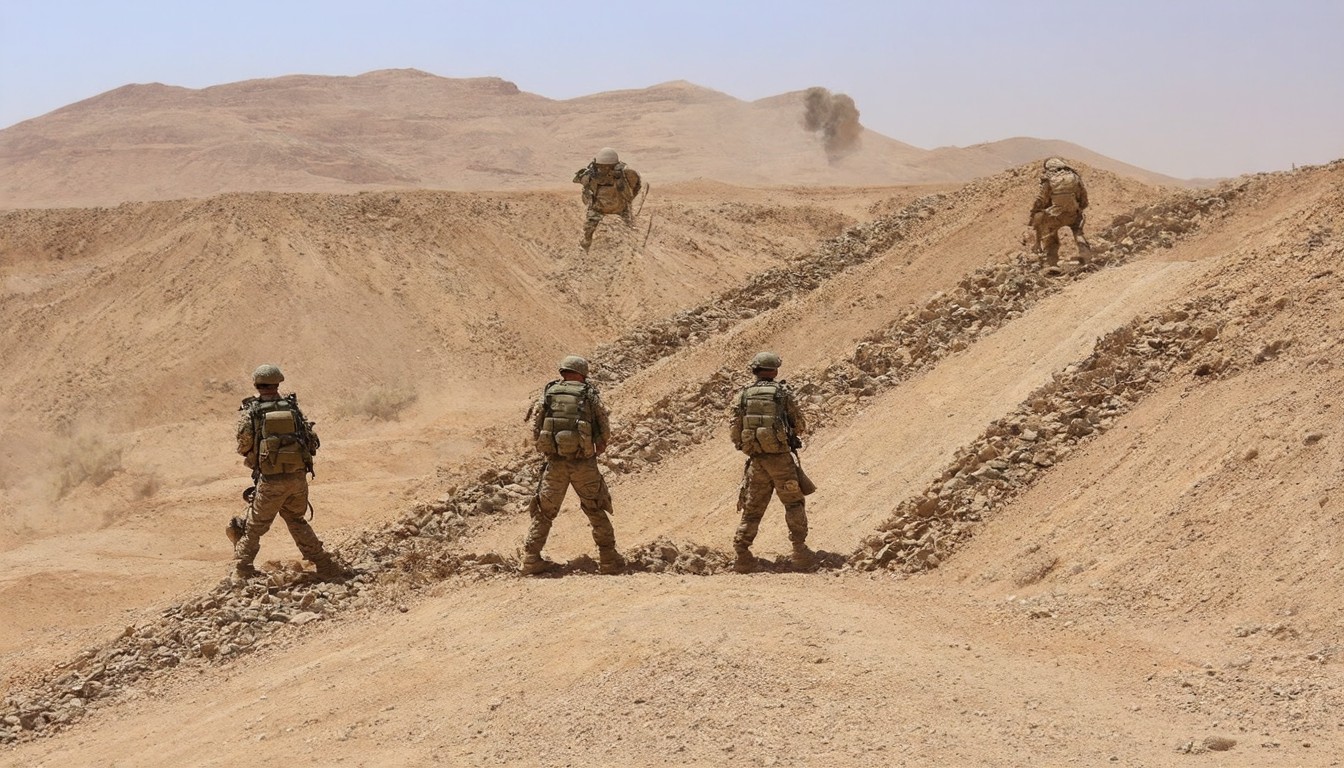
In recent years, the prospect of America being drawn back into another Middle East conflict has sparked concerns among policymakers and the general public. As tensions rise in the region, questions about the U.S. military's potential escalation strategies have become increasingly relevant. To understand how America might respond to such a situation, it's essential to examine the three steps that define its ladder of military escalation.
The first step in America's escalation ladder is diplomatic engagement. This involves leveraging diplomatic channels to address the root causes of conflict and encourage peaceful resolutions. The U.S. has a long history of using diplomacy to resolve disputes, often working through international organizations like the United Nations or through bilateral negotiations. In the Middle East, this might mean reengaging with key players to promote dialogue and de-escalation. For instance, during the Iran nuclear deal, diplomatic efforts were central to the agreement, aiming to reduce tensions and prevent further escalation.
The second step in the escalation ladder is the deployment of non-combat personnel. This refers to sending military personnel to the region without the intention of engaging in direct combat. Such deployments can serve multiple purposes, including providing security for U.S. interests, supporting allied forces, or enhancing intelligence-gathering capabilities. In the Middle East, this could involve reinforcing military advisory teams in countries like Iraq or Jordan, or increasing the presence of special operations forces to monitor and counter threats. These deployments are typically seen as a way to demonstrate U.S. commitment without immediately escalating to full-scale military involvement.
The third and final step in America's escalation ladder is the deployment of combat forces. This marks a significant escalation, as it involves direct military engagement. The U.S. has historically used this step sparingly, often as a last resort to protect national interests or fulfill allied obligations. In the Middle East, this could mean launching airstrikes against specific targets, deploying ground troops to support allies, or conducting large-scale operations to counter threats. However, such actions carry significant risks, including potential retaliation, increased civilian casualties, and prolonged conflicts.
The question of whether America will be dragged back into another Middle East war hinges on how these escalation steps are managed. Diplomatic engagement remains the preferred approach, as it avoids the high costs and risks associated with military intervention. However, if diplomatic efforts fail to de-escalate tensions, the U.S. may be forced to consider non-combat deployments to demonstrate resolve. Ultimately, the decision to deploy combat forces would depend on the severity of the threat and the potential impact on U.S. national security.
In conclusion, America's ladder of military escalation provides a framework for understanding how the U.S. might respond to a potential Middle East conflict. While diplomacy remains the priority, the possibility of further escalation cannot be ignored. As tensions in the region persist, the U.S. must carefully weigh its options and remain prepared to adapt its strategy as circumstances evolve. The key challenge lies in avoiding unnecessary escalation while ensuring the protection of U.S. interests and allies. As history has shown, the path to peace in the Middle East is fraught with complexities, and the U.S. must navigate these challenges with caution and foresight.








