
The latest on the Artemis II mission to the moon, and more science stories
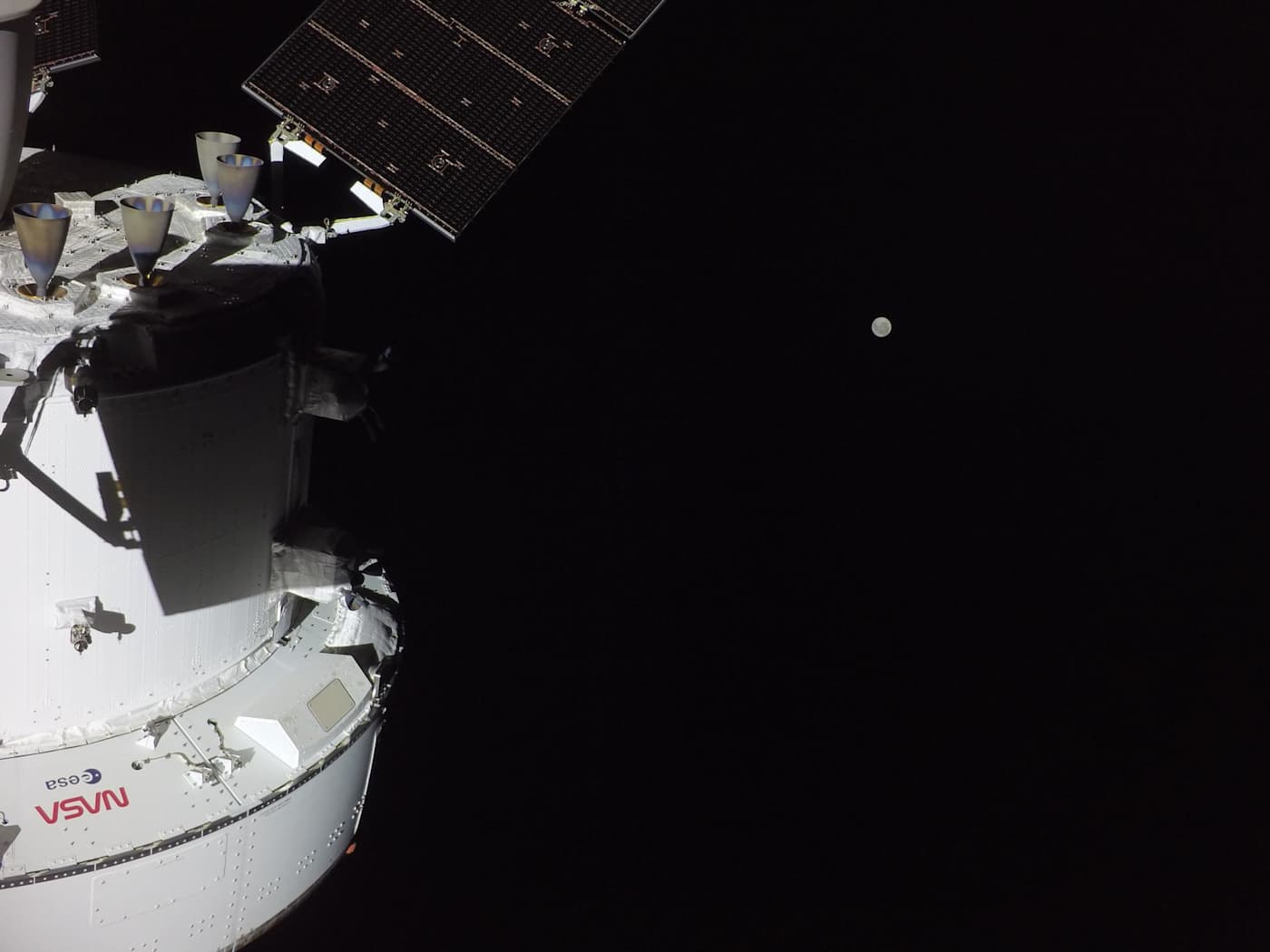
We got to share in a rare moment of collective awe this week as four astronauts blasted off toward the moon , beginning a 10-day journey that will take them farther from Earth than any humans have traveled in the last 50 years. It'll still be a little while before they reach their destination — the Orion spacecraft is expected to loop around the moon on Monday — but they've already seen some pretty incredible stuff on the way there. Here's the latest on the Artemis II mission, and other interesting science stories from this week. Artemis II crosses the halfway point After years of planning, NASA astronauts Reid Wiseman, Victor Glover and Christina Koch, along with Canadian Space Agency (CSA) astronaut Jeremy Hansen, are finally on their way to the moon for the Artemis II mission. This test flight is a crucial step in NASA's plans to send humans to the surface of the moon again for the first time since Apollo 17, and the high-stakes launch went off without a hitch on Wednesday. The Artemis II crew is now more than halfway to the moon, according to NASA. When Orion reaches the moon on April 6, the astronauts will have a six-hour window of opportunity to observe the partially lit lunar far side, which can't be seen from Earth. If you're curious about where exactly the astronauts are at any given moment, you can track the mission by visiting NASA's Artemis Real-Time Orbit website . And, if you just want to see what space looks like from Orion, here's a livestream from outside the capsule. The moon is now in view! The crew did experience some technical difficulties after leaving the ground, though all were resolved fairly quickly. Early Thursday morning, Wiseman contacted mission control to troubleshoot some issues with a Surface Pro he was attempting to use, noting, "I have two Microsoft Outlooks and neither one of those are working." Relatable. The Artemis II crew was also greeted by a malfunctioning toilet not long into the flight, and astronaut Koch had to work with the ground team to figure out a fix — which they thankfully were able to do. In a livestream later, the astronaut joked that she is now a space plumber . Small issues aside, the Artemis II mission is off to a pretty amazing start. The Orion spacecraft completed its translunar injection burn on Thursday, officially taking it out of Earth orbit and putting it on its way to the moon. Commander Wiseman shared some pictures of the view from Orion's windows afterward, and they are breathtaking. In one unbelievably crisp shot of Earth, you can even see two auroras. And there's plenty more observations to come. Students discover a nearly pristine ancient star Using data from the Sloan Digital Sky Survey (SDSS), a group of undergraduate students at the University of Chicago has discovered what's thought to be one of the oldest stars ever observed. Their analysis indicates that the star, called SDSSJ0715-7334, was born in the nearby Large Magellanic Cloud billions of years ago before eventually making its way to the Milky Way. Vedant Chandra and the SDSS collaboration Background ESA/Gaia image, A. Moitinho, A. F. Silva, M. Barros, C. Barata, University of Lisbon; H. Savietto, Fork Research The star was one of 77 that the students selected for closer observation after poring through the SDSS data in their "Field Course in Astrophysics” class, which is led by Professor Alex Ji, the deputy Project Scientist for SDSS-V. SDSS-V is an ongoing all-sky survey that's mapping the Milky Way. After creating their list, they set out to observe the stars during a field trip to Carnegie Science’s Las Campanas Observatory in Chile, and honed in on SDSSJ0715-7334 on day two. The team found it's made mostly of hydrogen and helium, with very little carbon and iron. In the paper published in the journal Nature Astronomy , the researchers note that this composition could be the product of a primordial supernova. "This ancient immigrant gives us an unprecedented look at conditions in the early universe,” said Ji in a statement. Ji added, “The star has so little carbon that it suggests an early sprinkling of cosmic dust is responsible for making it. This formation pathway has only been seen once before.” Before you go, be sure to check these stories out too: What’s going on with Donut Lab's so-called super battery? SpaceX has reportedly filed for the biggest IPO in history This article originally appeared on Engadget at https://www.engadget.com/science/space/the-latest-on-the-artemis-ii-mission-to-the-moon-and-more-science-stories-160000539.html?src=rss
This week marked a significant milestone in space exploration as the Artemis II mission blasted off toward the moon, carrying four astronauts on a 10-day journey that will take them farther from Earth than any humans have traveled in the last 50 years. The mission, led by NASA, is a crucial step in the agency's plans to return humans to the lunar surface for the first time since Apollo 17. The launch, which took place on Wednesday, was a high-stakes event that went off without a hitch.
The Artemis II crew, consisting of NASA astronauts Reid Wiseman, Victor Glover, and Christina Koch, along with Canadian Space Agency (CSA) astronaut Jeremy Hansen, is now more than halfway to the moon. When the Orion spacecraft reaches the moon on April 6, the astronauts will have a six-hour window of opportunity to observe the partially lit lunar far side, which is not visible from Earth. To track the mission's progress, interested readers can visit NASA's Artemis Real-Time Orbit website. Additionally, a livestream from outside the capsule offers a glimpse into the breathtaking views of space from the Orion spacecraft.
While the Artemis II mission has faced minor technical difficulties, all issues have been resolved quickly. Early Thursday morning, Commander Wiseman contacted mission control to troubleshoot some problems with a Surface Pro he was using, stating, "I have two Microsoft Outlooks and neither one of those are working." The crew also encountered a malfunctioning toilet shortly after launch, but astronaut Koch and the ground team were able to resolve the issue. In a lighthearted moment during a livestream, Koch joked that she had become a "space plumber."
Despite these minor setbacks, the Artemis II mission is progressing smoothly. The Orion spacecraft completed its translunar injection burn on Thursday, officially taking it out of Earth orbit and putting it on its way to the moon. Commander Wiseman shared pictures of the view from Orion's windows, which were stunningly clear. One photograph captured two auroras in the Earth's atmosphere, highlighting the mission's incredible vistas.
In addition to the Artemis II mission, this week also saw a groundbreaking discovery by a group of undergraduate students at the University of Chicago. Using data from the Sloan Digital Sky Survey (SDSS), they identified what is believed to be one of the oldest stars ever observed, named SDSSJ0715-7334. The star, which formed in the nearby Large Magellanic Cloud billions of years ago, eventually migrated to the Milky Way.
The students selected 77 stars for closer observation after analyzing SDSS data in their "Field Course in Astrophysics" class, led by Professor Alex Ji, the deputy Project Scientist for SDSS-V. SDSS-V is an ongoing all-sky survey that is mapping the Milky Way. The team observed the stars at Carnegie Science's Las Campanas Observatory in Chile and focused on SDSSJ0715-7334 on the second day of their field trip.
Their analysis revealed that the star is composed mostly of hydrogen and helium, with very little carbon and iron. The researchers published their findings in the journal Nature Astronomy, noting that this composition could be the result of a primordial supernova. Professor Ji commented, "This ancient immigrant gives us an unprecedented look at conditions in the early universe." He added that the star's low carbon content suggests it formed from an early sprinkling of cosmic dust, a pathway that has only been observed once before.
As the Artemis II mission continues its journey toward the moon, offering breathtaking views and valuable data, the discovery of SDSSJ0715-7334 provides invaluable insights into the early universe. These scientific advancements underscore the exciting developments in space exploration and astronomy that are shaping our understanding of the cosmos.
In addition to these stories, readers may also be interested in exploring reports on Donut Lab's super battery and SpaceX's reportedly historic IPO filing. As space exploration and scientific discoveries continue to captivate the world, these milestones highlight the relentless pursuit of knowledge and innovation in the field of science.








