The Great Filter Comes For Us All
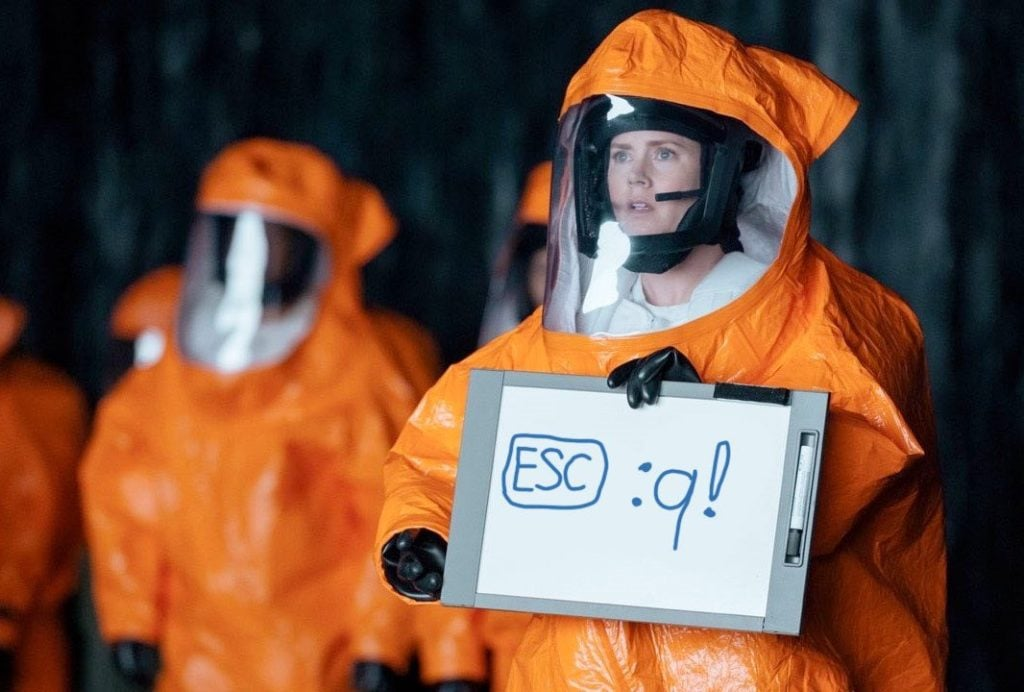
With a 13 billion year head start on evolution, why haven’t any other forms of life in the universe contacted us by now? ( Arrival is a fantastic movie. Watch it , but don’t stop there – read the Story of Your Life novella it was based on
The Great Filter Comes For Us All
With a 13 billion-year head start on evolution, why haven't any other forms of life in the universe contacted us by now? This question has puzzled scientists, philosophers, and science fiction enthusiasts alike, leading to the concept known as the Fermi Paradox. The paradox arises from the apparent contradiction between the high probability of extraterrestrial civilizations existing, as suggested by the Drake equation, and the lack of any evidence for such civilizations.
The Drake equation estimates the number of active, communicative extraterrestrial civilizations in the Milky Way galaxy. It considers factors such as the rate of star formation, the number of planets per star, the likelihood of a planet being habitable, and the duration of a civilization's existence. With billions of stars in our galaxy, many of which are similar to the Sun, and considering that some of these stars are billions of years older than Earth, the probability of finding Earth-like planets capable of supporting life seems high.
If Earth is typical in the universe, it stands to reason that other planets might develop intelligent life. Some of these civilizations might eventually develop the technology for interstellar travel. Even at the slow pace of currently envisioned interstellar travel, the Milky Way galaxy could be completely traversed in about a million years. This line of thinking suggests that, given enough time, extraterrestrial civilizations should have already reached Earth.
However, despite the vast number of potential civilizations, there is no concrete evidence of extraterrestrial life or contact. Enrico Fermi famously expressed this conundrum in an informal conversation, asking, "Where is everybody?" The absence of evidence for extraterrestrial civilizations has led some to speculate about possible explanations.
One explanation is the Great Filter, a hypothetical barrier that prevents the emergence of intelligent life. This could be a significant obstacle that most civilizations encounter before they can develop the technology to explore the galaxy. The Great Filter could take many forms, such as environmental disasters, self-destruction through nuclear war, or the inability to overcome technological or biological challenges.
The concept of the Great Filter is not unique to the search for extraterrestrial life. It is analogous to the absence of time travelers from the future, which some argue suggests that time travel is impossible. However, just as the lack of time travelers does not categorically prove time travel is impossible, the absence of extraterrestrial visitors does not prove that such civilizations do not exist. It is possible that time travel is physically possible but never developed, or that extraterrestrial civilizations exist but have not yet reached Earth.
The Fermi Paradox has inspired much debate and speculation. Some propose that we are alone in the universe, while others argue that we are part of a vast cosmic community. The absence of evidence for extraterrestrial life could be due to our inability to detect such civilizations, or it could be a result of the Great Filter preventing their existence.
In the meantime, the search for extraterrestrial life continues through projects like the Breakthrough Listen initiative, which uses telescopes to search for signals from other civilizations. Scientists also study the conditions necessary for life to exist, such as the presence of liquid water and a stable environment, to better understand the potential for life elsewhere in the universe.
The Great Filter serves as a reminder of the complexities of the universe and the challenges we face in understanding our place within it. While we may never have a definitive answer to the Fermi Paradox, the pursuit of knowledge and the exploration of the cosmos continue to drive scientific inquiry and inspire awe at the mysteries of the universe.
The story of our search for extraterrestrial life is a tale of curiosity, wonder, and the human quest for understanding. It is a journey that transcends borders and encourages us to look beyond our own world, to contemplate the vastness of the cosmos, and to ponder our existence in the grand scheme of things. As we delve deeper into the mysteries of the universe, the Great Filter remains a compelling enigma, urging us to consider the possibilities and limitations of life in the cosmos.
In the end, the Fermi Paradox is not just a scientific question but a philosophical reflection on our place in the universe. It challenges us to think critically about the potential for life beyond Earth and the implications of our existence in a vast, unknown cosmos. Whether we find evidence of extraterrestrial life or not, the Great Filter serves as a powerful reminder of the unknown and the infinite possibilities that lie beyond our understanding.