
The Future of Software Engineering with AI: Six Predictions
Notes from The Pragmatic Summit and ‘The Future of Software Development’ workshop
The Future of Software Engineering with AI: Six Predictions
In the fast-paced world of technology, the software engineering industry is undergoing rapid transformation, driven by the integration of artificial intelligence (AI). Two recent events, The Pragmatic Summit in San Francisco and a workshop titled "The Future of Software Development" in Deer Valley, Utah, brought together seasoned software engineers, industry leaders, and thought leaders to discuss the current state and future trajectory of software development. These gatherings highlighted a consensus that the pace of change in the tech sector is accelerating, with even veterans like Martin Fowler and Kent Beck acknowledging that such rapid shifts have not been observed in their over 50 years of experience.
At the start of the year, predictions about AI writing almost all code in the future were made, and these ideas resonated with many attendees at the events. However, an embedded engineer specializing in Assembly and C code at the Pragmatic Summit provided an interesting counterpoint. This engineer, who still writes more code by hand than with AI agents, shared that they have seen a significant increase in AI-generated code since the launch of Opus 4.5, with the share ranging between a third and half of their low-level code now being generated by AI. This anecdote underscores the evolving landscape of software engineering, where AI is gradually becoming an integral part of the development process, even for those who are initially resistant to its adoption.
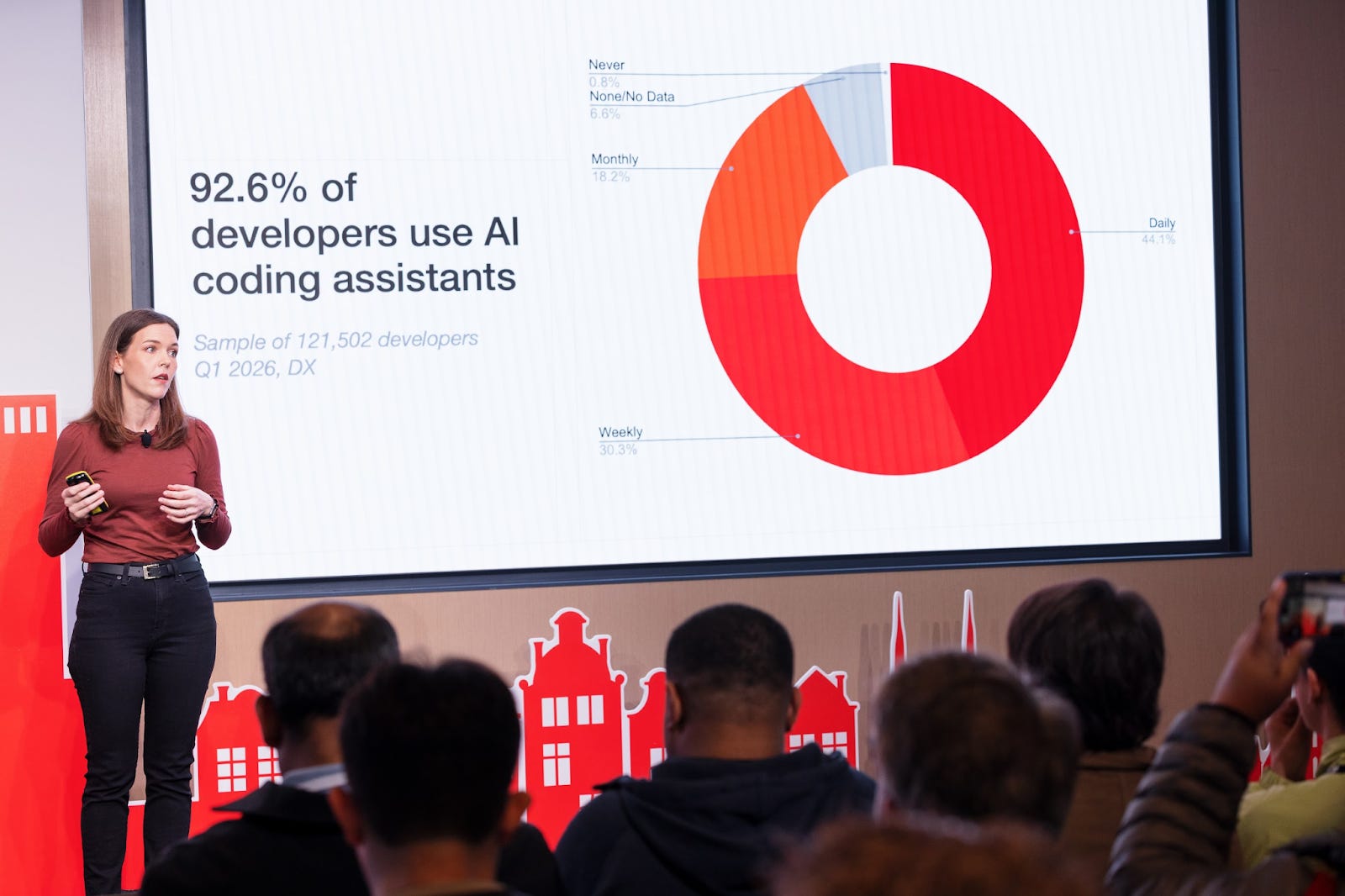
One of the key themes at both events was the distinction between data and hype when it comes to AI in software engineering. Laura Tacho's keynote at The Pragmatic Summit shed light on this, revealing exclusive data that 92% of developers use AI coding tools monthly. This statistic highlights the growing reliance on AI tools within the industry. Furthermore, the data showed that organizations experiencing "unhealthy" development environments saw twice as many incidents as those in "healthy" environments, which had 50% fewer incidents. This indicates that adopting AI tools effectively can lead to significant improvements in software development practices and outcomes.
The closing session of the Pragmatic Summit delved into the characteristics of world-class engineering organizations in the AI era. A fireside chat with GitHub's former CEO and the CTO of Atlassian explored the traits of AI-native teams. These teams are characterized by their ability to leverage AI tools and technologies to enhance their development processes, fostering a culture of continuous learning and adaptation. The discussion emphasized the importance of building organizations that are not only capable of integrating AI but also of evolving with it to maintain a competitive edge in the rapidly changing tech landscape.
Another highlight of the events was the panel discussion with Martin Fowler, distinguished engineer Annie Vella, and others. The conversation focused on the future of software development, with participants sharing insights and best practices for navigating the challenges and opportunities presented by AI. The panelists emphasized the need for developers to stay updated with the latest advancements in AI and to embrace a mindset that prioritizes collaboration between humans and AI systems.
In conclusion, the future of software engineering is undeniably intertwined with AI, and the events held in San Francisco and Deer Valley provided valuable insights into the current state and future trajectory of the industry. As organizations and developers continue to adopt AI tools and technologies, it is crucial to do so in a measured and strategic manner, ensuring that the integration of AI leads to improved development practices and outcomes. The key lies in striking a balance between leveraging AI's potential and maintaining a human-centric approach to software development, as this will be the foundation for building world-class engineering organizations in the AI era.









