The Fire in the West Bank Is Burning Hotter, Out of Sight
An Israeli law aiming capital punishment at Palestinians but not Jewish settlers is immoral, unconstitutional and part of a larger effort to suppress rights.
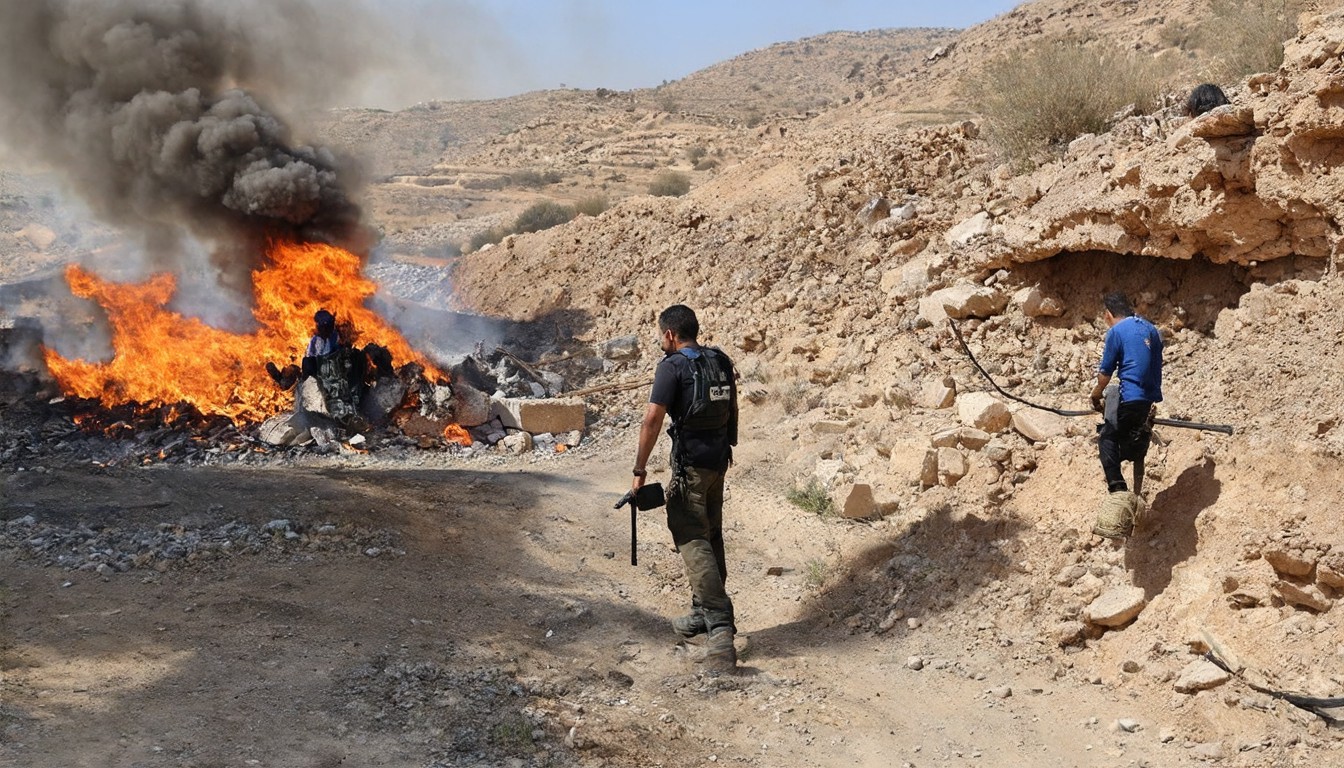
In recent weeks, tensions in the West Bank have escalated as a new Israeli law has come under scrutiny for its discriminatory nature. The legislation, which aims to impose capital punishment on Palestinians for certain offenses, has been met with widespread condemnation from human rights organizations and international bodies. Critics argue that the law is not only unconstitutional but also serves as a tool to suppress the rights of Palestinians, further exacerbating the already volatile situation in the region.
The law in question, which has been described as "immoral" by many, does not apply to Jewish settlers in the same territories. This disparity has raised concerns about the double standards being applied by the Israeli authorities. Critics contend that the law is designed to intimidate and control the Palestinian population, rather than uphold justice or protect security. They argue that the imposition of capital punishment for Palestinians while offering lenient treatment to Jewish settlers is a blatant violation of the principle of equality before the law.
The Israeli government has defended the legislation, claiming that it is necessary for maintaining security and order in the region. However, human rights groups have countered that the law disproportionately targets Palestinians and is a continuation of a broader pattern of oppression. They point out that the Israeli legal system has a history of applying different standards to Palestinians and Jewish settlers, often resulting in unfair treatment and limited recourse for those affected.
The international community has also weighed in on the issue, with several countries and organizations expressing concern over the legality and morality of the law. The United Nations, in particular, has called for a review of the legislation, arguing that it undermines the rule of law and human rights in the West Bank. Critics have further suggested that the law is part of a larger strategy to undermine the Palestinian territorial integrity and consolidate Israeli control over the region.
The situation in the West Bank has long been characterized by a complex web of political, legal, and social tensions. The new Israeli law has only served to intensify these issues, highlighting the need for a comprehensive and equitable approach to addressing the region's challenges. As the debate over the law continues, it remains to be seen whether the Israeli authorities will be willing to reconsider their policies and adopt a more just and equitable stance towards the Palestinian population.
In the meantime, the situation on the ground remains precarious, with both Palestinians and Israeli settlers living in a state of heightened tension and uncertainty. The recent developments have underscored the urgent need for international intervention and pressure to ensure that the rights of all individuals in the West Bank are protected and upheld. As the fire in the West Bank continues to burn hotter, it is crucial that the international community remains vigilant and committed to promoting peace, justice, and equality in the region.