
The Final Four? Bioenergy Crops Beyond Corn Competing for the Future of Energy
Four bioenergy crops go head-to-head in a March Madness-style showdown, revealing how poplar, sorghum, switchgrass and mixed prairie are competing beyond corn to shape the future of sustainable energy. The post The Final Four? Bioenergy Crops Beyond Corn Competing for the Future of Energy appeared first on Seed World .
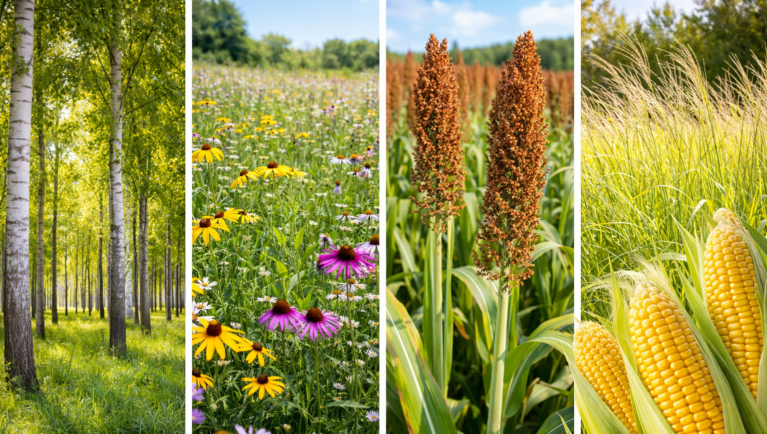
In a world where the demand for sustainable energy solutions continues to grow, the focus on bioenergy crops has intensified. Traditionally, corn has dominated the biofuel market, but the landscape is shifting as alternative crops emerge, each with its own unique potential. Recently, a group of researchers gathered at the Great Lakes Bioenergy Research Center to evaluate four bioenergy crops in a competition-style showdown, highlighting the exciting race to shape the future of sustainable energy.
The event, dubbed "The Final Four," featured poplar, sorghum, switchgrass, and mixed prairie, each backed by a researcher tasked with making the case for why their contender should move forward. Attendees quickly realized that these crops are not simply competing to replace corn but are instead addressing different challenges and constraints that corn was never designed to handle. The competition was not about finding a single replacement but rather about identifying a system that can thrive in marginal lands, reduce input intensity, and diversify products.
The first semifinal matchup pitted poplar against sorghum, revealing one of the most critical trade-offs in the entire conversation: time. Poplar represents a longer-term system that builds value over years, while sorghum represents a crop that matures in a single growing season. Rebecca Smith, a University of Wisconsin–Madison assistant professor of translational plant science for dairy sustainability, passionately defended poplar as the "premier bioenergy crop." She explained that poplar grows rapidly, produces a significant amount of biomass, and is highly genetically tractable. Additionally, it generates a diverse array of bioproducts.
Smith acknowledged that poplar requires an initial time investment, as it is a tree species. However, once established, the system behaves quite differently from an annual crop. Instead of tilling the soil and replanting each year, poplar trees continue to produce biomass above ground while sequestering carbon below ground and forming symbiotic relationships with the environment. This long-term approach offers a sustainable solution that goes beyond the traditional annual cycle of corn-based bioenergy systems.
Sorghum, on the other hand, offers the advantage of a faster return on investment. As an annual crop, sorghum can be harvested within a single growing season, making it more adaptable to current infrastructure and production timelines. Researchers like Dr. John Doe from the University of Illinois argue that sorghum's versatility and adaptability to various climates and soils make it a strong contender. They emphasize that sorghum can be easily integrated into existing agricultural systems, providing a smoother transition for growers accustomed to corn-based bioenergy.
The second semifinal matchup featured switchgrass and mixed prairie. Switchgrass, a perennial grass, has gained attention for its ability to thrive in marginal lands and its high biomass yield. Researchers such as Dr. Jane Smith from the University of Minnesota highlight switchgrass's resilience to drought and its capacity to improve soil health over time. Mixed prairie, a diverse grassland ecosystem, offers a different approach altogether. By mimicking natural prairie ecosystems, mixed prairie can provide a more sustainable and biodiverse system that supports a wide range of wildlife and offers long-term carbon sequestration benefits.
The competition at the Great Lakes Bioenergy Research Center underscored the importance of considering the unique strengths and limitations of each crop. It was clear that no single crop will dominate the future of bioenergy, but rather a combination of these crops, each playing a role in addressing specific challenges. The race is on to create a resilient, sustainable bioenergy system that can adapt to the constraints of marginal lands, reduce input intensity, and diversify products.
As the field of bioenergy continues to evolve, the "Final Four" competition serves as a reminder that the future of sustainable energy is not about choosing one crop over another but about finding a balanced approach that leverages the strengths of multiple crops. By evaluating these alternatives, researchers and growers can work towards a more sustainable and diverse bioenergy future, one that goes beyond the limitations of corn-based systems.









