
'The farmer isn't disappearing — they're moving up the stack': How AI is reshaping the role of modern agriculture
New robotics and AI tools are helping agriculture address workforce shortages while improving safety, productivity, and long-term sustainability.
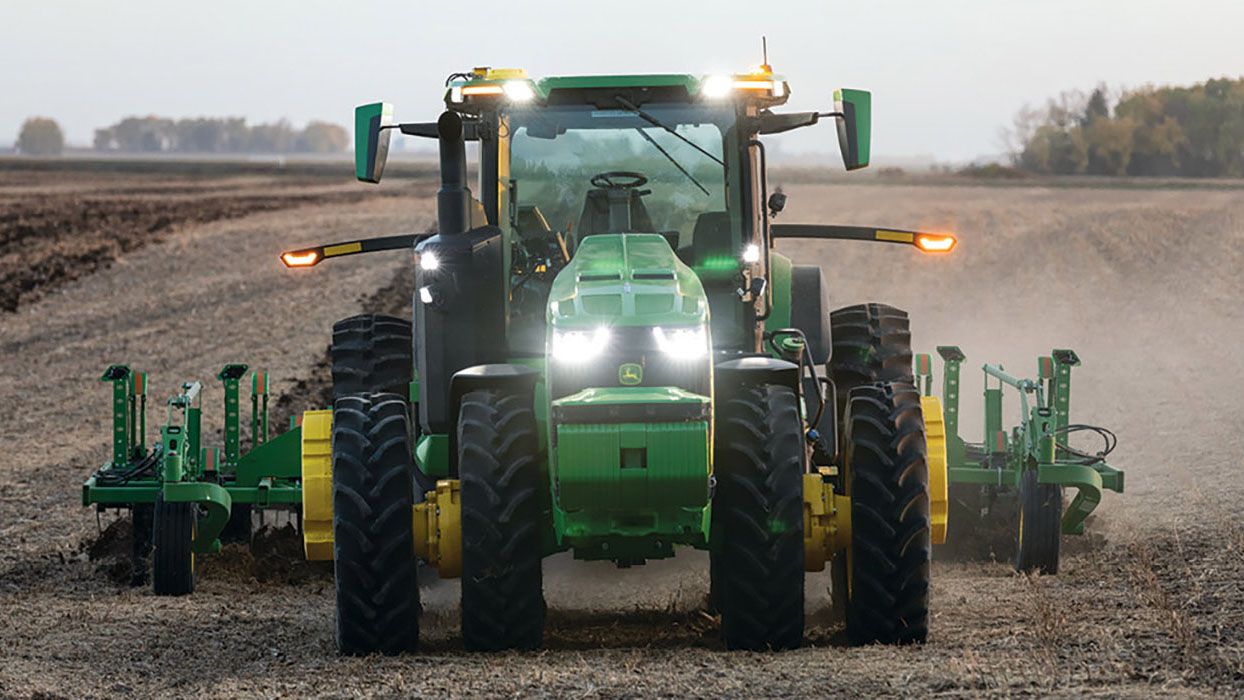
In recent years, the agricultural sector has been undergoing a significant transformation, driven by advancements in technology that are reshaping the role of farmers and the very nature of modern agriculture. As the demand for food continues to grow, and the workforce in farming becomes increasingly scarce, new robotics and AI tools are stepping in to address these challenges while enhancing safety, productivity, and long-term sustainability. The phrase "the farmer isn't disappearing — they're moving up the stack" encapsulates this shift, where farmers are transitioning from manual labor to overseeing sophisticated systems that automate much of the traditional farm work.
One of the most visible signs of this transformation is the integration of autonomous machinery into agricultural practices. For instance, the John Deere tractor, once a symbol of traditional farming, is now being equipped with advanced sensors and AI algorithms that enable it to operate independently in the field. These autonomous tractors can perform tasks such as planting, weeding, and harvesting with precision and efficiency that surpass human capabilities. This not only reduces the physical burden on farmers but also minimizes the risk of accidents, as the machines operate with a higher level of awareness and control.
Beyond tractors, the agricultural industry is also adopting a range of AI-driven tools and technologies to optimize various aspects of farming. Drones equipped with cameras and sensors are used to monitor crop health, detect pests, and assess soil conditions in real-time. This allows farmers to make data-driven decisions about when and where to apply fertilizers or pesticides, thereby reducing waste and minimizing environmental impact. Predictive analytics models are also being employed to forecast weather patterns and market trends, enabling farmers to plan their operations more effectively and adapt to changing conditions.
In addition to enhancing productivity, the adoption of AI in agriculture is also contributing to long-term sustainability. By optimizing resource use and reducing waste, these technologies help to conserve water, energy, and other natural resources. Moreover, the precision agriculture enabled by AI can lead to more efficient use of fertilizers and pesticides, which in turn reduces the environmental footprint of farming. This is particularly important in the context of global food security, as the world's population continues to grow and the need for sustainable agricultural practices becomes more urgent.
However, the transition to AI-driven agriculture is not without its challenges. One of the primary concerns is the potential displacement of farmers from their traditional roles. While the phrase "moving up the stack" suggests that farmers are evolving rather than disappearing, there is still a need to ensure that they are adequately trained and supported in adapting to these new technologies. Many farmers may need to acquire new skills, such as data analysis and system management, in order to effectively utilize AI tools and reap the benefits they offer.
Another challenge is the cost of implementing AI technologies. While the long-term savings and increased efficiency can be significant, the initial investment in machinery, sensors, and software can be prohibitively expensive for many small-scale farmers. To address this, there is a growing need for collaborative solutions, such as shared equipment and cooperative programs, that can help to lower the barriers to entry for adopting AI in agriculture.
Despite these challenges, the potential benefits of AI in agriculture are undeniable. By addressing workforce shortages, improving safety, and enhancing sustainability, these technologies are poised to revolutionize the way we produce food and ensure that future generations have access to a secure and sustainable food supply. As the sector continues to evolve, it will be crucial for farmers, policymakers, and technologists to work together to harness the full potential of AI while ensuring that the benefits of this transformation are equitably shared.
In conclusion, the integration of AI and robotics into agriculture is not only transforming the way we farm but also redefining the role of the farmer. While there are challenges to overcome, the long-term advantages of increased productivity, improved safety, and greater sustainability are clear. As we move forward, it is essential to foster a collaborative approach that supports farmers in adapting to these changes and ensures that the benefits of AI-driven agriculture are accessible to all. The future of food production is being shaped by technology, and it is up to us to guide this transformation in a way that is both innovative and equitable.









