
The development of Kant’s precritical cosmology and some ‘critical’ consequences
.
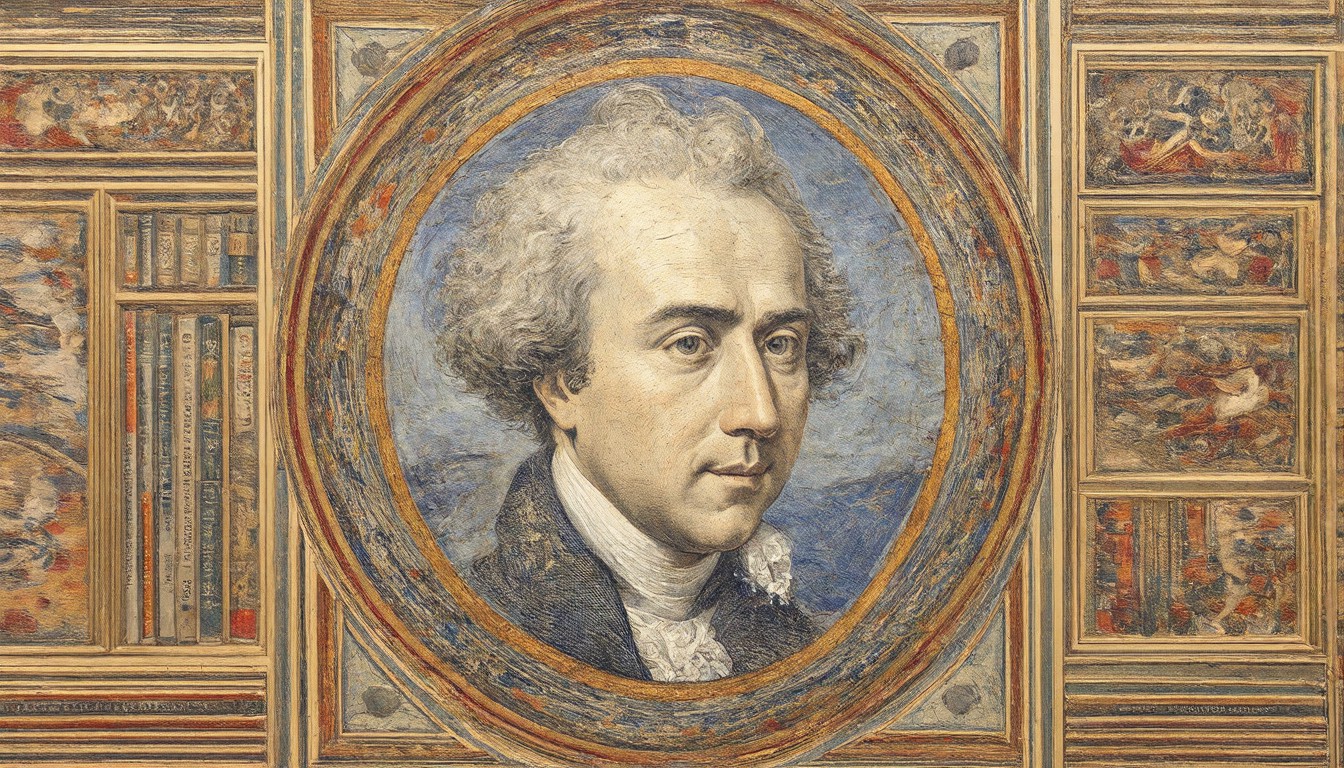
Immanuel Kant's precritical cosmology, developed before his groundbreaking work "Critique of Pure Reason," laid the foundation for his revolutionary approach to understanding the universe and human knowledge. This period of his intellectual journey was marked by a synthesis of Newtonian physics, Leibnizian metaphysics, and theological considerations, which later informed his critical philosophy. The development of this cosmology and its critical consequences reveal a complex interplay between scientific inquiry, philosophical inquiry, and theological thought.
Kant's precritical cosmology emerged in the late 18th century, a time when the scientific revolution was reshaping humanity's understanding of the cosmos. Newton's laws of motion and universal gravitation had provided a mechanistic view of the universe, where celestial bodies moved predictably in a deterministic framework. Kant, influenced by Newtonian physics, initially adopted this perspective, viewing the cosmos as a vast machine governed by immutable laws. However, he also drew on the metaphysical ideas of Gottfried Wilhelm Leibniz, who posited that the universe is the best possible world, harmoniously ordered by divine providence.
This synthesis of Newtonian physics and Leibnizian metaphysics led Kant to develop a cosmological model that reconciled the mechanistic view of the universe with the notion of a purposeful and meaningful existence. He believed that the universe, while governed by natural laws, also exhibits a teleological order, reflecting the workings of a benevolent creator. This view, later termed "precritical," laid the groundwork for his critical philosophy, which sought to reconcile human reason with the limits imposed by sensory experience.
Kant's precritical cosmology also engaged with theological concerns, particularly the relationship between the finite human mind and the infinite divine mind. He argued that the universe, as a product of divine intellect, is structured in a way that allows human reason to grasp certain truths about it. This perspective implied that the finite mind could attain knowledge of the infinite through reasoned reflection, a position that would later be refined in his critical philosophy.
The critical consequences of Kant's precritical cosmology became evident in his "Critique of Pure Reason," where he introduced the distinction between phenomena and noumena. Phenomena, the objects of sensory experience, are governed by the categories of the mind, which impose a structured framework on the raw data of perception. Noumena, the things-in-themselves, transcend this framework and remain inaccessible to human understanding. This dualism allowed Kant to reconcile the mechanistic view of the universe with the limits of human knowledge, asserting that while the cosmos may be a deterministic machine, human cognition is inherently structured and limited.
Moreover, Kant's precritical cosmology influenced his moral philosophy, as he sought to ground ethical principles in the structure of human reason. He argued that the categorical imperative, the foundation of his deontological ethics, arises from the rational nature of the human mind, which seeks to act according to universalizable maxims. This connection between cosmology and ethics underscores the overarching theme of his critical philosophy: the interplay between human reason, the limits of knowledge, and the possibility of moral and ethical engagement with the world.
The critical consequences of Kant's precritical cosmology extend beyond his own philosophy. His work has influenced subsequent generations of philosophers, scientists, and theologians, sparking debates about the nature of reality, the role of reason, and the relationship between science and philosophy. Critics have challenged his assumptions about the limits of human knowledge and the teleological order of the universe, while proponents have praised his ability to reconcile disparate intellectual traditions.
In conclusion, Kant's precritical cosmology, developed before his critical philosophy, was a complex interplay of scientific, metaphysical, and theological ideas. It laid the foundation for his critical philosophy, which sought to reconcile human reason with the limits of sensory experience. The critical consequences of this cosmology continue to resonate in contemporary debates about the nature of reality, the role of reason, and the relationship between science and philosophy. Kant's precritical cosmology remains a testament to the enduring power of philosophical inquiry to shape our understanding of the universe and our place within it.








