
The Courage to Be Yourself: Virginia Woolf on How to Hear Your Soul
"Beyond the difficulty of communicating oneself, there is the supreme difficulty of being oneself."
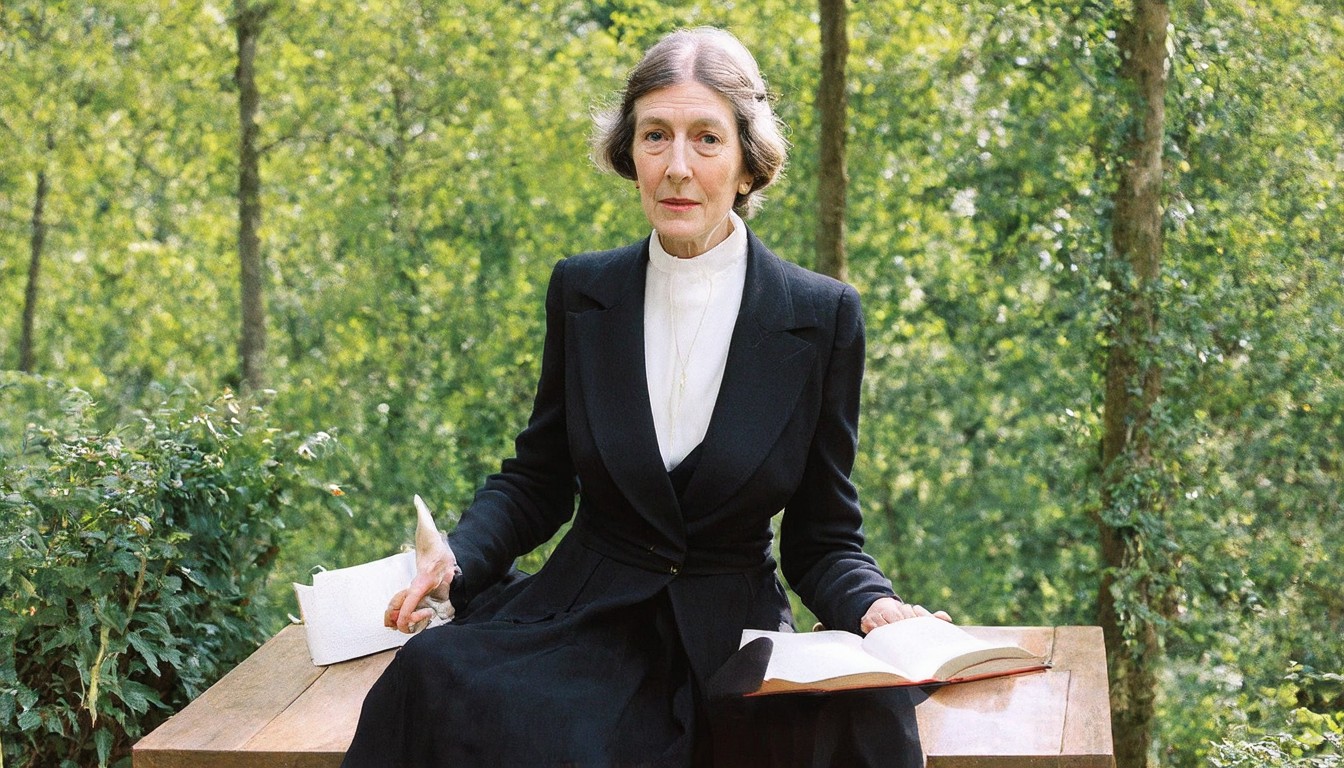
Virginia Woolf's profound reflections on the soul and the courage to be oneself have resonated with readers for generations. In her essay on Montaigne, Woolf captures the essence of the soul as a complex and indefinite force that often contradicts the public persona we present to the world. She writes, "Beyond the difficulty of communicating oneself, there is the supreme difficulty of being oneself." This statement encapsulates the challenge of discovering and embracing our true selves amidst the ever-changing landscape of our lives.
The concept of the soul has been explored by many thinkers throughout history. Eudora Welty referred to it as "the continuous thread of revelation," while Walt Whitman described it as "independent, lifted out from all else, calm, like the stars, shining eternal." Even complexity theory has attempted to trace the soul to the quantum foam, highlighting its elusive yet fundamental nature. Despite these diverse perspectives, the term "soul" remains the most accessible shorthand for this mysterious essence that persists through time and change.
Woolf herself struggled with the challenge of writing directly about the soul. In her diary, she lamented, "One can't write directly about the soul. Looked at, it vanishes." Yet, her work on Montaigne demonstrates that she masterfully navigated this challenge. Montaigne's essays, Woolf argued, were an "attempt to communicate a soul" and a "miraculous adjustment of all these wayward parts that constitute the human soul." Through her analysis, Woolf not only explored Montaigne's soul but also illuminated her own understanding of the soul's complexities.
The soul, Woolf believed, is deeply private and often at odds with the public self we present. She wrote, "the soul, or life within us, by no means agrees with the life outside us." This discrepancy highlights the importance of having the courage to listen to our inner voice, even when it contradicts societal expectations and norms. Whitman captured this idea when he declared, "dismiss whatever insults your own soul, and your very flesh shall be a great poem."
To truly be oneself, one must cultivate the courage to hear the voice of the soul. This voice rises above the din of convention and expectation, urging us to embrace our authentic selves. By becoming aware of our inner selves, we gain the ability to hear this voice and align our actions with our true nature. Woolf's insights into the soul serve as a powerful reminder of the importance of self-awareness and the courage to be true to ourselves.
In her exploration of the soul, Virginia Woolf offers a timeless message about the struggle to be oneself. Her reflections on Montaigne's essays reveal the soul's complexity and the supreme difficulty of being oneself. By embracing the courage to listen to our inner voice, we can discover the true essence of our being and live a life that is in harmony with our soul. Woolf's words continue to inspire readers to confront the challenges of self-expression and self-discovery, reminding us of the transformative power of hearing our soul.








