
The 1973 Constitution and ‘Bhutto’ the Man Who Made It: What Pakistan Owes and What It Destroyed
Pakistan’s constitutional story is built on a contradiction so stark that it still indicts the state nearly half a century later. The country’s most durable constitutional settlement, the 1973 Constitution, is inseparable from Zulfikar Ali Bhutto’s political rise and institutional imagination. However, the same state later hanged him on April 4, 1979 after a trial […] The post The 1973 Constitution and ‘Bhutto’ the Man Who Made It: What Pakistan Owes and What It Destroyed appeared first on Tfipost.com .
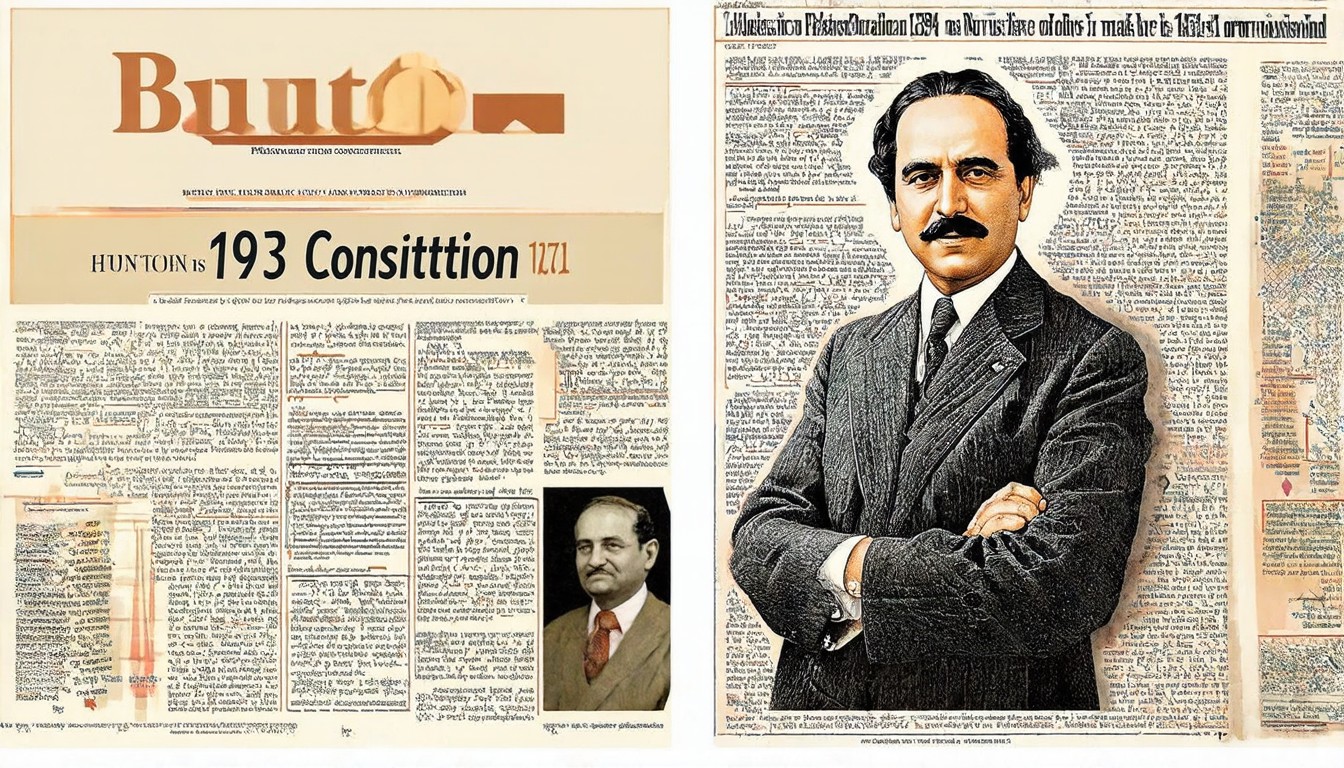
Pakistan’s constitutional story is built on a contradiction so stark that it still indicts the state nearly half a century later. The country’s most durable constitutional settlement, the 1973 Constitution, is inseparable from Zulfikar Ali Bhutto’s political rise and institutional imagination. However, the same state later hanged him on April 4, 1979 after a trial that Pakistan’s own Supreme Court has since said did not meet the standards of fair trial and due process. That is not merely irony, it is a revelation of how Pakistan has often treated law not as a restraint on power, but as a stage on which power performs legitimacy.
Bhutto’s place in Pakistan’s history does not depend on romanticism. He was a divisive, flawed, and often ruthless politician, but the scale of his democratic contribution is undeniable. Under his leadership, the National Assembly’s constitution committee produced the draft that was unanimously passed on 10 April 1973, authenticated on April 12, and promulgated on 14 August 1973, when Bhutto assumed office as prime minister under the new order. The Constitution established a parliamentary system, placed executive authority with the prime minister, and created the bicameral Parliament that still structures the federation. This was not a minor procedural achievement. In a state repeatedly bent by coups, it was an attempt to give Pakistan a consensual constitutional center.
Bhutto’s contribution was not only institutional but political. The Pakistan Peoples Party (PPP) was founded in 1967 as a programmatic challenge to the old patronage politics, explicitly presenting itself as an “Islamic socialist” party aimed at workers and peasants. Its support base drew in rural leftists, urban progressives, and lower and middle-class constituencies who had long been spoken for but rarely politically empowered. Bhutto did not invent mass politics in Pakistan, but he gave it a national vocabulary, comprising popular sovereignty, social justice, parliamentary rule of law, and a commitment to transforming the country’s socio-economic fabric.
The 1973 Constitution was a product of Bhutto’s vision and pragmatism. It sought to balance the demands of political modernity with the realities of a deeply religious society. The document recognized Islam as the state religion but also guaranteed religious freedom, a testament to Bhutto’s understanding of the complexities of Pakistan’s social fabric. The Constitution also emphasized the importance of democracy, establishing a framework for free and fair elections and protecting civil liberties.
However, the same Constitution that Bhutto helped create would eventually become a tool in his downfall. In 1977, a military coup led by General Zia-ul-Haq overthrew Bhutto’s government, accusing him of corruption and human rights abuses. The military junta suspended the Constitution and established a new legal order that prioritized Islamic values over secular principles. Bhutto was tried, convicted, and executed in 1979, a verdict that has been widely criticized as unjust.
The irony of Bhutto’s fate is profound. The man who helped establish Pakistan’s most enduring constitutional framework was ultimately dismantled by the very system he created. The 1973 Constitution, which was meant to provide a stable foundation for democratic governance, became a battleground for political power struggles and ideological battles.
Today, the 1973 Constitution remains Pakistan’s legal blueprint, despite its flaws and contradictions. It has withstood the test of time, serving as a testament to Bhutto’s foresight and determination. Yet, it also underscores the fragility of Pakistan’s democratic institutions and the challenges faced by the country in upholding the rule of law.
In many ways, Bhutto’s legacy is a double-edged sword. He was a polarizing figure who divided Pakistan socially and politically. His tenure was marked by both progress and controversy, with land reforms, nationalization of industries, and social welfare programs on the one hand, and authoritarian tendencies, human rights abuses, and political repression on the other.
Despite its complexities, Bhutto’s role in shaping Pakistan’s constitutional identity cannot be denied. The 1973 Constitution, with its blend of democratic ideals and pragmatic compromises, is a reflection of his political vision and a testament to his enduring influence on Pakistan’s political landscape.
In the end, the story of Bhutto and the 1973 Constitution is a tale of ambition, power, and betrayal. It is a reminder of the complexities of democracy and the challenges of building a stable, just, and inclusive state. As Pakistan navigates its ongoing constitutional and political crises, the legacy of Bhutto and his Constitution continues to shape the country’s future, a testament to the enduring power of politics and the enduring struggle for a just and equitable society.








