
Tesla Workers Are Seizing Control of Robotaxis When They Get Stuck
Remote assistance workers can "take temporary control of the vehicle." The post Tesla Workers Are Seizing Control of Robotaxis When They Get Stuck appeared first on Futurism .
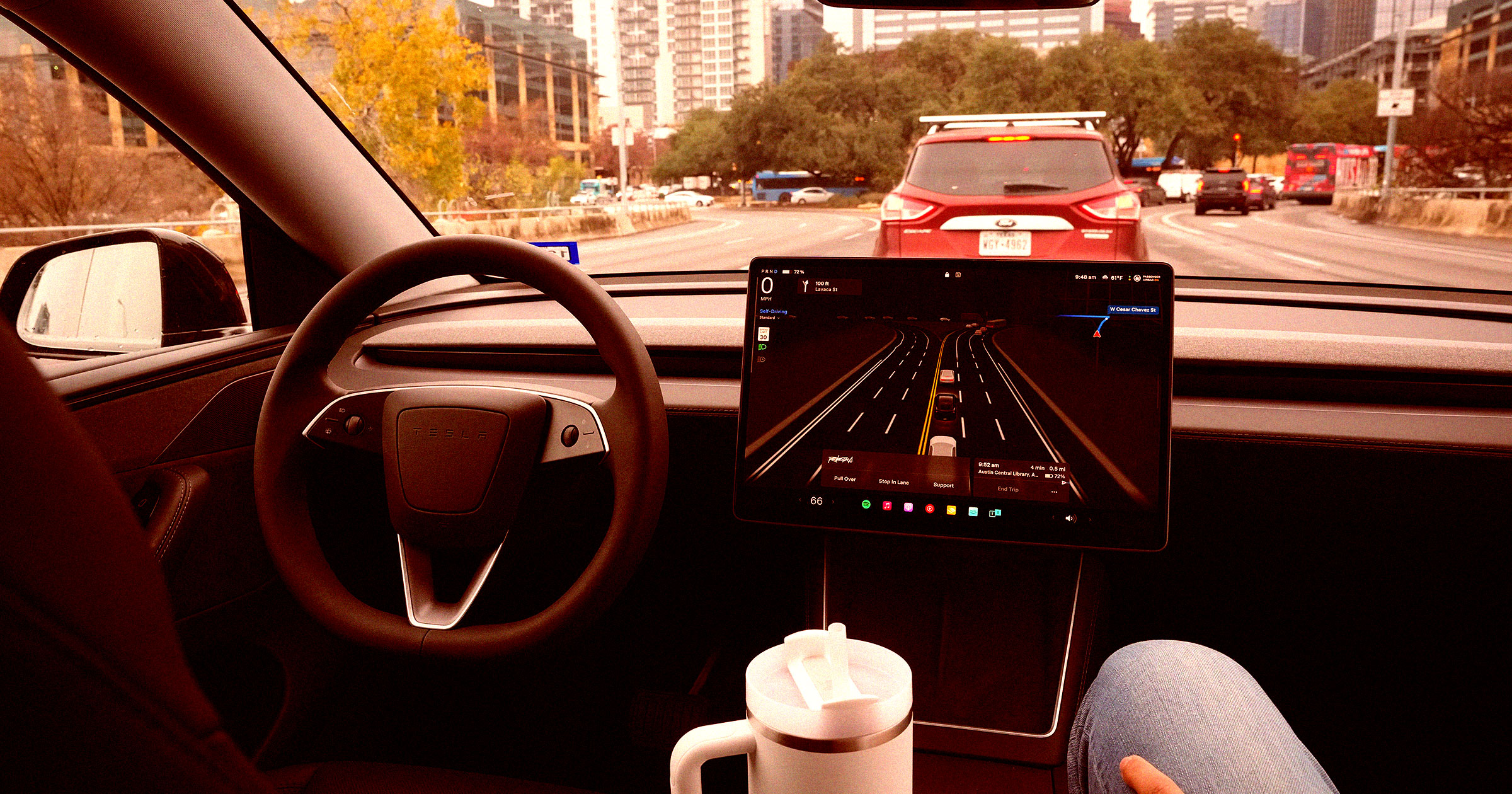
Tesla Workers Are Seizing Control of Robotaxis When They Get Stuck
In a recent development that underscores the human element in autonomous driving, Tesla has revealed that its remote assistance operators are authorized to temporarily take control of robotaxis vehicles when they encounter unexpected obstacles or get stuck. This revelation comes to light after a series of letters sent by senator Ed Markey (D-MA) to several robotaxi companies, including Tesla, Amazon's Zoox, and Nuro, prompting transparency about the role of humans in their autonomous driving operations.
The need for human intervention in autonomous vehicles has been a topic of debate in the industry. While companies like Waymo have emphasized that their remote operators never physically take over the wheel, they do make critical decisions about where a stuck vehicle should navigate next. In contrast, Tesla's approach allows its human operators to directly assume control of the vehicle in rare cases, as a last resort after exhausting all other intervention options.
The February hearing before the Senate Committee on Commerce, Science, and Transportation brought this issue to the forefront. During the hearing, Waymo's executive discussed the company's reliance on an army of remote assistant operators in the Philippines, who are tasked with resolving situations where the autonomous system is unable to proceed. This has sparked discussions about the extent of human involvement in what is marketed as fully autonomous driving.
Tesla's response to senator Markey's inquiries highlighted that its remote assistance operators, based in Austin, Texas, or Palo Alto, California, have the authority to temporarily take control of the vehicle. This capability is enabled at speeds of up to ten miles per hour, allowing for a prompt response to situations where the robotaxis is unable to proceed independently.
The ability of Tesla's operators to seize control of the vehicle contrasts with Waymo's approach, where the remote team intervenes to make higher-level navigation decisions. In a letter to senator Markey, Karen Steakley, director of public policy and business development at Tesla, explained that the temporary control measure is a "redundancy" in rare cases. This underscores the fact that, despite advancements in autonomous technology, human operators remain a critical component of the system.
The revelation of Tesla's approach to handling stuck robotaxis vehicles raises questions about the true autonomy of these systems. While the industry continues to push for fully autonomous driving, the reliance on human intervention in critical moments highlights the importance of having a safety net in place.
As the autonomous vehicle market expands, the role of human operators will likely become even more significant. The need for remote assistance in navigating complex urban environments and resolving unexpected situations is a reality that companies like Tesla and Waymo must address. The transparency provided by companies like Tesla in their use of human operators is a step towards building public trust in the technology and ensuring that safety remains a top priority.
In conclusion, Tesla's decision to allow remote assistance operators to temporarily take control of robotaxis vehicles when they get stuck is a testament to the ongoing human element in autonomous driving. While the vision of fully autonomous systems is appealing, the reality is that human intervention will continue to play a crucial role in ensuring the safe and efficient operation of these vehicles on the road. As the industry evolves, it will be essential for companies to continue to be transparent about the extent of human involvement in their autonomous driving operations.









