
Telling the Truth About China’s Success
With the Persian Gulf in flames, de-escalation of the cold war between the United States and China must become the world’s top priority. To that end, it is essential to explode a powerful myth: the idea that China has cheated its way to prosperity.
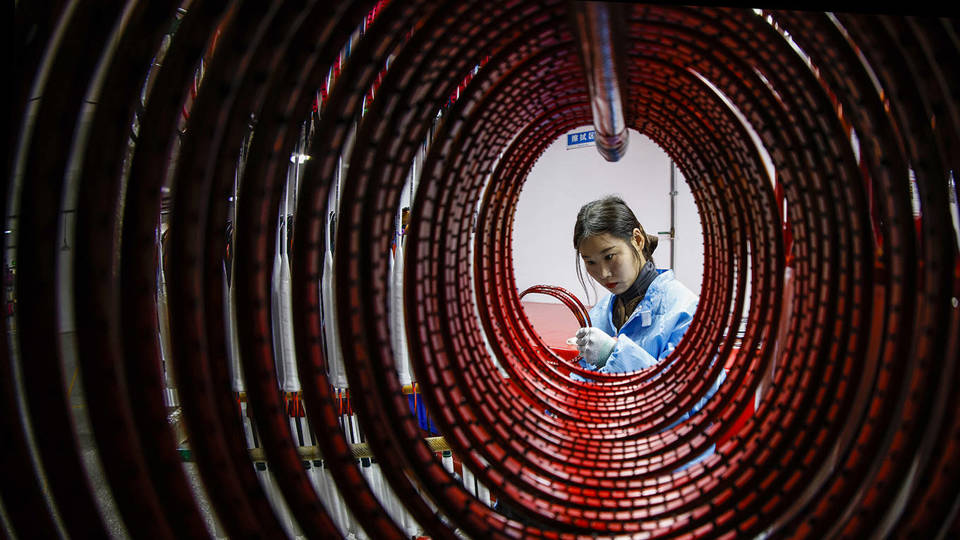
As the Persian Gulf burns, the world is faced with a critical moment that demands urgent attention. The simmering tensions between the United States and China, often referred to as a "cold war," have reached a tipping point. In this volatile landscape, de-escalation must become the global priority. However, to achieve this, it is imperative to confront and dismantle a powerful myth that has long clouded the narrative surrounding China's rise to prosperity: the notion that the country has cheated its way to success.
For years, this myth has persisted, suggesting that China's economic growth was not the result of hard work, innovation, or strategic planning, but rather a series of underhanded tactics and government manipulation. Critics argue that China's government artificially inflated its economy, subsidized industries, and engaged in currency manipulation to gain a competitive edge. They claim that China's rapid industrialization and technological advancements were not organic developments but rather the product of state-directed policies that distorted the global market.
However, a closer examination of China's history reveals a different story. The country's journey from a largely agrarian society to a global economic powerhouse was indeed marked by significant challenges and sacrifices. In the late 1970s, China embarked on a bold reform agenda under Deng Xiaoping, which transformed its economy from a centrally planned system to one that incorporated market elements. This shift was not without its struggles, as millions of people were displaced, and social unrest occasionally flared. Yet, the reforms laid the foundation for China's remarkable growth.
China's success can be attributed to a combination of factors, including a large and rapidly growing workforce, strategic investments in infrastructure and education, and a commitment to innovation. The government's role in guiding the economy was undeniable, but it was not synonymous with cheating. Instead, it reflected a pragmatic approach to addressing the country's unique challenges and seizing opportunities. For instance, China's focus on export-led growth was driven by the need to create jobs and reduce poverty, not to undermine global trade rules.
Moreover, the idea that China's economic policies were inherently unfair overlooks the systemic issues within the global economic order. Many of the same policies that are criticized in China, such as subsidies and state-owned enterprises, have been employed by other nations, including the United States, to protect their industries and maintain competitiveness. The criticism often stems from a lack of understanding of China's historical context and the challenges it faced in modernizing.
Furthermore, the notion that China's prosperity was achieved through deception ignores the significant investments the country has made in innovation and technology. China has become a global leader in areas such as renewable energy, artificial intelligence, and advanced manufacturing. These advancements are the result of massive state investments in research and development, as well as a culture of hard work and perseverance among Chinese citizens.
In reality, China's rise is a testament to its people's resilience and the effectiveness of its reforms. The country has not cheated its way to prosperity; rather, it has embraced a path of strategic planning, hard work, and adaptation. As the world grapples with the complexities of its relationship with China, it is crucial to move beyond the myths and recognize the complexities of the situation.
De-escalation of the cold war between the United States and China requires a mutual understanding and respect for each other's strengths and challenges. By acknowledging the truth about China's success, we can foster a more realistic and constructive dialogue. This, in turn, can help build a more stable and prosperous global order, one that acknowledges the contributions of all nations, including China, to the world's economic and technological progress.
In conclusion, the myth that China has cheated its way to prosperity is not only inaccurate but also counterproductive. It obscures the realities of China's economic transformation and perpetuates misunderstandings that fuel tensions. As the world confronts the challenges posed by the Persian Gulf crisis and the broader geopolitical landscape, it is essential to prioritize de-escalation and foster a more nuanced understanding of China's role in the global community. Only then can we work towards a future where cooperation and mutual respect replace unfounded accusations and misinformation.









