
Teachers union boss blasts Melania Trump's robot pitch: 'Every parent's nightmare'
The president of one of America’s most powerful teachers unions pushed back on Melania Trump’s comments that robots could become central to child education.
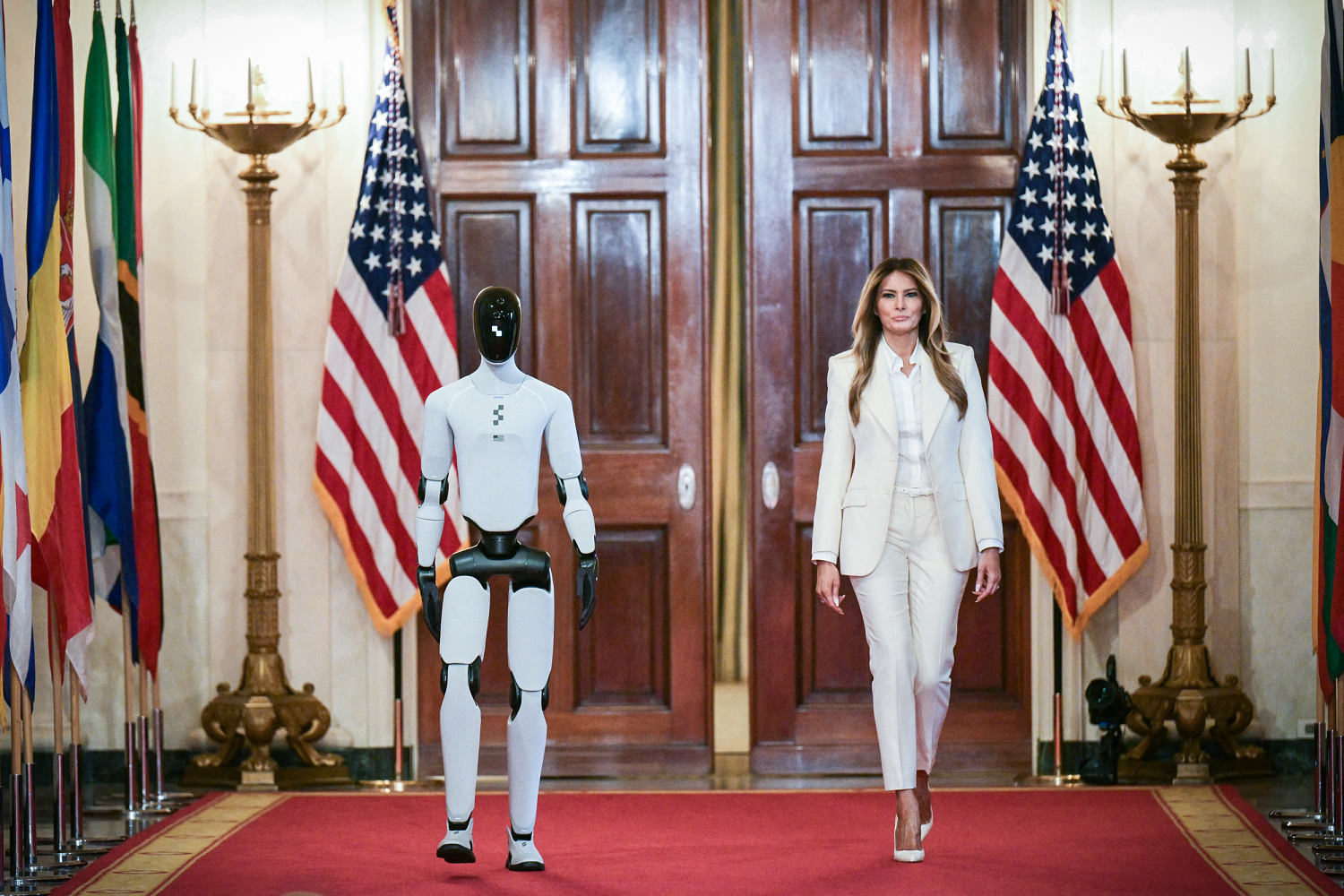
The president of one of America’s most powerful teachers unions has sharply criticized Melania Trump’s suggestion that robots could play a central role in child education. In a recent statement, the union leader described the idea as "every parent's nightmare," emphasizing the importance of human interaction in the classroom.
The comments from Melania Trump came during a high-profile event at the White House, where she walked alongside a humanoid robot as part of the Fostering the Future Together Global Coalition Summit. The summit aimed to explore the integration of technology in education, with a particular focus on preparing students for the challenges of the 21st century.
In response to the first lady’s remarks, the union president, who has been a vocal advocate for quality education and teacher rights, expressed deep concerns about the potential impact of such a shift. The union leader argued that while technology can be a valuable tool in the classroom, it should not replace the essential role of human teachers.
"Robots may be impressive, but they cannot replicate the empathy, understanding, and individualized attention that a dedicated teacher provides," the union president stated. "Our children need more than just a machine to guide them through their formative years. They need a caring adult who can adapt to their unique needs and help them develop into well-rounded individuals."
The union leader also highlighted the potential economic consequences of such a shift. If robots were to become central to education, it could lead to massive job losses among teachers and support staff. This, in turn, would have a ripple effect on communities that rely on education as a cornerstone of their economic stability.
Moreover, the union president warned that relying on robots for education could perpetuate existing inequalities. Not all students would have access to the same level of technology, leading to a widening gap between those who can afford advanced educational tools and those who cannot. This could result in a society that is even more divided than it is now.
Despite these concerns, proponents of integrating robots into education argue that it could lead to more personalized and efficient learning. They point to the ability of robots to provide consistent feedback and support students at their own pace. However, the union president dismissed these arguments, stating that "no machine can replace the human touch."
The debate over the role of technology in education is far from new, but Melania Trump’s recent comments have reignited the discussion. As the first lady continues to advocate for innovative approaches to learning, it will be interesting to see how her vision for the future of education evolves.
In the meantime, the teachers union remains steadfast in its commitment to defending the importance of human interaction in the classroom. The union president called on policymakers to prioritize investments in teachers and schools, rather than looking to technology as a silver bullet for educational reform.
"Our children deserve the best possible education, and that means investing in the people who are dedicated to their success," the union leader concluded. "Let us not forget that at the heart of every great educational experience is a teacher who cares."
As the debate continues, it is clear that both sides have valid points. While technology can undoubtedly enhance the learning experience, it must be used as a supplement to, rather than a replacement for, the vital role of human educators. Ultimately, the goal should be to create a balanced approach to education that values both the latest innovations and the enduring power of human connection.









