
Teachers union boss blasts Melania Trump's robot pitch: 'Every parent's nightmare'
The president of one of America’s most powerful teachers unions pushed back on Melania Trump’s comments that robots could become central to child education.
The president of one of America’s most powerful teachers unions has sharply criticized First Lady Melania Trump’s suggestion that robots could play a central role in child education. In a recent statement, the union leader described the idea as "every parent's nightmare," emphasizing the importance of human interaction in the classroom.
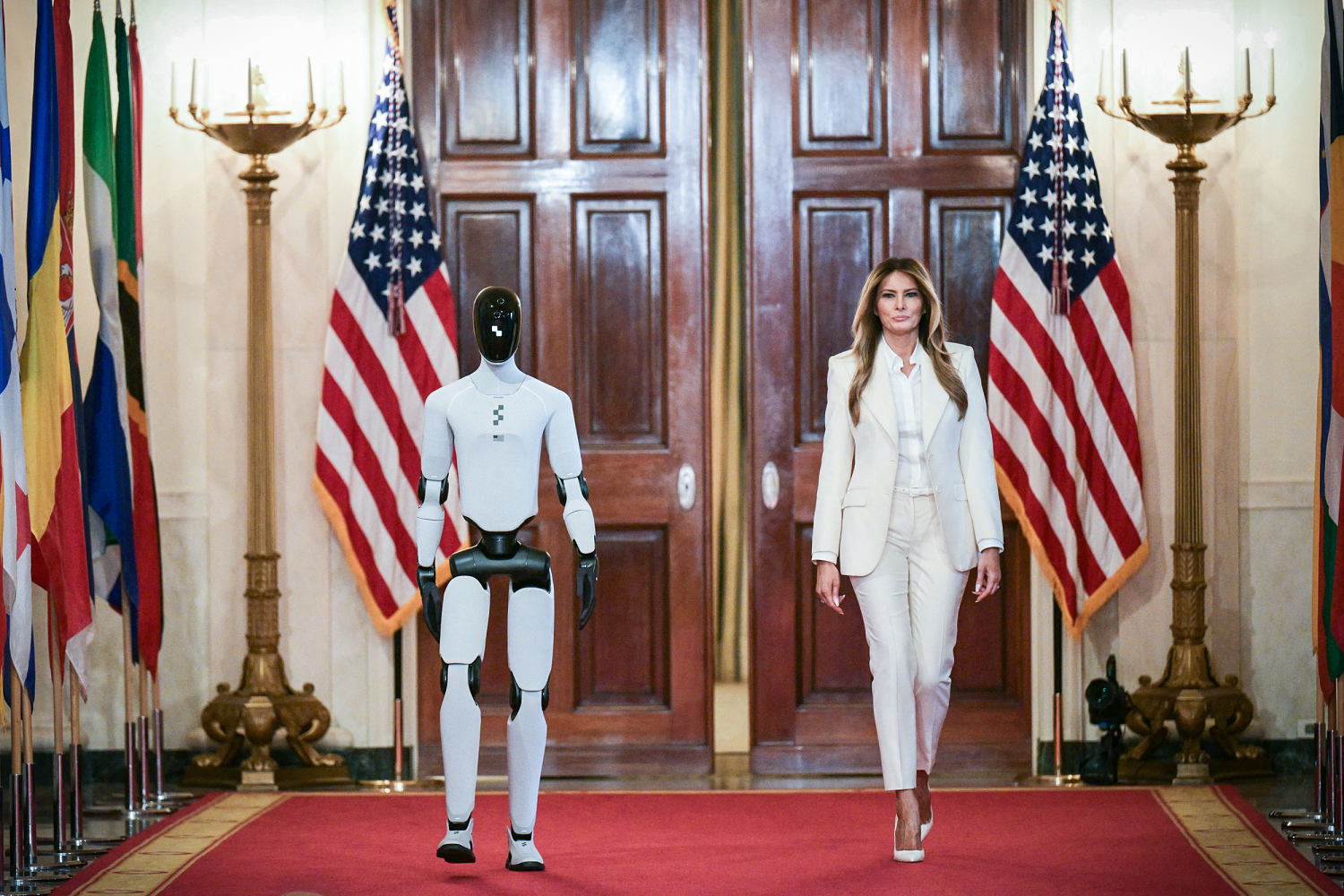
The comments from Melania Trump came during a high-profile event at the White House, where she walked alongside a humanoid robot as part of the Fostering the Future Together Global Coalition Summit. The summit aimed to explore the integration of technology in education and was attended by educators, policymakers, and industry leaders.
In her remarks, Melania Trump highlighted the potential of robots to assist in teaching and learning, particularly in areas where there is a shortage of qualified teachers. She argued that robots could provide personalized education and support diverse learning styles, ultimately enhancing the educational experience for students.
However, the president of the National Education Association (NEA), the largest teachers' union in the United States, has taken a starkly different view. In a statement released in response to Melania Trump's comments, the union leader expressed concerns about the impact of replacing human teachers with robots. They argued that such a shift would undermine the fundamental principles of education, which are rooted in empathy, understanding, and individualized attention.
The union leader further emphasized that teachers are not just educators but also mentors and role models for students. They argued that the unique relationship between a teacher and a student is crucial for a student's emotional and social development. Replacing this with a machine, they argued, would rob students of the opportunity to build essential life skills such as communication, collaboration, and critical thinking.
Moreover, the union leader raised concerns about the potential job losses for teachers if robots were to take over many of their roles. They pointed out that the teaching profession is not only about imparting knowledge but also about nurturing young minds and guiding them through challenges. This, they argued, cannot be replicated by machines.
The NEA president also questioned the feasibility of robots being able to adapt to the unique needs of every student. They noted that students come from diverse backgrounds and have varying learning paces and styles. While technology can be a valuable tool in the classroom, they argued, it should be used as a supplement to human teaching, not a replacement.
In response to the criticism, White House officials defended Melania Trump's comments, stating that the idea of integrating technology into education is not about replacing teachers but about enhancing their capabilities. They argued that robots could be used to augment teaching, allowing human educators to focus on more complex tasks such as problem-solving and critical thinking.
Despite this, the teachers' union remains unconvinced. The NEA president reiterated their stance that the core of education must remain human-centered. They called for a balanced approach that recognizes the value of both technology and human interaction in the classroom.
The debate over the role of robots in education is not new, but it has gained renewed attention in recent years as advancements in artificial intelligence have made such possibilities more realistic. While some see robots as a potential solution to the teacher shortage and a way to personalize education, others, like the NEA president, warn of the risks and potential downsides.
As the discussion continues, it is clear that the future of education will be shaped by a delicate balance between technology and human touch. The challenge for policymakers and educators will be to find a way to integrate technology in a way that enhances, rather than undermines, the educational experience for students.
In the meantime, the comments from Melania Trump and the strong reaction from the teachers' union highlight the ongoing tension between those who view technology as a transformative force in education and those who prioritize the irreplaceable value of human interaction. Only time will tell which perspective prevails, but one thing is certain: the future of education is poised for significant change.









