Tamil Nadu Election 2026: Women, Youth & First-Time Voters Trends - Wave That Could Decide The Result
Women now outnumber men in Tamil Nadu voters, making gender and Gen Z key in 2026 polls, with DMK, AIADMK, Vijay and Seeman vying through welfare and youth focused appeals.
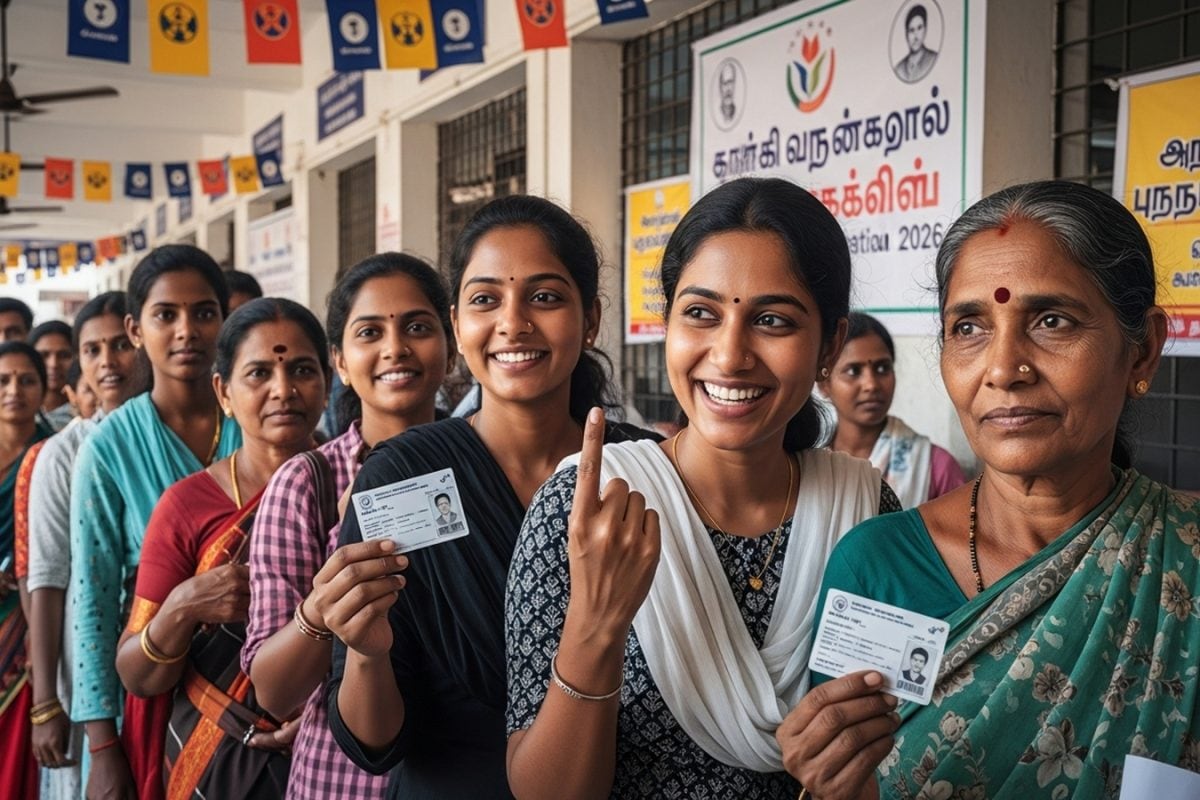
In the lead-up to the Tamil Nadu state elections scheduled for 2026, the political landscape is being reshaped by two significant demographic shifts: the increasing number of women voters and the growing influence of Gen Z, or the millennial generation. These trends are expected to play a pivotal role in determining the outcome of the elections, as the two major political parties, the Dravida Munnetra Kazhagam (DMK) and the All India Anna Dravida Munnetra Kazhagam (AIADMK), along with their respective leaders M.K. Stalin and Edappadi K. Palaniswami, are strategizing to appeal to these groups.
First and foremost, the demographic shift in the electorate is noteworthy. For the first time in Tamil Nadu, women now outnumber men in the voter population. This development is a reflection of the changing social dynamics in the state, where women's political participation has been steadily increasing. Historically, Tamil Nadu has been known for its high voter turnout, but the rise of women voters adds a new dimension to the electoral equation.
The DMK and AIADMK are acutely aware of the importance of this demographic change. Both parties have been actively engaging with women voters, recognizing that their support could be decisive in the upcoming elections. This has led to an increased focus on women's welfare issues, such as education, healthcare, and economic empowerment, in their campaigning.
In addition to the gender dynamics, the Gen Z generation, which includes voters aged 18-29, is expected to play a crucial role in the 2026 elections. This demographic group is the largest in the electorate and is characterized by its progressive outlook and digital-savvy nature. The DMK and AIADMK are thus striving to connect with this youthful electorate through innovative campaigning strategies that leverage social media and other digital platforms.
Both parties have also been focusing on welfare schemes that cater to the needs of the youth. For instance, the DMK has been emphasizing the importance of job creation and skill development, while the AIADMK has been highlighting its record in providing affordable healthcare and education.
The role of first-time voters in the 2026 elections cannot be understated. With a growing population and a higher literacy rate, the number of first-time voters is expected to be significantly high. These voters, who are likely to be influenced by social media and digital campaigns, are a key target for both the DMK and AIADMK.
In addition to these demographic trends, the personal appeal of the party leaders is also expected to play a significant role in the elections. The DMK's M.K. Stalin, the son of the late M. Karunanidhi, and the AIADMK's Edappadi K. Palaniswami, the son of the party's founder J. Jayalalithaa, are both vying for the support of the electorate. Their popularity, particularly among the youth and women, is expected to be a deciding factor in the elections.
The DMK's campaign has been particularly focused on the welfare of women and the youth. The party has been highlighting its record in implementing welfare schemes that benefit women, such as free healthcare and education. It has also been emphasizing the importance of digital literacy and job opportunities for the youth.
On the other hand, the AIADMK has been focusing on its record in providing affordable healthcare and education, as well as on its commitment to rural development. The party has also been emphasizing the importance of maintaining law and order and combating corruption.
The 2026 Tamil Nadu elections are thus expected to be a battle of ideas and policies, with the DMK and AIADMK vying for the support of women, the youth, and first-time voters. The outcome of these elections will be determined not only by the policies and promises made by the parties but also by their ability to connect with and appeal to these key demographic groups.
In conclusion, the Tamil Nadu elections of 2026 are shaping up to be a historic contest, with the increasing number of women voters and the growing influence of Gen Z expected to play a pivotal role in determining the outcome. The DMK and AIADMK are acutely aware of the importance of these demographic trends and are strategizing to appeal to women and the youth through welfare schemes and digital campaigns. The personal appeal of the party leaders, M.K. Stalin and Edappadi K. Palaniswami, is also expected to be a significant factor in the elections. As the electorate prepares to cast its vote, the future of Tamil Nadu and its political landscape hangs in the balance.