SC Raps Gujarat Police Over 20-Year Probe Delay, Sets 6-Week Deadline
India's Supreme Court has issued a stern rebuke to the Gujarat Police, criticizing a staggering 20-year delay in an investigation and mandating its completion within a strict six-week timeframe. Justices Karol and Masih underscored the judiciary's inability to
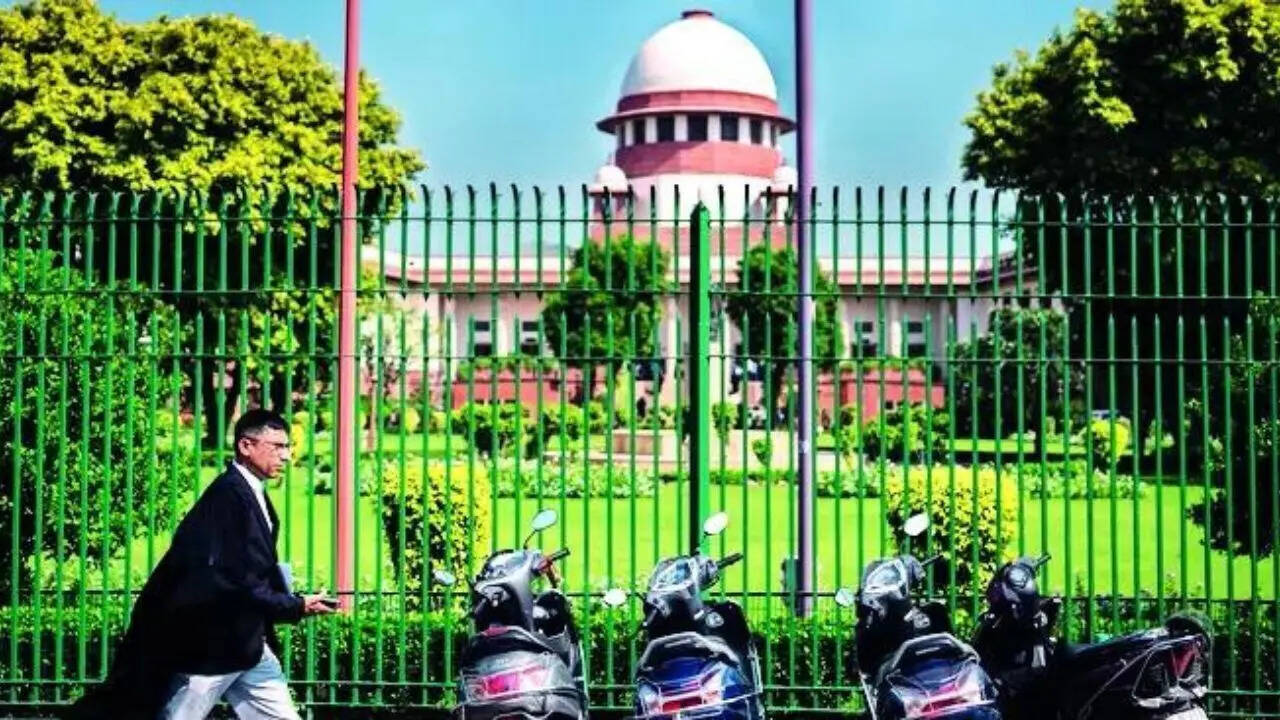
In a significant development underscoring the judiciary's commitment to timely justice, the Supreme Court of India has delivered a sharp rebuke to the Gujarat Police, castigating them for an extraordinary 20-year delay in completing an investigation. The apex court has not only expressed its profound displeasure but has also issued a stringent directive, ordering the state police force to conclude the long-pending probe within a strict timeframe of six weeks. This decisive intervention by the highest court of the land sends a clear message regarding accountability and efficiency within law enforcement agencies.
The bench, comprising Justices C.T. Ravikumar and A.S. Bopanna, articulated the Court's firm stance, emphasizing that constitutional courts cannot, under any circumstances, afford to ignore such prolonged and egregious delays in investigative processes. Their Lordships highlighted the fundamental principle that justice delayed is justice denied, particularly when the protracted nature of an investigation inflicts immense difficulty and hardship upon the complainant. This observation underscores the judiciary's role as a guardian of citizens' rights and its imperative to ensure that the wheels of justice turn with due diligence and speed.
The extraordinary duration of this particular delay – two decades – is a stark indicator of systemic issues that can plague investigative mechanisms. Such a prolonged period not only erodes public trust in the law enforcement apparatus but also severely compromises the efficacy and fairness of the judicial process. An investigation spanning twenty years raises critical questions about resource allocation, oversight, and the commitment to resolving cases in a timely manner, which is a cornerstone of any robust legal system.
The Supreme Court's concern extends beyond merely the delay itself. The bench specifically pointed to the seriousness of lost case records, an issue that can fundamentally undermine any attempt to achieve justice. The disappearance or misplacement of crucial documents, evidence, or statements can render an investigation futile, making it nearly impossible to establish facts, identify culprits, or provide redress to victims. This aspect of the Court's criticism highlights a deeper institutional challenge that requires urgent attention and systemic reforms to safeguard the integrity of judicial proceedings.
For a complainant, enduring a two-decade wait for an investigation to conclude represents an unimaginable ordeal. The "immense difficulty" mentioned by the Justices can manifest in various forms: emotional distress, financial burden, loss of faith in the system, and a perpetual state of uncertainty. The very purpose of the justice system is to provide resolution and closure, and a delay of this magnitude effectively denies these fundamental aspects, leaving individuals in limbo for an unacceptably long period. The Supreme Court's intervention, therefore, is a crucial step towards acknowledging and addressing the human cost of administrative and investigative inefficiencies.
The directive for "swift action" within six weeks is a powerful mandate. It demands a focused and expedited approach from the Gujarat Police to overcome the historical inertia and bring the investigation to a definitive conclusion. This timeline implies that the police must deploy all necessary resources, re-examine existing evidence, if any, and take decisive steps to reconstruct the case records or gather fresh information to complete the probe. It is a test of their capacity to respond effectively to judicial oversight and to demonstrate accountability.
This ruling by the Supreme Court serves as a significant precedent and a stern reminder to all law enforcement agencies across the nation about their constitutional obligation to conduct investigations efficiently and without undue delay. It reinforces the principle that procedural lapses, especially those leading to prolonged inaction, will not be tolerated by the higher judiciary. The emphasis on lost records also signals the need for better record-keeping, digitalization, and robust administrative practices within police departments to prevent such critical failures.
The broader implications of this ruling extend to strengthening public confidence in the judicial system. When the Supreme Court intervenes decisively to correct long-standing injustices and administrative failures, it reaffirms its role as the ultimate arbiter of justice and a protector of citizens' rights. The expectation is that this directive will prompt not just the Gujarat Police but other state police forces to review their pending cases, particularly those with significant delays, and implement measures to prevent similar situations from arising in the future.
Ultimately, the Supreme Court's firm stance on the 20-year investigative delay by the Gujarat Police, coupled with the strict six-week deadline, underscores the paramount importance of timely and transparent justice. It is a clear assertion that systemic inefficiencies and the loss of critical records cannot be allowed to impede the fundamental right of a complainant to a fair and expeditious investigation, thereby upholding the sanctity of the rule of law in India.