
StreetReaderAI: Towards making street view accessible via context-aware multimodal AI
Generative AI
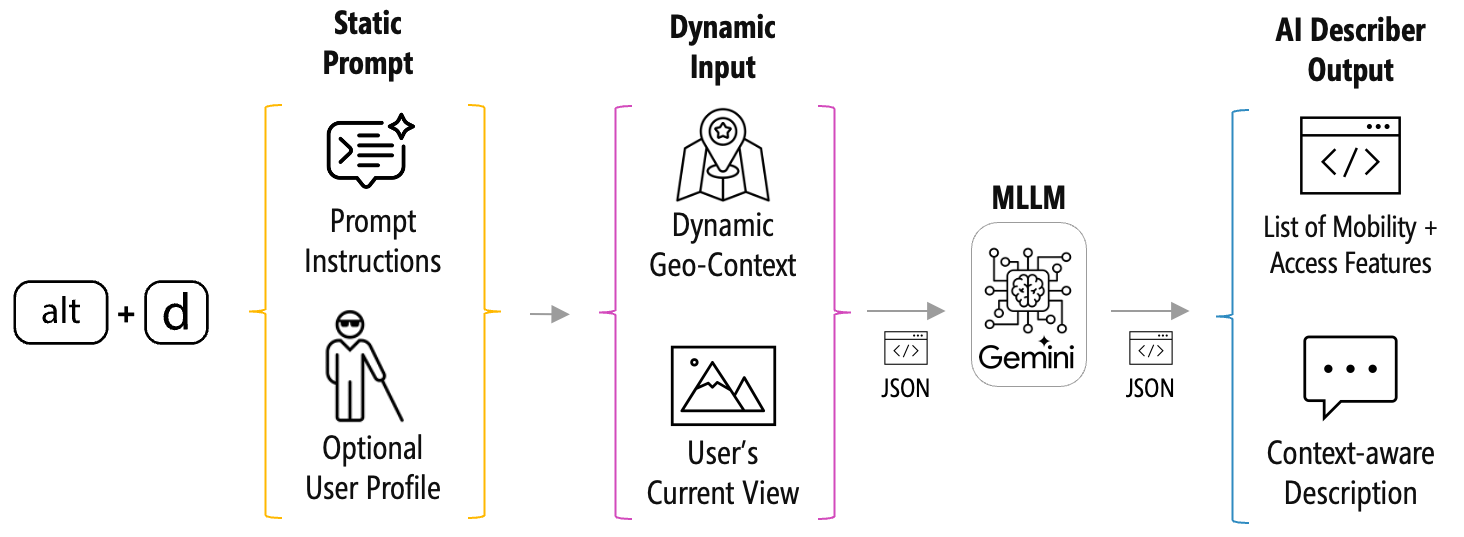
In recent years, the integration of artificial intelligence (AI) into various aspects of daily life has been transformative. One such innovation is StreetReaderAI, a project aimed at enhancing accessibility to street view imagery through the use of context-aware multimodal AI. This initiative is part of the broader generative AI movement, which focuses on creating systems capable of generating human-like text, images, and even videos. StreetReaderAI takes this a step further by leveraging AI to provide contextual insights and interpretations of street view data, making it more accessible to a wider audience.
The concept behind StreetReaderAI is rooted in the idea that street view imagery, while powerful, can be challenging to interpret, especially for individuals with visual impairments or those who rely on assistive technologies. Traditional street view platforms offer static images and limited textual descriptions, which may not fully capture the nuances of a location. StreetReaderAI addresses this gap by employing advanced AI algorithms to analyze street view data and generate contextual descriptions that are both detailed and user-friendly.
At the heart of StreetReaderAI is its multimodal approach, which combines visual, auditory, and textual data to create a comprehensive understanding of a scene. The system uses computer vision techniques to identify objects, landmarks, and even weather conditions within the street view images. Simultaneously, it processes ambient sounds, such as traffic noise or bird songs, to provide additional context about the environment. This multimodal analysis is then translated into natural language descriptions, allowing users to gain a deeper understanding of the scene they are viewing.
One of the key innovations of StreetReaderAI is its context-awareness. Unlike traditional systems that provide generic descriptions, StreetReaderAI is designed to understand the user's specific needs and preferences. For instance, if a user with a visual impairment is exploring a new city, the AI can prioritize descriptions of landmarks, road signs, and public transportation options. On the other hand, a tourist might receive more detailed information about nearby points of interest or historical landmarks. By tailoring the output to the user's context, StreetReaderAI ensures that the information is both relevant and actionable.
The development of StreetReaderAI is also driven by the growing interest in generative AI, which has shown remarkable capabilities in recent years. Generative AI models, such as those based on transformer architectures, are trained on vast amounts of data to generate coherent and realistic outputs. StreetReaderAI leverages these models to create descriptions that are not only factually accurate but also engaging and easy to understand. This approach not only benefits users with disabilities but also enhances the overall user experience for everyone, as the system can provide insights that might otherwise be missed.
The project is still in its early stages, with researchers and developers continuously refining the algorithms and expanding the system's capabilities. One of the main challenges lies in ensuring the accuracy and reliability of the generated descriptions. To address this, StreetReaderAI undergoes rigorous testing and validation, with human experts reviewing the outputs to identify and correct any errors. Additionally, the system is designed to learn from user feedback, allowing it to improve over time and better meet the needs of its users.
The potential applications of StreetReaderAI are vast, ranging from assisting individuals with visual impairments in navigating unfamiliar environments to enhancing the educational experiences of students and tourists. By making street view data more accessible and interpretable, the project has the potential to bridge gaps in information accessibility and promote greater inclusivity in digital spaces.
In conclusion, StreetReaderAI represents a significant step forward in the field of generative AI, demonstrating the potential of context-aware multimodal systems to enhance accessibility and understanding of street view imagery. As the technology continues to evolve, it holds the promise of transforming how we interact with digital environments and fostering a more inclusive digital landscape for all.









