
South Korea president says he regrets 'reckless' drones sent to North
South Korean President Lee Jae Myung expressed regret to Pyongyang Monday over drones sent into North Korea earlier this year, actions he called "irresponsible". Seoul initially denied any…
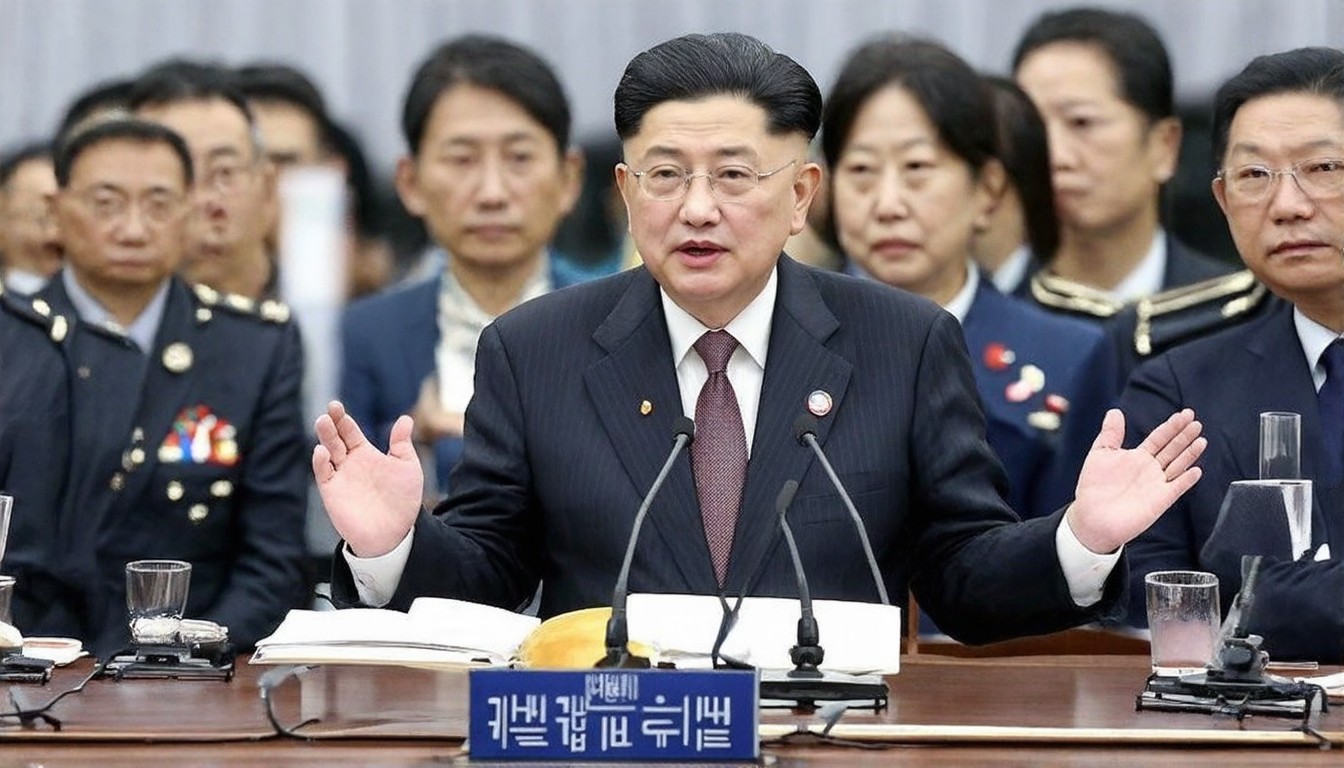
South Korean President Lee Jae Myung has publicly apologized to North Korea for the deployment of drones into its airspace earlier this year, describing the actions as "reckless" and "irresponsible." The admission of regret comes as a significant shift in tone from the South Korean government, which initially denied any involvement in the incidents.
The drones, which were reportedly sent into North Korean territory, were initially met with strong condemnation from Pyongyang, with the North Korean government accusing Seoul of provoking tensions on the Korean Peninsula. The situation escalated further when North Korea responded with its own military exercises, raising concerns about the potential for a renewed outbreak of hostilities between the two nations.
In a statement released on Monday, President Lee Jae Myung expressed deep regret for the actions taken by his administration, emphasizing that the drone deployments were not authorized and were instead carried out by a rogue faction within the South Korean military. He assured North Korea that such incidents would not be repeated and that his government was committed to maintaining peace and stability on the peninsula.
The initial denial from Seoul was met with skepticism from both North Korea and international observers, who pointed to evidence suggesting that the drones were indeed South Korean-made and operated. The revelation of the rogue operation has sparked an internal investigation within the South Korean military, with several high-ranking officials reportedly facing disciplinary action for their alleged involvement.
The apology comes at a time when relations between the two Koreas are already strained due to ongoing tensions over nuclear weapons and missile tests conducted by North Korea. President Lee Jae Myung's administration has been working to improve diplomatic ties, with recent high-level talks aimed at reducing military tensions and promoting economic cooperation.
The drone incident has complicated these efforts, with North Korea demanding a full explanation and compensation for any damage caused. In response, President Lee Jae Myung has pledged to conduct a thorough investigation and to take punitive measures against those responsible for the operation. He also reiterated South Korea's commitment to the Korean Demilitarized Zone (DMZ) as a buffer zone between the two countries, emphasizing that such unauthorized actions would not be tolerated in the future.
The international community is closely monitoring the situation, with some analysts warning that the drone deployment could lead to a further deterioration in relations between the two Koreas. Others, however, view the apology as a positive step towards de-escalation and a chance to rebuild trust between the adversaries.
As tensions remain high, both governments are expected to engage in further negotiations to address the incident and prevent similar provocations in the future. The apology from President Lee Jae Myung serves as a reminder of the delicate balance required in maintaining peace on the Korean Peninsula, where even a single misstep can have far-reaching consequences.
In the coming weeks, it will be crucial for both sides to demonstrate a willingness to engage in constructive dialogue and to prioritize stability over confrontation. The drone incident serves as a stark reminder of the need for vigilance and restraint in managing the complex relationship between North and South Korea, a relationship that has been shaped by decades of conflict and division.
As the two nations grapple with the aftermath of the drone deployment, the path forward will require careful navigation of sensitive issues and a shared commitment to peace. The apology from President Lee Jae Myung offers a glimmer of hope for improved relations, but it remains to be seen whether the gesture will be enough to bridge the divide and pave the way for a more stable future on the Korean Peninsula.









