South Delhi Hotel Fire: 8 Dead, Safety Lapses Exposed
A tragic fire in a Malviya Nagar hotel has resulted in the deaths of eight members of the Aggarwal family from Gurugram, who were in Delhi for medical treatment. The devastating incident, which rapidly engulfed the narrow five-floor building, has brought criti
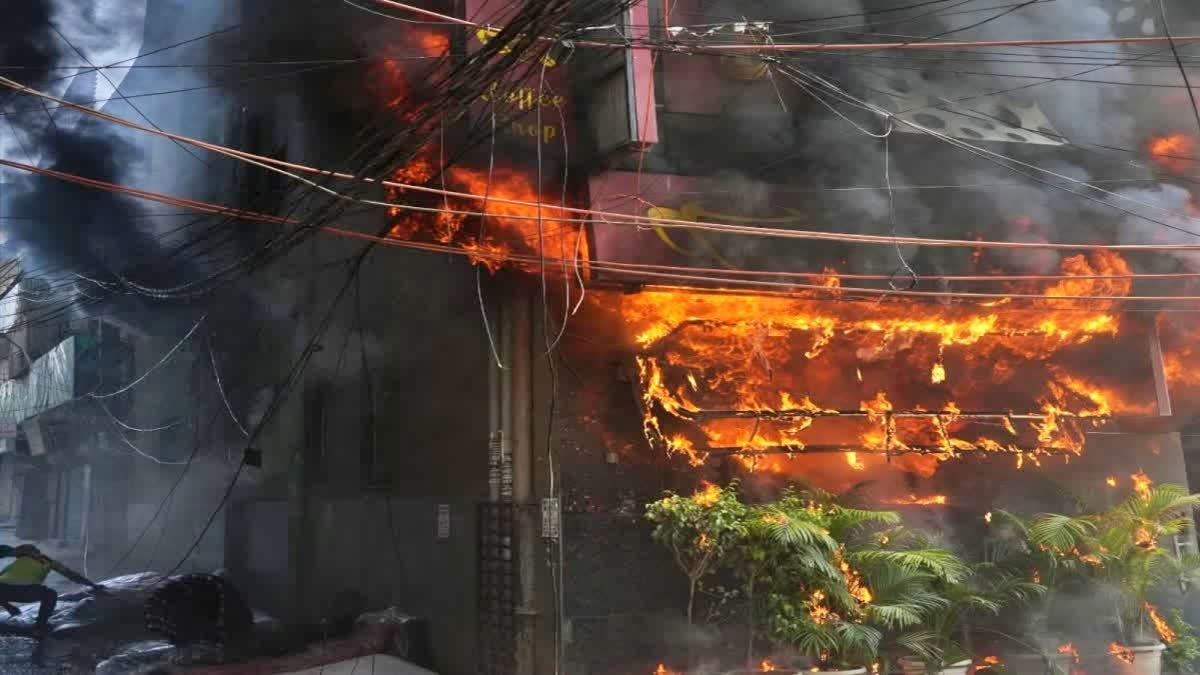
A profound tragedy has struck South Delhi, as a devastating fire at a hotel in Malviya Nagar claimed the lives of eight members of the Aggarwal family. Hailing from Gurugram, the family was reportedly visiting the capital for critical medical reasons, adding a layer of poignant sorrow to an already heartbreaking incident. The inferno, which reportedly erupted around 8:30 am, rapidly engulfed the narrow, five-floor building where the family was lodged, highlighting severe concerns about urban safety standards and emergency preparedness in commercial accommodations.
The loss of an entire family unit under such dire circumstances sends shockwaves across the region, prompting widespread grief and calls for immediate action. The Aggarwal family's journey to Delhi, undertaken with the hope of medical care, ended in an unimaginable catastrophe. This incident underscores the vulnerability of individuals and families who rely on temporary accommodations in bustling metropolitan centres, assuming a basic level of safety and adherence to regulatory norms. The community in Gurugram, from where the family originated, is undoubtedly grappling with immense sorrow and a sense of profound loss, as they come to terms with this sudden and tragic event.
Reports indicate the fire spread with alarming speed through the multi-storey structure. The description of the building as "narrow" suggests potential challenges for escape routes and fire suppression efforts, which are critical factors in containing such emergencies and ensuring occupant safety. Rapid fire propagation in commercial buildings often points towards issues with construction materials, lack of compartmentalization, or the absence of effective fire detection and suppression systems. These elements become particularly crucial in densely populated urban areas where buildings are often closely packed, increasing the risk of rapid spread and complicating rescue operations.
This devastating event has, according to initial assessments from the source, exposed major safety lapses within the hotel's operations or infrastructure. Such an outcome typically prompts a rigorous examination of fire safety protocols, building code compliance, and the efficacy of regulatory oversight. Hotels, by their very nature, host a transient population, many of whom are unfamiliar with the building's layout, making it imperative for these establishments to maintain the highest standards of safety, including clearly marked exits, functional fire alarms, and trained staff capable of guiding guests during an emergency.
The broader context of urban development in cities like Delhi often involves a mix of old and new constructions, with varying adherence to modern safety standards. The incident in Malviya Nagar serves as a stark reminder of the critical importance of regular and unannounced inspections by municipal and fire safety authorities. It raises pertinent questions about how frequently such establishments are audited for compliance with fire safety certificates, structural integrity, and the presence of essential safety equipment like sprinklers, smoke detectors, and emergency lighting. The lives lost in this tragedy underscore the severe consequences of any laxity in these crucial areas.
Following an incident of this magnitude, a comprehensive investigation is invariably launched to ascertain the precise cause of the fire and to identify any specific points of failure. This probe would typically involve forensic analysis of the fire scene, examination of the hotel's operational licenses, safety certifications, and maintenance records. Furthermore, interviews with survivors, staff, and first responders would be crucial in piecing together the sequence of events that led to such a catastrophic loss of life. The findings of such an investigation are vital not only for accountability but also for informing future policy and enforcement measures.
The tragic deaths of eight individuals from a single family underscore the urgent need for a renewed focus on public safety in commercial establishments across the nation. For countless visitors who travel to major cities for various purposes, including medical treatment, hotels represent a temporary home. The expectation of safety and security in these spaces is fundamental. This incident should serve as a powerful catalyst for authorities to re-evaluate and reinforce fire safety regulations, ensuring that all hotels, guesthouses, and similar accommodations strictly adhere to the prescribed norms, thereby safeguarding the lives of their patrons.
The profound grief experienced by the Aggarwal family's relatives and friends, coupled with the shock felt across the wider community, highlights the deep human cost of such disasters. While investigations will undoubtedly seek to assign responsibility and implement corrective measures, the immediate aftermath is marked by an overwhelming sense of loss and sorrow. The memory of a family, seeking health and hope, being tragically cut short in a place meant to offer respite, resonates deeply, calling for collective introspection on urban safety.
Preventative measures are the cornerstone of fire safety. This includes not just the installation of advanced fire suppression systems and alarms, but also the regular training of hotel staff in emergency response procedures, the clear demarcation and maintenance of unobstructed escape routes, and the conduct of periodic fire drills. Guests too, play a role by familiarizing themselves with emergency exits upon check-in. However, the primary onus remains on hotel management and regulatory bodies to ensure a safe environment, particularly in buildings described as "narrow" and multi-storied, where escape can be challenging.
In conclusion, the devastating fire in a South Delhi hotel, which claimed the lives of eight members of the Aggarwal family, stands as a grim reminder of the critical importance of stringent safety standards and their unwavering enforcement. As the nation mourns this profound loss, there is an urgent imperative for all stakeholders – hotel operators, regulatory authorities, and urban planners – to collaborate effectively. The goal must be to prevent such heart-wrenching tragedies from recurring, ensuring that every establishment offering public accommodation prioritizes safety above all else, thereby protecting lives and upholding public trust.