
Sonar on stock smartwatches leads to hand-tracking advancement
Imagine tapping your thumb and index finger together twice to skip to the next song or clicking around your laptop or desktop computer without a mouse, using discreet finger motions. New first-of-its-kind wearable technology from researchers at Cornell and KAIST, in South Korea, brings that vision closer to reality. The system, called WatchHand, equips off-the-shelf smartwatches with AI-powered micro sonar capable of tracking hand movements.
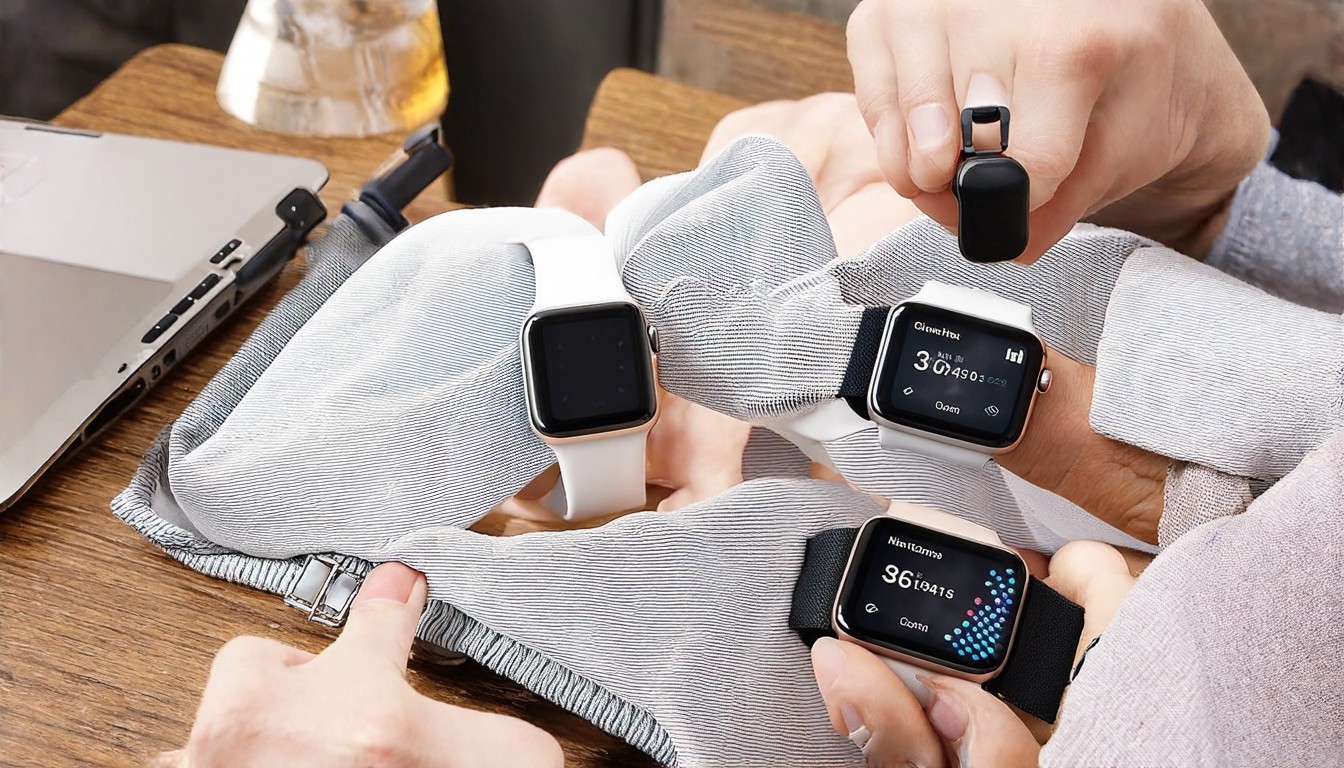
In a groundbreaking development that could revolutionize how we interact with technology, researchers at Cornell University and Korea Advanced Institute of Science and Technology (KAIST) have created a new wearable technology called WatchHand. This innovative system equips off-the-shelf smartwatches with AI-powered micro sonar, enabling them to track hand movements with unprecedented precision.
The concept behind WatchHand is simple yet transformative. By using discreet finger motions, users can perform actions such as skipping to the next song on their smartphone or navigating a laptop or desktop computer without the need for a mouse. This hands-free approach not only enhances convenience but also offers a more intuitive and natural way to interact with digital devices.
The technology behind WatchHand is equally impressive. The researchers have developed a micro sonar system that can be integrated into existing smartwatches. This sonar emits ultrasonic waves, which bounce off the user's hand and are then detected by the watch's sensors. By analyzing the time it takes for the waves to return and the changes in their frequency, the AI-powered system can accurately track the position and movement of the hand in three-dimensional space.
One of the key advantages of WatchHand is its compatibility with off-the-shelf smartwatches. This means that users do not need to purchase a new device to experience the benefits of hand-tracking technology. Instead, they can simply download a software application that enables the smartwatch to function as a hand-tracking device. The system is designed to be easily customizable, allowing users to map specific finger motions to various actions, such as swiping left or right to navigate a webpage or double-tapping to pause and play music.
The development of WatchHand is the result of years of research by the teams at Cornell and KAIST. The researchers have worked closely together to refine the sonar technology and the AI algorithms that process the data. They have also conducted extensive user testing to ensure that the system is both accurate and user-friendly.
The potential applications of WatchHand are vast. In addition to the examples mentioned earlier, users could use hand-tracking gestures to control smart home devices, such as adjusting the thermostat or turning on lights. The technology could also be used in healthcare settings to monitor patients' hand movements and detect early signs of neurological disorders.
While WatchHand represents a significant leap forward in wearable technology, there are still challenges to overcome. One concern is the energy consumption of the sonar system. Researchers are working to optimize the technology to minimize power draw, ensuring that it can function for an extended period on a single charge. Additionally, the system must be made more robust to handle a wide range of hand sizes and shapes.
Despite these challenges, the potential benefits of WatchHand are undeniable. By enabling hands-free interaction with digital devices, the technology could improve productivity, enhance accessibility for people with disabilities, and simplify everyday tasks. As the research continues, WatchHand has the potential to become a standard feature in smartwatches and other wearable devices, transforming the way we live and work.
In conclusion, the WatchHand system, developed by researchers at Cornell and KAIST, represents a major breakthrough in wearable technology. By equipping smartwatches with AI-powered micro sonar, the technology allows for precise tracking of hand movements, enabling users to interact with digital devices in a more intuitive and natural way. While there are still hurdles to overcome, the potential applications of WatchHand are vast, and it has the potential to revolutionize the way we use technology in our daily lives.









