
Single metasurface could generate record numbers of trapped neutral atoms
Technique boosts prospects for building quantum computers with more than 100,000 qubits The post Single metasurface could generate record numbers of trapped neutral atoms appeared first on Physics World .
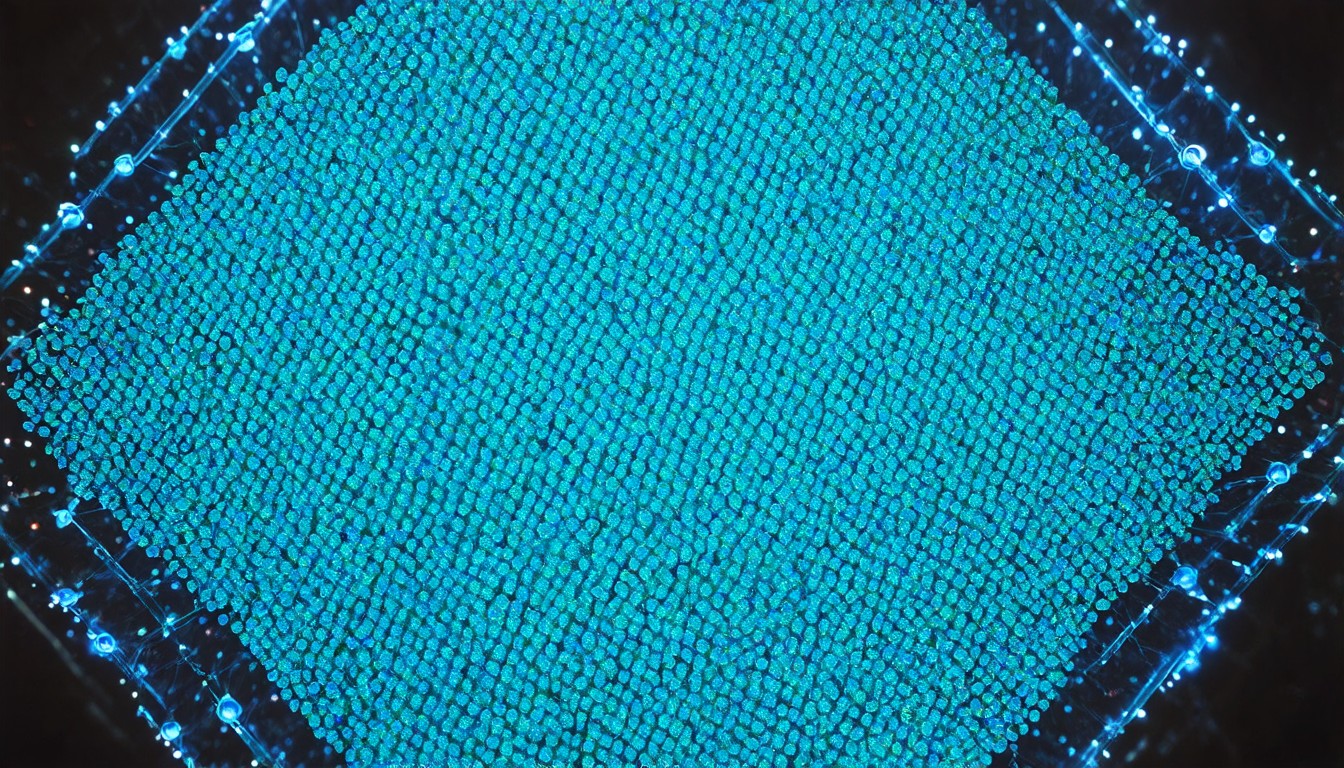
Physicists in China have made a significant breakthrough in the field of quantum computing by demonstrating that an optical metasurface can individually trap up to 78,400 neutral atoms. This achievement, which was published in Chinese Physics Letters, could pave the way for the development of large-scale quantum computers with more than 100,000 qubits. The method, developed by researchers at Tsinghua University, is similar to one independently demonstrated by a team at Columbia University in the US.
Arrays of trapped neutral atoms are widely used in physics research and are considered a promising platform for quantum computing. However, their scalability has been a major challenge. Traditional components, such as spatial light modulators (SLMs) and acousto-optic deflectors (AODs), can only create around 10,000 atom traps at any one time, limiting the number of atomic qubits to 10,000. This bottleneck has hindered progress in building quantum computers with the capacity to outperform classical systems.
To address this issue, physicist Zhongchi Zhang and his colleagues replaced SLMs and AODs with two-dimensional arrays of metasurfaces. Metasurfaces are artificial nanostructures that manipulate light in a manner similar to traditional optics, but with far less bulk. The researchers used a method known as the weighted Gerchberg-Saxton algorithm to design a metasurface made up of nanoscale pillars. This metasurface can transform a single input laser beam into a 280 x 280 array, capable of trapping a large number of atoms.
The metasurface was constructed from silicon nitride using electron-beam lithography and reactive ion etching. Both techniques are compatible with standard complementary metal–oxide–semiconductor (CMOS) manufacturing processes, ensuring high reproducibility and scalability. The resulting nanoscale, light-manipulating, pixel-like structures act like a superposition of tens of thousands of flat lenses. When a laser beam hits these "lenses," they produce a unique pattern that contains tens of thousands of atom traps.
This breakthrough not only addresses the scalability issue in trapped neutral atom arrays but also opens up new possibilities for quantum computing research. The ability to trap a record number of neutral atoms could significantly enhance the performance and capabilities of quantum computers. The use of metasurfaces, which are compatible with existing manufacturing techniques, further underscores the potential for widespread adoption and integration into quantum computing systems.
While the research is still in its early stages, the demonstration of trapping 78,400 neutral atoms using a single metasurface marks a significant milestone in the quest for large-scale quantum computers. As the field continues to evolve, advancements in trapped neutral atom technology will play a crucial role in realizing the full potential of quantum computing. The collaboration between Chinese and American researchers also highlights the global effort to push the boundaries of quantum technology and accelerate its development.
In conclusion, the development of an optical metasurface capable of trapping a record number of neutral atoms represents a major leap forward in the field of quantum computing. By overcoming the scalability limitations of traditional components, this innovative approach could enable the creation of quantum computers with more than 100,000 qubits. The compatibility of metasurfaces with existing manufacturing processes further ensures that this technology can be readily integrated into future quantum computing systems, paving the way for a new era of computational power and scientific discovery.








