Shock as CERN antiproton lorry vanishes in staff car park
Truck was used last month to transport 92 antiprotons around CERN The post Shock as CERN antiproton lorry vanishes in staff car park appeared first on Physics World .
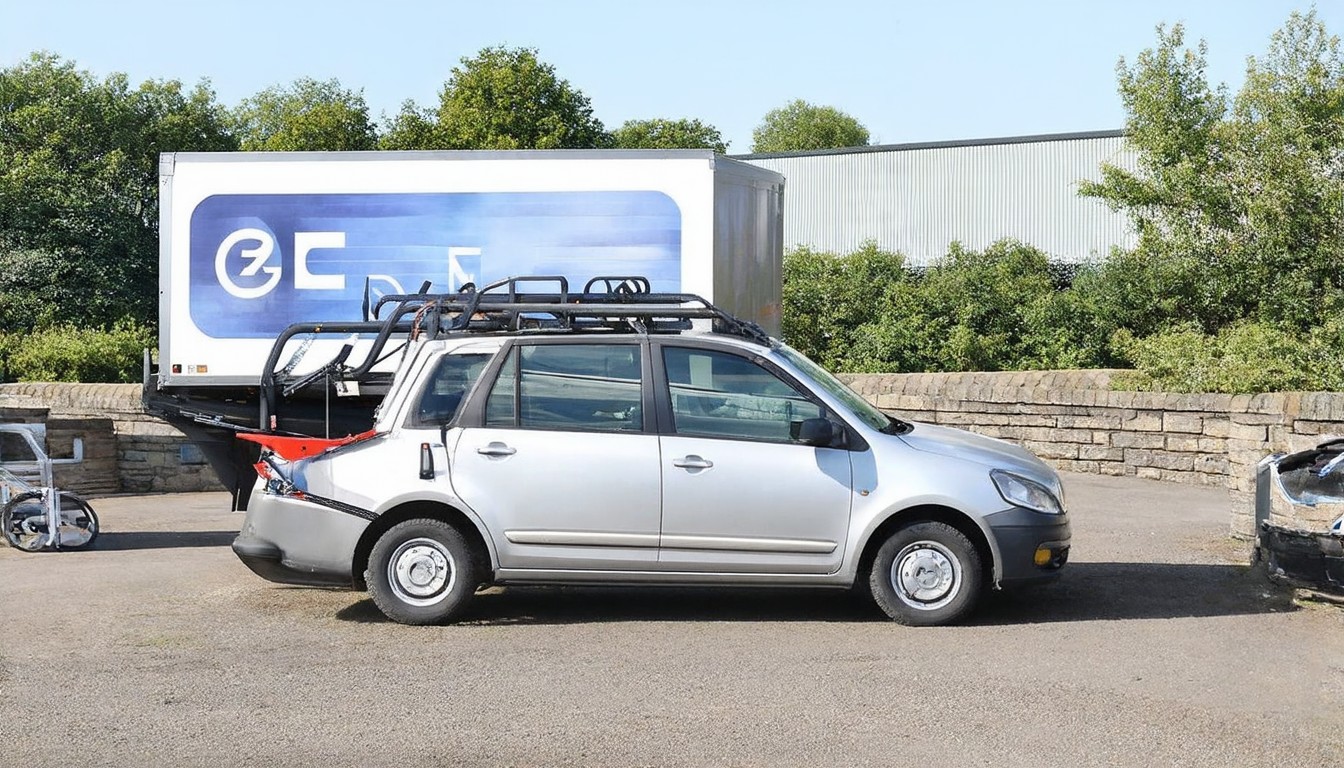
Researchers at the CERN particle-physics lab near Geneva were left in shock when a lorry containing a vial of antiprotons vanished from the main CERN car park. The lorry, used by the Baryon-Antibaryon Symmetry Experiment (BASE) to transport 92 antiprotons around the CERN site last month, had been left parked after the experiment concluded. However, when the researchers returned the following morning, the lorry was nowhere to be found.
The antiprotons were stored in a specialized container: a cryogenically-cooled Penning trap made of gold-plated cylindrical electrode stacks crafted from oxygen-free copper, surrounded by a superconducting magnet bore. This intricate setup was designed to safely hold the antimatter particles, which are known to annihilate upon contact with their matter counterparts, releasing a tremendous amount of energy.
Initial suspicions about the lorry's disappearance fell on visiting US researchers from Fermilab, a renowned particle physics laboratory. However, a thorough review of CCTV footage by CERN scientist Vittoria Vetra revealed a different explanation. The footage showed that the lorry had been left overnight with the handbrake off. Vetra admitted that she should have paid more attention, as she was distracted by reaching into her bag to retrieve her baguette lunch.
CERN lorry driver Herwig Chopper, who was in charge of the antiproton transport, explained that after the test run, he had encountered a pine marten dashing across the car park. In an attempt to help the stricken animal, Chopper left the truck to get assistance, inadvertently leaving the handbrake off. The lorry began to roll slowly towards an identical vehicle parked nearby, which contained protons. This proton-carrying lorry had been used in 2024 for a successful transport of protons across the lab's campus.
Tragically, the two trucks collided, resulting in an intense flash of light that dazzled the CCTV camera. The light was so powerful that it was even detected at CERN's Antiproton Proton RecoIL-1 (APRIL-1) experiment, located just a few hundred meters away. Initial analysis of the event suggested that the collision had caused the antiprotons and protons to annihilate each other, converting their mass into energy in accordance with Einstein's famous equation, E=mc².
The incident has raised questions about the safety protocols in place for handling antimatter particles at CERN. While the lab is renowned for its pioneering research in particle physics, this unexpected accident serves as a stark reminder of the potential dangers associated with working with such exotic substances. The BASE collaboration has since issued a statement expressing disappointment and vowing to review their procedures to prevent similar incidents in the future.
Meanwhile, the CERN community is left to grapple with the implications of this unusual event. The antiproton lorry's disappearance has become a topic of conversation among scientists and staff, with many wondering how such a high-stakes situation could have unfolded so tragically. As the dust settles, one thing is clear: the world of particle physics is once again reminded of the delicate balance between discovery and risk.