
Self-healing materials could make automobile parts last over 100 years
Scientists have created a material with the ability to repeatedly and autonomously repair cracks The post Self-healing materials could make automobile parts last over 100 years appeared first on Physics World .
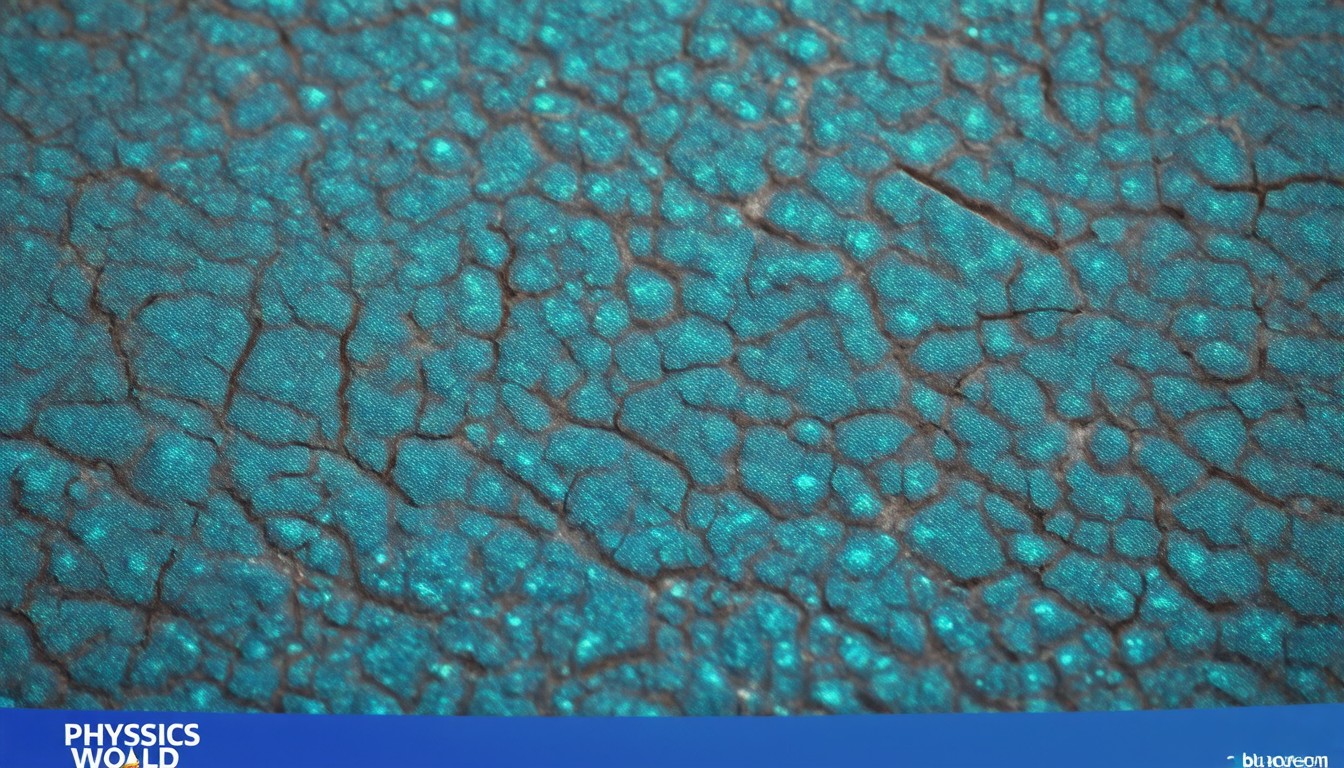
Scientists at North Carolina State University and the University of Houston have made a groundbreaking breakthrough in materials science, creating a composite material that can autonomously and repeatedly repair cracks. This development, published in the Proceedings of the National Academy of Sciences, has the potential to extend the lifespan of aircraft and automotive parts by over a century.
Composite materials, which combine two or more components to achieve balanced strength, flexibility, and durability, are widely used in industries such as aerospace, naval, and wind energy. A prime example of a natural composite is bone, which consists of flexible collagen fibers and stiff minerals. Synthetic analogs, known as fiber-reinforced polymers (FRPs), embed strong fibers within a polymer matrix to achieve similar advantages. However, while bonding multiple layers in FRPs enhances strength, it also makes the material susceptible to interlaminar delamination, or the separation of layers, which is one of the most common and life-limiting failure modes in these materials.
Lead researcher Jack Turicek and his team have drawn inspiration from nature's remarkable ability to autonomously and repeatedly heal from delamination. They achieved this feat in synthetic materials by employing a method called "thermal remanning." The process involves embedding a healing agent, poly(ethylene-co-methacrylic acid) or EMAA, into a glass-fibre epoxy-matrix composite during curing. This forms strong covalent bonds between EMAA and the epoxy.
To test their innovative material, the researchers systematically created a fracture by applying controlled tensile loading until the fracture reached 50 mm. To initiate the healing process, they warmed the material using built-in electrical heaters. The heat vaporized small water bubbles created during the initial curing process, generating a microporous network that physically expanded and spread the EMAA into the fracture. This "pressure delivery mechanism" allowed the material to autonomously repair the crack.
The self-healing capability of this composite material could revolutionize the durability of automotive and aerospace components, significantly reducing maintenance costs and environmental impact. By extending the lifespan of critical parts, this technology not only enhances safety but also contributes to a more sustainable future. As the research continues, the potential applications of self-healing materials are vast, ranging from infrastructure to medical devices, offering a new era of resilience in engineering and design.








