Seeds connecting communities for food security and sovereignty in Quintana Roo
What to read next: Planting Better Seeds a Key for Mexico’s Food Security | Why women are central to resilient food systems | From the Amazon to Mesoamerica: women, science, and policy are shaping resilient agri-food systems in Latin America | CIMMYT and Cargill Mexico announce second food security and sustainability awards
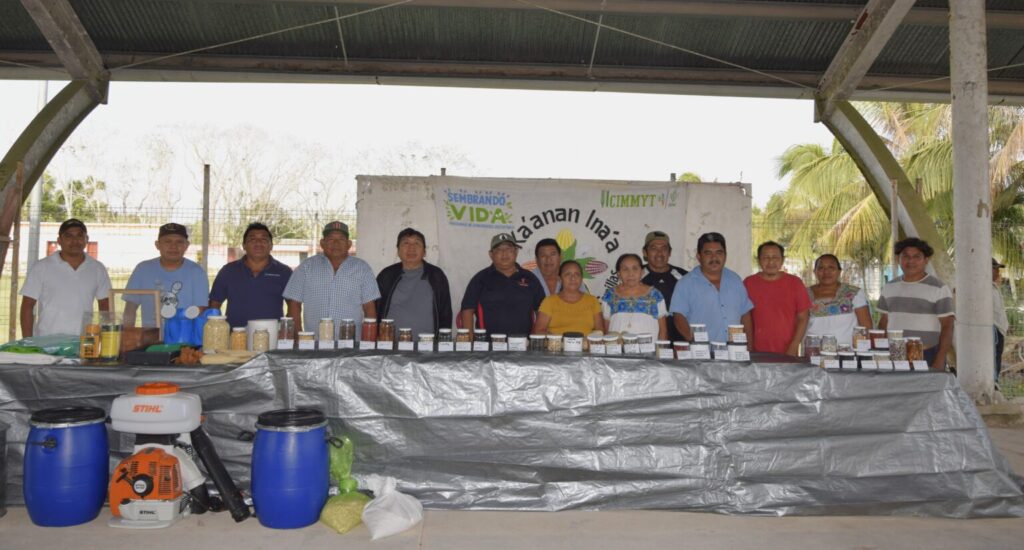
In the face of escalating challenges to agrifood systems, the State of Quintana Roo in Mexico is pioneering a unique approach to food security and sovereignty through the collaboration of science, public policy, and community action. The Government of Quintana Roo, in partnership with the State Food Security Agency (ASAQROO), the Institute of Social and Solidarity Economy (IESSOL), and the Ministry of Welfare (SEBIEN), is working alongside the International Maize and Wheat Improvement Center (CIMMYT) to strengthen food security and sovereignty in rural communities. This initiative, part of the project “Food and Nutritional Security for Rural Communities in the State of Quintana Roo,” focuses on innovative solutions grounded in agronomic science and co-designed with local communities to promote sustainable development and enhance the resilience of production systems.
Central to this effort are the new seed fairs being held across the state. These events bring together community leaders, families who safeguard agricultural knowledge, and other local actors in a shared space for exchange, learning, and connection. Seed fairs are not merely markets; they are vibrant hubs where ancestral knowledge, cultural identity, and sustainable agricultural practices converge. Each seed shared represents generations of care, adaptation, and learning. Participants exchange not only varieties of maize, beans, or squash but also knowledge on how to plant, conserve, and improve seed quality. These gatherings also strengthen relationships among community members, fostering a sense of collective identity and shared purpose.
Meliza Peña, a research associate in seed systems and value chains at CIMMYT, explains that seed fairs are spaces where rural communities can exchange, gift, or sell seeds, but also share other products from the milpa and build community. One such event took place in Tres Garantías, where Don Miguel and Doña Dora participated, offering a variety of fresh produce from their farm alongside maize, legume, and squash seeds from their milpa. These seed fairs are part of a broader strategy to address food insecurity and promote food sovereignty by empowering local communities with the knowledge and resources they need to thrive.
This collaboration between the state government and CIMMYT is designed to create sustainable development that responds to local challenges and strengthens the resilience of production systems. By co-designing innovations with communities, the project ensures that solutions are tailored to the specific needs and contexts of rural Quintana Roo. This approach not only enhances food security but also preserves the cultural heritage and agricultural knowledge that have been passed down through generations.
The success of these seed fairs highlights the importance of women in resilient food systems. Women often play a pivotal role in agricultural practices, particularly in milpa systems, which are central to the food security of many rural communities. By participating in seed fairs and sharing their knowledge, women contribute to the preservation of traditional agricultural practices and the development of sustainable food systems.
The efforts in Quintana Roo are part of a broader trend in Latin America, where women, science, and policy are shaping resilient agri-food systems. Initiatives like the CIMMYT and Cargill Mexico Food Security and Sustainability Awards further underscore the commitment to fostering innovation and collaboration in the pursuit of food security and sustainable development.
In conclusion, the seed fairs in Quintana Roo represent a unique model for addressing food security and sovereignty by combining agronomic science with community action. These events not only promote the exchange of seeds and knowledge but also strengthen community bonds and preserve cultural heritage. By prioritizing the needs and contributions of local communities, this initiative demonstrates a sustainable and inclusive approach to food security that can serve as a blueprint for other regions facing similar challenges.