
Home TechnologyScientists uncover the brain’s hidden learning blo...
Technology⭐ Featured

Scientists uncover the brain’s hidden learning blocks

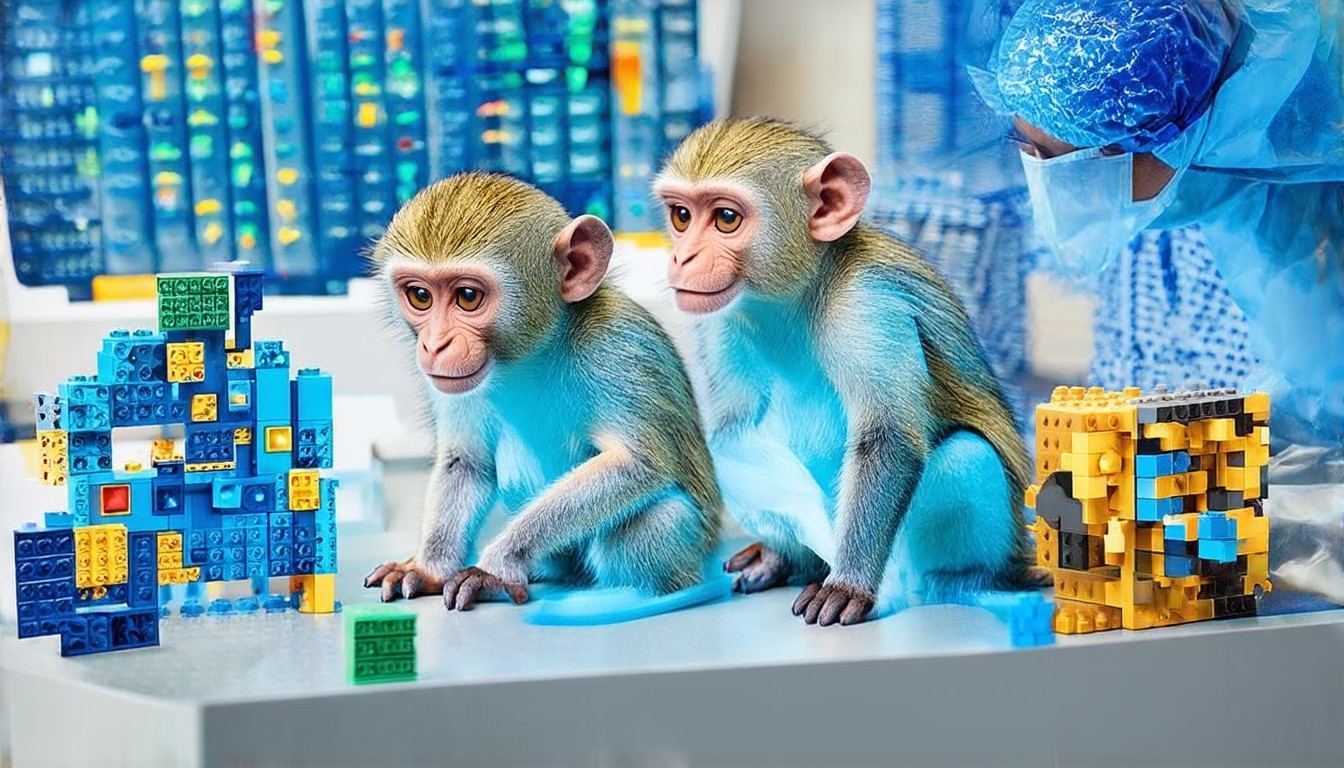
Princeton researchers found that the brain excels at learning because it reuses modular “cognitive blocks” across many tasks. Monkeys switching between visual categorization challenges revealed that the prefrontal cortex assembles these blocks like Legos to create new behaviors. This flexibility explains why humans learn quickly while AI models often forget old skills. The insights may help build better AI and new clinical treatments for impaired cognitive adaptability.
6 April 2026 at 06:25 pm
1 views
Scientists uncover the brain’s hidden learning blocks

Scientists at Princeton University have recently uncovered a fascinating aspect of how the human brain facilitates learning. Their research reveals that the brain's ability to excel in learning is rooted in its capacity to reuse modular "cognitive blocks" across a wide range of tasks. This discovery, which was made through experiments involving monkeys engaged in visual categorization challenges, sheds new light on the brain's remarkable flexibility and its implications for both artificial intelligence and human cognitive health.

The study, conducted by a team of neuroscientists led by Dr. Elizabeth Grafton, focused on the prefrontal cortex, a region of the brain known to play a critical role in complex cognitive functions such as decision-making, planning, and problem-solving. By observing how monkeys switched between different visual categorization tasks, the researchers were able to identify that the prefrontal cortex assembles these cognitive blocks, much like Lego pieces, to create novel behaviors. This modular approach allows the brain to adapt quickly to new situations, enabling humans to learn rapidly and efficiently.

The concept of cognitive blocks is not entirely new; researchers have long hypothesized that the brain organizes information into discrete, reusable units. However, this study provides the first direct evidence of how these blocks are dynamically assembled and reconfigured to support learning. The findings suggest that the brain's ability to reuse these modules is a key factor in its capacity for rapid adaptation and learning.

One of the most intriguing implications of this research is its potential impact on the development of artificial intelligence. Current AI models, while highly effective in specific tasks, often struggle with the ability to retain previously learned skills when faced with new information. This phenomenon, known as catastrophic forgetting, is a significant challenge in the field of machine learning. By understanding how the brain's cognitive blocks enable it to avoid such forgetting, researchers may be able to design more robust AI systems that can better manage and retain multiple tasks.

Moreover, the insights gained from this study could have profound implications for the treatment of cognitive disorders. Many neurological conditions, such as traumatic brain injury or neurodegenerative diseases, impair an individual's ability to adapt and learn new skills. By better understanding the brain's modular learning system, researchers may be able to develop targeted therapies or rehabilitation strategies that enhance cognitive adaptability in affected individuals.

The Princeton researchers emphasize that their findings are a significant step forward in our understanding of how the brain learns and adapts. They believe that by further exploring the nature and function of cognitive blocks, scientists will be able to uncover even more about the brain's remarkable learning capabilities.

In conclusion, the discovery of the brain's hidden learning blocks, as revealed by Princeton's research, offers a powerful new perspective on how the brain facilitates learning. By reusing modular cognitive units, the brain is able to create new behaviors and adapt quickly to new challenges. This understanding not only deepens our knowledge of human cognition but also provides valuable insights that could revolutionize the fields of artificial intelligence and neurorehabilitation. As researchers continue to explore the intricacies of these cognitive blocks, the potential for advancements in both technology and medicine becomes increasingly clear.


📰 Related News
Ekaya Banaras Founder Palak Shah’s ₹40 Lakh Billboard Mistake Became a Masterclass in Startup Marketing
Ekaya Banaras founder Palak Shah recently opened up about one of the most expensive mistakes she made while building her luxury textile brand. During the early years of the company, Shah rented a premium billboard near Delhi’s DLF Emporio to increase brand visibility. However, after forgetting to cancel the campaign, the hoarding reportedly continued running for months — resulting in losses of nearly ₹40 lakh. The incident has now become a viral example of how small operational oversights can turn into costly business lessons for startups and entrepreneurs.
28 May
Betting On AI: Jensen Huang And NVIDIA’s Rise To The Top
Before AI was inevitable, it was a gamble—and Jensen Huang went all in.
14 Apr
Red Hat OpenShift sandboxed containers 1.12 and Red Hat build of Trustee 1.1 bring confidential computing to bare metal and AI workloads
Red Hat is excited to announce the release of Red Hat OpenShift sandboxed containers 1.12 and Red Hat build of Trustee 1.1, marking a major leap forward in our confidential computing journey. These releases graduate confidential containers on bare metal from …
14 Apr
Large AI firms hoovering maximum funding, not enough for smaller startups: Y Combinator’s Ankit Gupta
YC Startup School: India’s talent pool across colleges and universities are key for building next-gen startups, which is what YC is looking to tap into. It wants to target entrepreneurs building for global markets, focussed on fintech, consumer, B2B, and ecom…
14 Apr
TSMC likely to book fourth straight quarter of record profit on insatiable AI demand
TSMC-RESULTS/ (PREVIEW, PIX):PREVIEW-TSMC likely to book fourth straight quarter of record profit on insatiable AI demand
14 Apr
TSMC likely to book fourth straight quarter of record profit on insatiable AI demand
Any profit result ‌above T$505.7 billion would mark the company's highest-ever quarterly net income ​and its ninth consecutive quarter of profit growth
14 Apr
TSMC likely to book fourth straight quarter of record profit on insatiable AI demand
On Thursday, ​TSMC is expected to report a net profit of $17.1 billion for the quarter, according to an LSEG SmartEstimate compiled from 19 analysts. The war in the Middle East threatens to disrupt the supply of production materials for semiconductors such as…
14 Apr
If we can’t kick the habit, how do we manage AI’s energy needs?
One can only hope that OpenAI’s Sam Altman was joking when he sought to justify the immense energy consumption of artificial intelligence
14 Apr
What caused Nvidia Blackwell GPU prices to spike? #tech
Blackwell GPU hourly “rent” surges on agentic AI demand A compute pricing index tracking hourly costs for Nvidia Blackwell GPUs shows a sharp climb: hourly rental hit $4.08 , up 48% from $2.75 just two months earlier. The reported driver is rising demand tied…
14 Apr
Anthropic Releases Claude Mythos Preview with Cybersecurity Capabilities but Withholds Public Access
Anthropic has introduced Claude Mythos Preview, its most advanced AI model, improving significantly in reasoning, coding, and cybersecurity. Unlike previous releases, it will not be publicly available. Access is limited to a consortium of tech companies throu…
14 Apr







