Home ScienceScheduling in a changing world: Maximizing through...
ScienceтнР Featured

Scheduling in a changing world: Maximizing throughput with time-varying capacity

Algorithms & Theory

6 April 2026 at 08:36 pm
1 views
Scheduling in a changing world: Maximizing throughput with time-varying capacity

In recent years, the world has witnessed an unprecedented pace of change, with industries and systems adapting to new technologies, shifting demands, and unpredictable events. This dynamic environment has put a spotlight on the need for efficient scheduling systems that can handle time-varying capacities and maximize throughput. Researchers in the field of algorithms and theory have been exploring innovative approaches to tackle these challenges, leading to significant advancements in scheduling strategies.

The traditional scheduling models often assume a static environment where capacities remain constant over time. However, in today's world, this assumption is increasingly outdated. Factors such as fluctuating resource availability, seasonal demand, and unexpected disruptions necessitate more flexible and adaptive scheduling algorithms. Time-varying capacity scheduling aims to address these issues by dynamically adjusting to changing conditions, ensuring optimal resource utilization and maximizing overall throughput.

One of the key challenges in time-varying capacity scheduling is the ability to predict and adapt to changes in capacity. Traditional methods often rely on static models that cannot effectively handle such variability. To overcome this, researchers have developed algorithms that incorporate real-time data and predictive analytics to anticipate changes in capacity. These algorithms use historical trends, seasonal patterns, and external factors to forecast future capacity levels, enabling more accurate and proactive scheduling decisions.

Another critical aspect of time-varying capacity scheduling is the allocation of resources. In a dynamic environment, resources must be distributed efficiently to meet fluctuating demands. This requires a sophisticated understanding of the interplay between different tasks, their deadlines, and the varying capacities of the resources. Researchers have been exploring advanced algorithms that can optimize resource allocation by considering these factors and dynamically adjusting the schedule as needed.

One promising approach in this area is the use of machine learning techniques. By training models on historical data, these algorithms can learn patterns and make more accurate predictions about future capacity levels and task demands. This enables them to generate schedules that are not only optimized for the current state but also adaptable to future changes. Machine learning-based scheduling systems have shown remarkable performance in handling complex, time-varying environments, outperforming traditional methods in terms of throughput and efficiency.

In addition to machine learning, researchers have also been investigating the application of metaheuristic algorithms, such as genetic algorithms and simulated annealing, to solve complex scheduling problems with time-varying capacities. These algorithms are particularly useful for handling large-scale, real-world problems where exact solutions are computationally infeasible. By exploring a wide range of potential solutions and iteratively refining them, metaheuristic approaches can find near-optimal schedules that maximize throughput even in the face of significant uncertainty and variability.

The development of efficient time-varying capacity scheduling algorithms is not only crucial for industries but also has broader implications for society. For instance, in healthcare, optimizing the scheduling of medical procedures and staffing can lead to improved patient care and reduced wait times. In transportation, efficient scheduling of flights, trains, and road traffic can reduce congestion and delays. In manufacturing, optimizing production schedules can enhance efficiency and reduce downtime.

As the world continues to evolve, the demand for robust and adaptive scheduling systems will only grow. The field of algorithms and theory is at the forefront of addressing these challenges, driving innovation and providing solutions that maximize throughput in the face of time-varying capacities. By leveraging predictive analytics, machine learning, and metaheuristic techniques, researchers are paving the way for more efficient and resilient scheduling systems that can adapt to the ever-changing landscape of our modern world.

ЁЯУ░ Related News
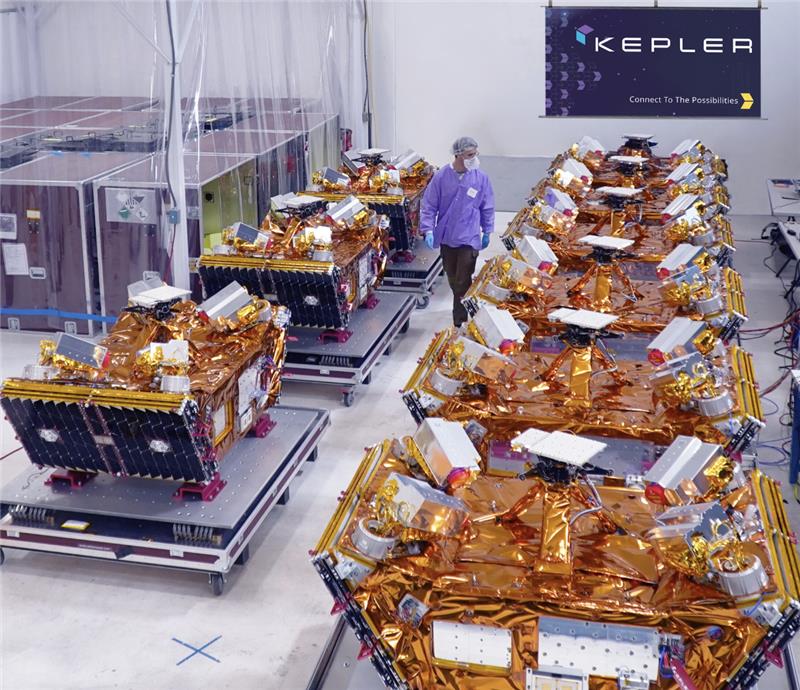
The largest orbital compute cluster is open for business | TechCrunch
Kepler Communications is flying 40 GPUs in Earth orbit. And its latest customer is Sophia Space.
14 Apr
тАШMideast conflict poses risks to Philippines growthтАЩ
The Philippine economy is expected to grow at a faster pace of 5.3 percent this year from last year’s 4.4 percent but the ongoing Middle East conflict is seen to pose risks, according to the Association of Southeast Asian Nations Plus 3 Macroeconomic Research Office.
7 Apr
AFBI welcomes DUP representatives to its research farm at Hillsborough
The Agri-Food and Biosciences Institute (AFBI) welcomed a number of DUP representatives to its research farm at Hillsborough on Friday.
7 Apr
A simple way to get more value from metrics
We spent one day 1 building a system that immediately found a mid 7 figure optimization (which ended up shipping). In the first year, we shipped mid 8 figures per year worth of cost savings as a result. The key feature this system introduces is the ability to query metrics data across all hosts and all services and over any period of time (since inception), so we've called it LongTermMetrics (LTM) internally since I like boring, descriptive, names. This got started when I was looking for a starter project that would both help me understand the Twitter infra stack and also have some easily quantifiable value. Andy Wilcox suggested looking at JVM survivor space utilization for some large services. If you're not familiar with what survivor space is, you can think of it as a configurable, fixed-size buffer, in the JVM (at least if you use the GC algorithm that's default at Twitter). At the time, if you looked at a random large services, you'd usually find that either: The buffer was too small, resulting in poor performance, sometimes catastrophically poor when under high load. The buffer was too large, resulting in wasted memory, i.e., wasted money. But instead of looking at random services, there's no fundamental reason that we shouldn't be able to query all services and get a list of which services have room for improvement in their configuration, sorted by performance degradation or cost savings. And if we write that query for JVM survivor space, this also
7 Apr
Accelerating Mathematical and Scientific Discovery with Gemini Deep Think
Research papers point to the growing impact of Deep Think across fields
7 Apr
Gemini 3 Deep Think: Advancing science, research and engineering
Our most specialized reasoning mode is now updated to solve modern science, research and engineering challenges.
7 Apr
Context Engineering for Coding Agents
The number of options we have to configure and enrich a coding agent’s context has exploded over the past few months. Claude Code is leading the charge with innovations in this space, but other coding assistants are quickly following suit. Powerful context engineering is becoming a huge part of the developer experience of these tools. Birgitta Böckeler explains the current state of context configuration features, using Claude Code as an example. moreтАж
7 Apr
What does less protein and nitrogen mean for methane?
Does feeding less protein to cows over a longer period not only reduce nitrogen losses, but also affect methane emissions? Researchers at Wageningen University & Research (WUR) investigated this in a multi-year study with dairy cows, funded by the Vereniging Diervoederonderzoek Nederland (VDN), the Dutch Ministry of Agriculture, Fisheries, Food Security and Nature (LVVN), and […] The post What does less protein and nitrogen mean for methane? appeared first on Agriland.ie .
7 Apr
SecondтАЩs Bark Boasts New era of Bitcoin Payments, drawing in former Blockstream developers
Bitcoin Magazine SecondтАЩs Bark Boasts New era of Bitcoin Payments, drawing in former Blockstream developers Second, the Bitcoin development lab founded by ex-Blockstream executives including CEO Steven Roose and CTO Erik De Smedt, has unveiled Bark тАФ its custom Ark protocol implementation promising self-custodial payments that are faster and cheaper than Lightning channels. This post SecondтАЩs Bark Boasts New era of Bitcoin Payments, drawing in former Blockstream developers first appeared on Bitcoin Magazine and is written by Juan Galt .
7 Apr
'Morale boost': Nasa carries out Moon mission during tough year for science
HOUSTON — As the four Artemis astronauts approached a high point of their lunar mission -- getting slung around the far side of the Moon -- National Aeronautics and Space Administration (Nasa) staffers crowded into Houston's famed mission control room Monday for a team photo.
7 Apr