
Samples from the far side of the Moon shed light on lunar asymmetry
Unusual isotopic ratio in samples brought back by Chang'e-6 reveals clues about the early history of Earth's satellite The post Samples from the far side of the Moon shed light on lunar asymmetry appeared first on Physics World .
Samples from the far side of the Moon shed light on lunar asymmetry
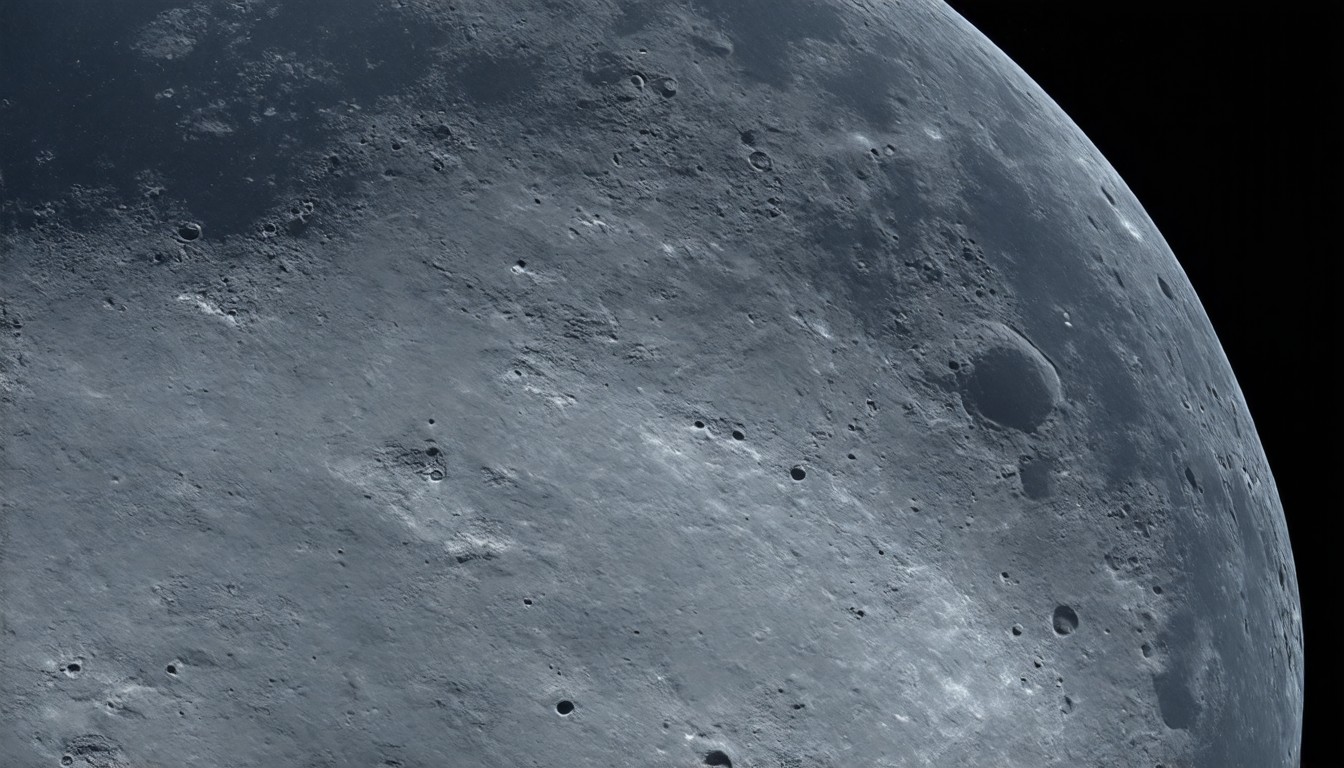
The near and far sides of the Moon have long been known to exhibit significant differences in their chemical composition, magmatic activity, and crustal thickness. While these disparities have been observed for decades, their origins remain a subject of scientific debate. Recent research, however, is beginning to unravel the mystery behind this lunar asymmetry. A study conducted by scientists at the Chinese Academy of Sciences (CAS) in Beijing has provided new insights into the reasons for these differences, thanks to samples brought back to Earth by China’s Chang’e-6 mission.
The Chang’e-6 mission, which launched on May 3, 2024, returned samples from the far side of the Moon, specifically from the South Pole-Aitken Basin (SPA). This basin, one of the largest and oldest impact craters in our solar system, stretches from the near side to the far side of the Moon and is estimated to be between 4.2 and 4.3 billion years old. The SPA’s formation is believed to have been the result of a colossal meteorite impact, and it has long been theorized that this event played a significant role in shaping the Moon’s geological history.
China’s lunar exploration program has been at the forefront of lunar research in recent years. Beginning with the launch of the lunar orbiter Chang’e-1 in 2007, the country has conducted several uncrewed missions to the lunar surface. In 2019, Chang’e-4 became the first spacecraft to land on the far side of the Moon, touching down in the Von Kármán crater within the SPA. This was followed by the Chang’e-5 mission, which launched in November 2020 and returned 1.7 kg of samples from the near side of the Moon – the first such samples to reach Earth in nearly 50 years.
The Chang’e-6 mission, which returned samples from the far side of the Moon, provided a unique opportunity for scientists to study the isotopic composition of lunar rocks from this previously inaccessible region. Researchers at the CAS Institute of Geology and Geophysics, led by Heng-Ci Tian, analyzed four samples from the SPA and compared them to those collected by Chang’e-5 and NASA’s Apollo missions from the near side.
The study revealed a striking difference in the ratio of potassium-41 to potassium-39 isotopes between the samples from the SPA and those from the near side. This potassium isotope ratio, which is influenced by the heat and pressure experienced during the giant impact that formed the basin, is a key indicator of the geological history of the Moon. According to Tian, the higher ratio in the SPA samples suggests that they were subjected to more intense conditions during the impact event, which would have occurred approximately 4.3 billion years ago.
This finding aligns with previous hypotheses that the SPA’s formation was the result of a catastrophic impact, and it provides strong evidence that this event played a crucial role in shaping the Moon’s geological characteristics. The differences in isotopic ratios between the near and far sides of the Moon can now be attributed to the unique conditions experienced by the far side during the impact, which would have led to a distinct evolutionary path for this region.
The Chang’e-6 mission has thus provided valuable data that helps to explain the lunar asymmetry observed between the near and far sides. By studying the isotopic composition of samples from the far side, scientists have gained a deeper understanding of the Moon’s early history and the processes that shaped its geological features. This research not only advances our knowledge of the Moon but also offers insights into the formation and evolution of terrestrial planets in our solar system.
As China continues its ambitious lunar exploration program, with plans for crewed missions and the establishment of a lunar research station, future missions will undoubtedly yield even more information about the Moon’s complex history. The Chang’e-6 samples, however, have already provided a significant breakthrough in understanding the origins of the Moon’s asymmetry and the pivotal role that the giant impact played in its development. This discovery underscores the importance of continued lunar exploration and the potential for groundbreaking discoveries that can be made by studying the samples returned from the far side of our Earth-orbiting satellite.








