
Russia unveils battle robot armed with rapid-fire mortar cannon
Russia has unveiled a battlefield robot armed with a rapid-fire mortar system capable of 'loading and firing rounds without any human input'.
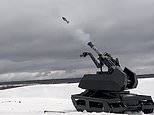
Russia has recently unveiled a groundbreaking battlefield robot equipped with a rapid-fire mortar cannon, designed to operate autonomously and significantly enhance military capabilities. This new development marks a significant advancement in the country's robotics and military technology, showcasing its commitment to staying ahead in the evolving field of warfare.
The battle robot, which remains unnamed, is equipped with a mortar system capable of loading and firing rounds without any human intervention. This autonomous feature allows the robot to operate independently, making it a potent tool for modern battlefields where speed and precision are critical. The mortar cannon is reportedly capable of rapid-fire, enabling the robot to deliver a sustained barrage of firepower, overwhelming enemy positions with minimal human oversight.
The unveiling of this robot follows a growing trend in Russia's investment in autonomous military systems, aimed at enhancing operational efficiency and reducing the risk to human personnel. By deploying such robots, Russia seeks to maintain a strategic advantage in military engagements, particularly in high-risk environments where human casualties are a significant concern.
The autonomous loading and firing mechanism of the mortar system is a key innovation in this robot's design. Traditional mortar systems require manual loading and firing, which can be time-consuming and vulnerable to enemy counterattacks. The new robot eliminates these limitations, allowing it to engage targets with unprecedented speed and accuracy. This capability could prove decisive in scenarios where rapid response is essential, such as in urban combat or during rapid advancements.
The development of this battle robot is also a testament to Russia's technological prowess in the field of robotics. The country has been investing heavily in autonomous systems, driven by a desire to stay competitive in the global arms race. This latest addition to Russia's arsenal highlights its commitment to innovation and its ambition to lead in the development of advanced military technology.
However, the unveiling of this robot has raised concerns among military analysts and international observers. The potential for autonomous weapons to be used in combat raises ethical and strategic questions. Critics argue that the development of such systems could lead to an escalation in military conflicts, as nations seek to gain an advantage through technological superiority. Additionally, the risk of unintended consequences or misuse of these systems cannot be ignored.
Despite these concerns, Russia's military leaders remain optimistic about the potential of autonomous systems. They argue that such technology can enhance operational effectiveness and reduce the risks associated with human deployment. The country's focus on robotics is part of a broader strategy to modernize its military forces and ensure their readiness for future challenges.
In conclusion, Russia's unveiling of a battlefield robot armed with a rapid-fire mortar cannon represents a significant leap forward in military technology. This autonomous system promises to revolutionize the way battles are fought, offering unprecedented speed and precision in engaging enemy targets. While concerns about the ethical implications of autonomous weapons persist, Russia's commitment to innovation in this field is clear. As the world continues to evolve, the role of autonomous systems in shaping military strategies will undoubtedly become more prominent.









