
Russia says 'highly likely' that Ukraine planted explosives near gas pipeline
The Kremlin said on Monday that while there was not yet conclusive evidence it was highly likely that proof would be found showing Ukraine had planted explosives found near a gas pipeline in Serbia which carries Russian gas to Hungary.
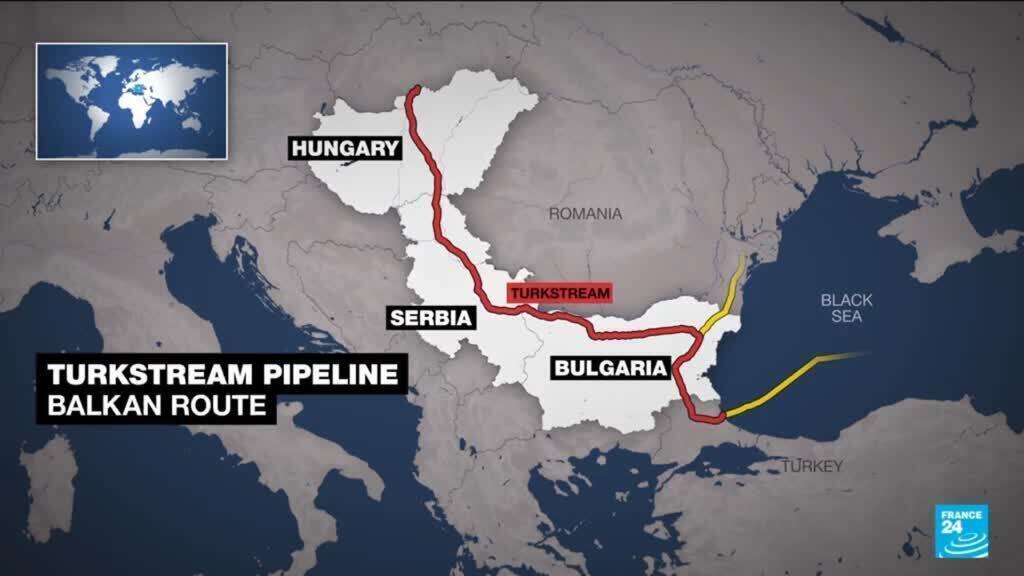
Russia has accused Ukraine of planting explosives near a gas pipeline in Serbia, a claim that has intensified tensions between the two countries. The Kremlin stated on Monday that, although there was not yet conclusive evidence, it was highly likely that proof would be found showing Ukraine's involvement in the incident. The pipeline in question carries Russian gas to Hungary, a critical route for energy supply in the region.
The accusation comes as part of a broader narrative of escalating hostilities between Russia and Ukraine, which has been marked by a series of provocative actions and counter-actions since the annexation of Crimea in 2014. Russia has frequently blamed Ukraine for various incidents, including the 2014 explosion at a gas pipeline in Ukraine that disrupted gas supplies to Europe.
In this latest development, the Kremlin's statement highlights the ongoing geopolitical rivalry between the two nations. The pipeline in question, which runs through Serbia, is a vital component of Russia's energy infrastructure, supplying natural gas to Hungary and other European countries. Any disruption to this pipeline could have significant consequences for energy security in the region.
Ukraine has not yet responded to the accusations, but the situation has raised concerns among European officials about the stability of energy supplies. The European Union has long relied on Russian gas to meet its energy needs, and any disruption to the pipeline could lead to shortages and increased prices.
The accusation also underscores the complex dynamics of energy politics in Europe. Russia has used its position as a major energy supplier to exert influence on European countries, particularly those in Eastern Europe. The pipeline in question is part of a network of gas pipelines that Russia has developed to bypass traditional transit routes through Ukraine, a move that has been seen as a strategic attempt to reduce Ukraine's influence over Russian energy exports.
The situation in Serbia has prompted questions about the security of critical infrastructure in Europe. The discovery of explosives near the pipeline has raised concerns about potential sabotage, and the accusation against Ukraine adds another layer of complexity to an already tense relationship.
In response to the accusations, the European Union has called for a transparent investigation into the incident. EU officials have emphasized the need for cooperation and dialogue between Russia and Ukraine to prevent further escalation and ensure the stability of energy supplies.
The situation in Serbia is likely to remain a focal point of geopolitical tensions in the coming weeks. As both Russia and Ukraine continue to blame each other for various incidents, the international community will closely monitor the situation to ensure the security of critical infrastructure and the stability of energy supplies in Europe.
In conclusion, Russia's accusation that Ukraine planted explosives near a gas pipeline in Serbia has added to the existing tensions between the two countries. While there is no conclusive evidence at this stage, the Kremlin's statement highlights the ongoing rivalry and the complex dynamics of energy politics in Europe. The situation has prompted calls for a transparent investigation and cooperation between Russia and Ukraine, as well as concerns among European officials about the stability of energy supplies. The geopolitical implications of this latest development are likely to reverberate across the continent in the coming weeks.








