
Russia is attacking Ukraine’s agricultural exports
It is blowing up both the facilities used to ship food out and the deal that grants it safe passage
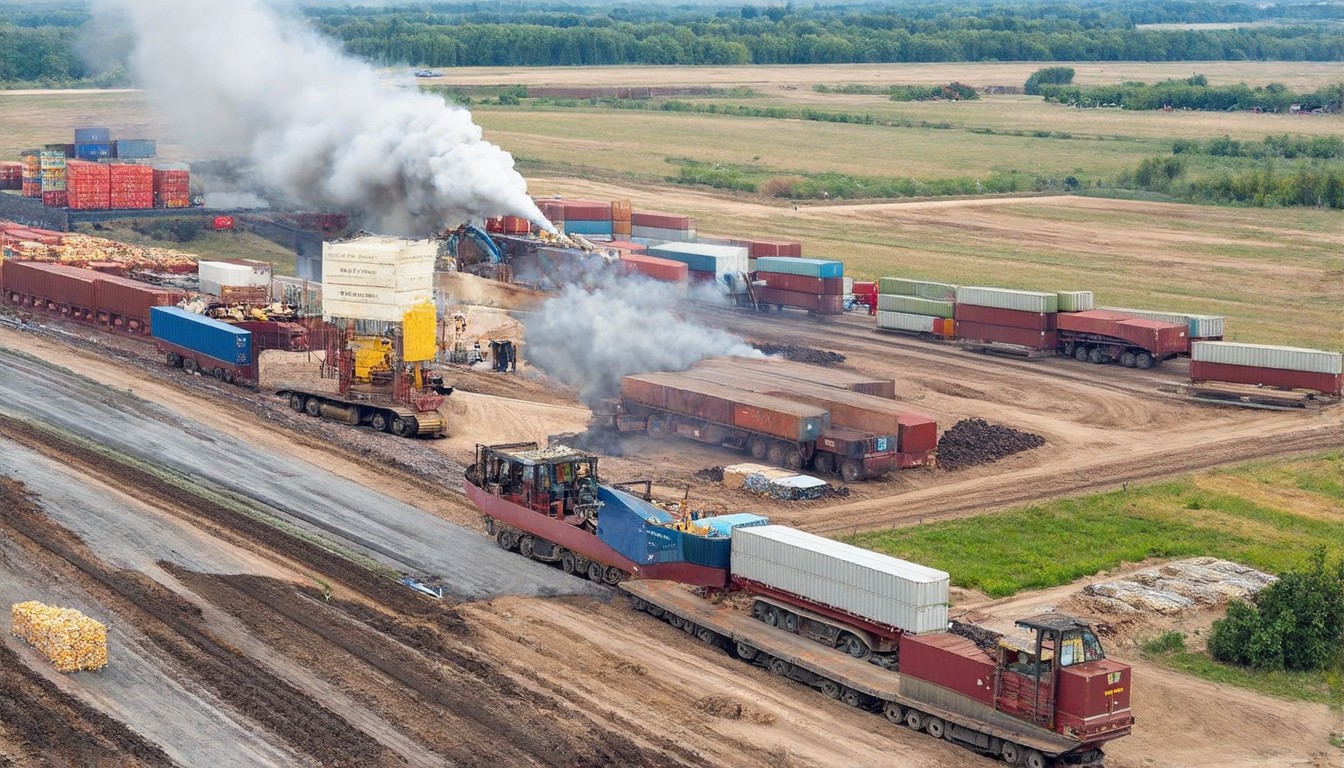
Russia's ongoing conflict with Ukraine has taken a devastating toll on the country's agricultural exports, which are vital for global food security. By targeting infrastructure and disrupting agreements that ensure safe passage of goods, Moscow is not only crippling Ukraine's economy but also exacerbating a global crisis.
Ukraine is one of the world's largest exporters of wheat, corn, and sunflower oil, supplying significant portions of these staples to countries in Africa, Asia, and the Middle East. However, Russia's military campaign has disrupted this trade, with a particular focus on agricultural facilities and transportation routes. By bombarding ports, railways, and storage facilities, Russia is effectively blocking the export of these crucial commodities.
One of the most significant impacts of this disruption is the collapse of the Black Sea grain deal, brokered by the United Nations and signed in July 2022. This agreement allowed Ukraine to resume exporting grain through Black Sea ports, albeit under strict conditions and with Russian assurances of non-interference. However, Russia's repeated attacks on infrastructure and vessels have rendered the deal all but unworkable. In response, the UN has called for an emergency review of the agreement, highlighting the urgent need for alternative solutions.
The consequences of this disruption are far-reaching. Global food prices have already soared, with wheat prices reaching record highs. This not only threatens food security in vulnerable regions but also fuels inflation in many countries. The International Food Policy Research Institute (IFPRI) has warned that the conflict could push an additional 47 million people into poverty and 13 million into hunger by 2023.
Ukraine has been forced to seek alternative routes for its agricultural exports, such as railways and road networks leading to neighboring countries like Poland, Romania, and Bulgaria. However, these routes are limited in capacity and face logistical challenges, making it difficult to compensate for the lost trade through maritime channels. Moreover, the increased reliance on these alternative routes has strained relations with neighboring nations, which are already grappling with the influx of Ukrainian refugees.
The European Union has responded to the crisis by pledging to support Ukraine's agricultural exports through alternative routes. The EU has committed to investing in infrastructure and logistics to facilitate the movement of goods, while also providing financial assistance to Ukraine. However, critics argue that these efforts are insufficient to address the scale of the problem, and that a more comprehensive international response is needed.
Meanwhile, Russia continues to justify its actions as a response to Ukraine's alleged food exports to fuel its war efforts. However, there is little evidence to support these claims, and the majority of the grain in question has been destined for humanitarian aid or trade with neutral countries.
The situation in Ukraine underscores the complex interplay between geopolitics and global food security. As Russia's attacks on agricultural infrastructure and trade continue, the international community must find ways to mitigate the humanitarian crisis that is unfolding. This requires not only addressing the immediate disruptions but also exploring long-term solutions to ensure the stability of global food markets.
In conclusion, Russia's attack on Ukraine's agricultural exports has far-reaching implications for global food security. By targeting infrastructure and undermining agreements that facilitate safe passage of goods, Moscow is exacerbating a crisis that threatens millions of lives. The international community must act swiftly to find alternative solutions and support Ukraine in its efforts to resume exporting vital commodities. Without a coordinated response, the consequences of this disruption could be felt for years to come.









