Rupert Lowe and the rise of zombie politics
The stable, socially rooted party system of the postwar period is being washed away by a new volatility.
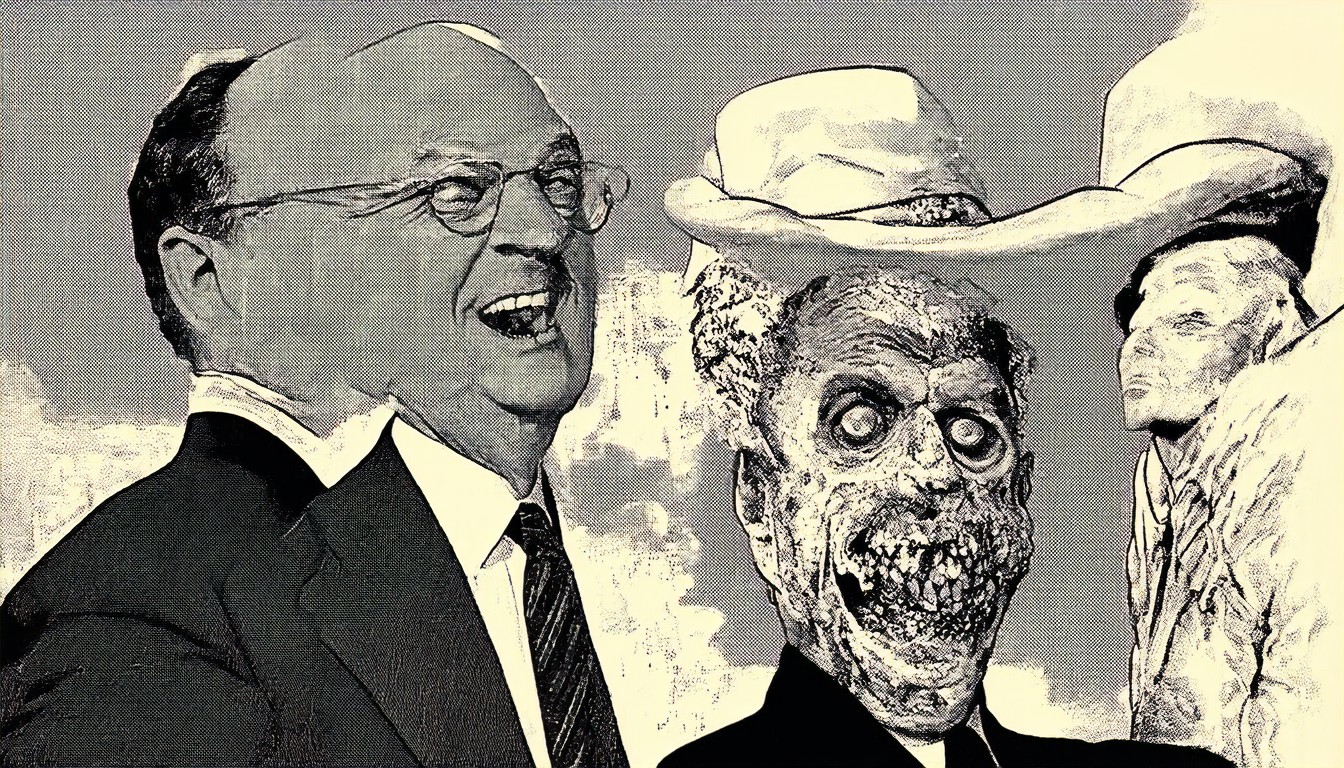
In the rapidly evolving landscape of British politics, the once stable, socially rooted party system of the postwar period is being disrupted by a new wave of volatility. This transformation is exemplified by the rise of Rupert Lowe and his pressure group, Restore Britain, which announced in February that it would formally become a political party. Within just a few weeks of this announcement, the group claimed to have over 100,000 registered members, a testament to the changing dynamics of political engagement in the UK.
Restore Britain, with its single MP, lack of local associations, and platform tailored to appeal to those who feel Nigel Farage has lost his edge, represents a stark contrast to the traditional political parties like Labour. Yet, it boasts a large and energetic social media following, a factor that could prove crucial in the 2026 electoral landscape. Labour, meanwhile, spent much of February embroiled in a procedural row over whether Andy Burnham could stand in a by-election. The outcome hinged on the views of the party’s National Executive Committee, a body comprising representatives from trade unions, constituency parties, and socialist societies. Ultimately, the bureaucratic machinery stalled, resulting in Burnham's defeat.
The divergence between Labour and Restore Britain highlights the significant changes underway in British politics. Both entities are technically political parties, yet they share little else in common. This disparity underscores the broader shift in the nature of political competition in the UK, which has always been shaped by the society beneath it. The postwar system, which came to define modern British politics, reflected this with remarkable clarity. Labour was established to represent the industrial working class, while the Conservatives represented everyone else. This sharp class divide gave rise to a distinctive set of political institutions – mass memberships, local associations, seaside party conferences, and stable electoral coalitions – that came to define what a political party should be.
For decades, this form of political competition functioned effectively. In the 1950s alone, the Conservative Party boasted nearly three million members. Constituency associations were significant local institutions, deeply embedded in the social fabric of the communities they represented. Joining a political party was not merely an act of consumer choice but an expression of identity, a statement about one's origins and allegiance to a particular side of the fundamental divide in British life.
However, the rise of Rupert Lowe and Restore Britain signals a departure from this traditional model. The group's success, built on a strong social media presence and a platform catering to specific voter frustrations, suggests that the future of British politics may no longer rely on the established institutions of mass memberships and local associations. Instead, it may hinge on the ability to mobilize support through digital platforms and adapt to the changing preferences of the electorate.
This shift is not without consequences. As political parties evolve, so too must the structures and processes that govern them. The bureaucratic inertia that stifled Labour's response to the Burnham by-election, for instance, may be a symptom of the very same institutions that once provided stability. In contrast, Restore Britain's rapid growth and adaptability highlight the potential for new entrants to challenge the status quo and reshape the political landscape.
In the end, the rise of Rupert Lowe and the volatility he represents are not just about Restore Britain or Labour. They are a reflection of the broader transformation underway in British politics, one that challenges the very foundations of what it means to be a political party. As society continues to evolve, so too must the political system, adapting to new realities and the changing needs of the electorate. Only then can it hope to remain relevant and effective in the years to come.