
RFI Investigation: Ukrainian military in Libya and the strike on the Russian gas carrier Arctic Metagaz
French journalists report the presence of more than 200 Ukrainian military specialists in Libya and their alleged involvement in the attack on the Arctic Metagaz vessel using a maritime drone.
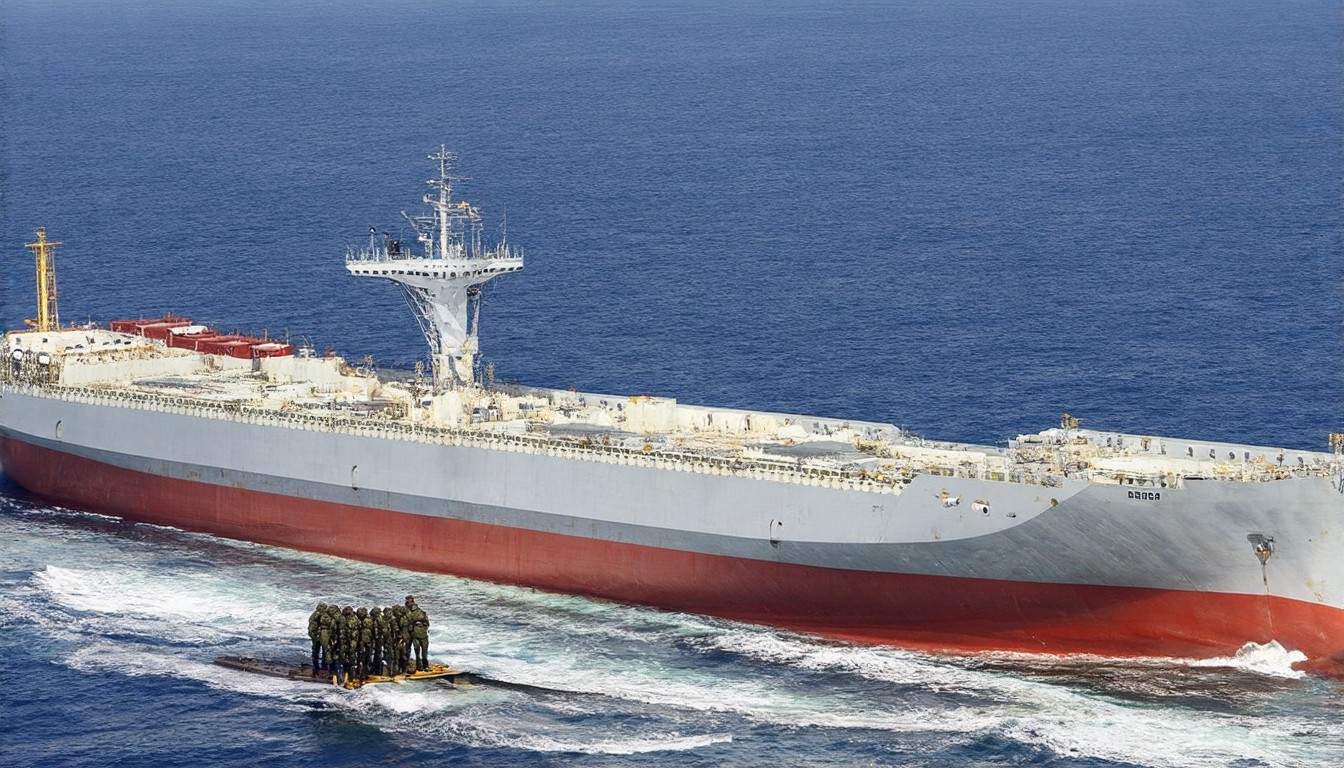
French journalists have recently uncovered a complex international incident involving Ukrainian military personnel in Libya and their alleged role in the attack on the Russian gas carrier, Arctic Metagaz. The revelations, which have sparked significant geopolitical interest, highlight the intricate dynamics of modern military operations and the potential for cross-border involvement.
According to the reports, more than 200 Ukrainian military specialists are currently stationed in Libya, where they are believed to be providing training and support to local forces. This deployment, which has been ongoing for several months, raises questions about the broader strategic objectives of Ukraine in the region. While Ukraine has not officially confirmed the presence of its military personnel in Libya, the French journalists' findings suggest a deeper involvement than previously acknowledged.
The second key element of the story is the alleged involvement of these Ukrainian military specialists in the attack on the Arctic Metagaz. The vessel, a Russian-owned gas carrier, was targeted in a recent maritime drone strike, resulting in significant damage and raising tensions between Russia and Ukraine. The French journalists' report suggests that the Ukrainian specialists played a role in planning or executing the attack, potentially using their expertise to orchestrate the operation.
The attack on the Arctic Metagaz has been a point of contention in international relations, with Russia accusing Ukraine of orchestrating the assault as part of a broader campaign to disrupt Russian energy interests. Ukraine, in turn, has denied any involvement, insisting that it is the victim of Russian aggression rather than the aggressor. The involvement of Ukrainian military specialists in Libya adds a new layer to this complex situation, raising questions about the extent of Ukraine's reach and capabilities in conducting covert operations.
The presence of Ukrainian military personnel in Libya also raises concerns about the potential for cross-border spillover and the broader implications for regional stability. Libya, which has been embroiled in a protracted civil conflict, has become a battleground for various foreign actors seeking to influence the outcome. The involvement of Ukrainian military specialists could further complicate the situation, potentially exacerbating tensions between rival factions and foreign powers.
French journalists' report has prompted calls for a thorough investigation into the incident, with some experts suggesting that an independent inquiry could help clarify the facts and determine the extent of Ukrainian involvement. Such an investigation would likely require cooperation from multiple nations, including Ukraine, Russia, and Libya, as well as international organizations.
The situation also raises broader questions about the role of military specialists and mercenaries in modern conflicts. With the rise of private military companies and the increasing use of non-state actors, it is becoming more challenging to determine the ultimate responsibility for actions taken in the field. The case of the Ukrainian military specialists in Libya and their alleged involvement in the attack on the Arctic Metagaz underscores the need for greater transparency and accountability in international security operations.
In conclusion, the French journalists' report on the presence of Ukrainian military specialists in Libya and their alleged involvement in the attack on the Arctic Metagaz has shed light on a complex and sensitive situation. The revelations highlight the intricate web of international relations and the potential for cross-border operations to have significant geopolitical implications. As the investigation unfolds, it will be crucial to determine the facts accurately and to address the broader questions surrounding the role of military specialists and the conduct of modern conflicts.








