Resolving the spin of sound
Researchers show how sound waves can hold conserved spin angular momentum, resolving a long‑standing theoretical debate The post Resolving the spin of sound appeared first on Physics World .
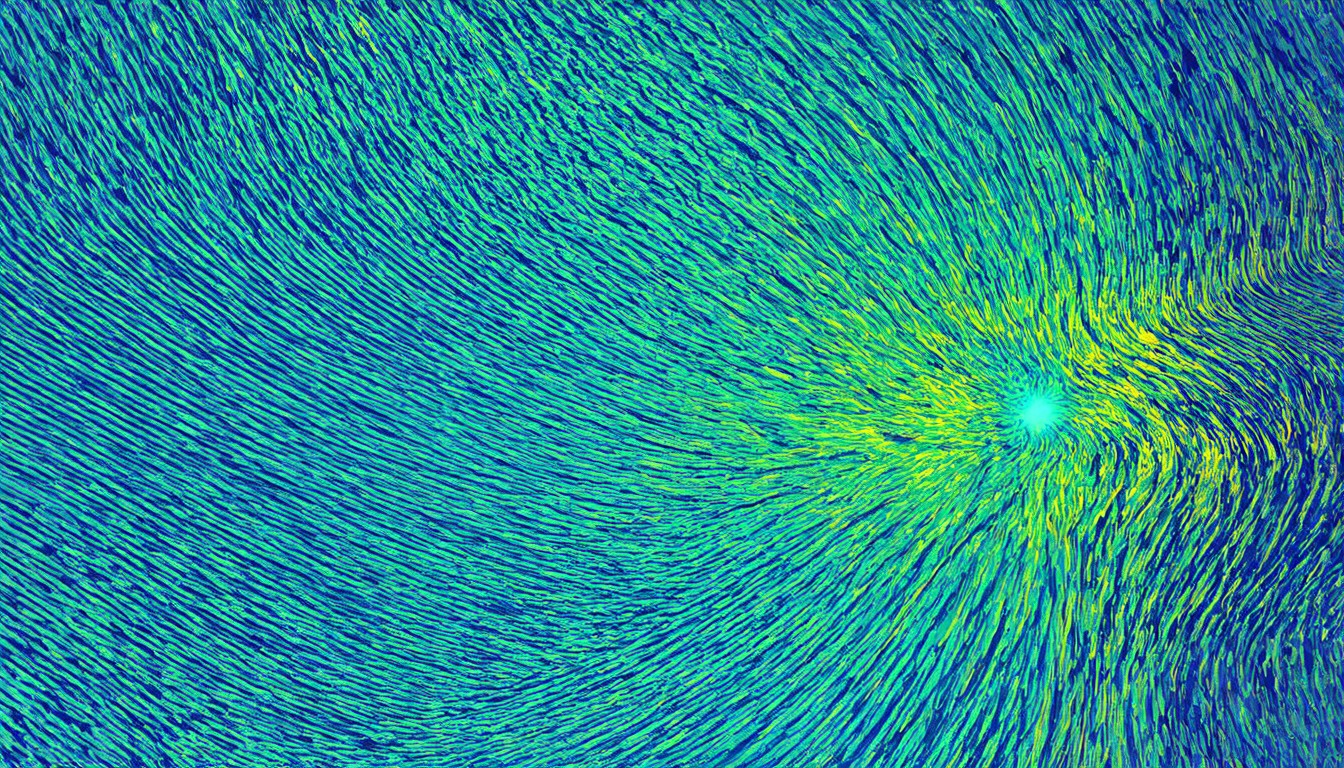
For decades, the physics community has been puzzled by the nature of sound waves, particularly their spin. Traditionally, acoustic waves have been considered purely longitudinal, meaning they oscillate in the direction of their propagation without any intrinsic rotation. This has led to the assumption that sound waves possess no spin, classified as spin-0. However, recent research has challenged this long-held belief, revealing that acoustic waves can indeed carry local spin-like behavior. Despite this, the total spin angular momentum of an acoustic field was previously thought to vanish, with positive and negative spin contributions cancelling each other out, resulting in an overall global spin-0.
A groundbreaking study has now shown that acoustic vortex beams can carry a non-zero longitudinal spin angular momentum when guided by specific boundary conditions. This discovery overturns the decades-old assumption that longitudinal waves cannot possess a global spin degree of freedom. The researchers, employing a self-consistent theoretical framework, derived the full spin, orbital, and total angular momentum of these beams, uncovering a new kind of spin-orbit interaction that emerges when the beam is compressed or expanded.
In their analysis, the team explored the relationship between two competing descriptions of angular momentum in acoustics: the canonical-Minkowski and kinetic-Abraham formulations. They found that only the canonical-Minkowski formulation is truly conserved and directly tied to the beam's azimuthal quantum number, which describes the wave's twisting motion as it travels. This revelation provides a deeper understanding of how angular momentum is distributed and conserved in acoustic systems.
To validate their findings, the researchers conducted experiments using a waveguide with a slowly varying cross-section. They demonstrated that the observed effect is not limited to this particular setup but can also arise in evanescent acoustic fields and even in other wave systems, such as electromagnetism. This broad applicability highlights the fundamental nature of their discovery.
The introduction of a missing fundamental degree of freedom in longitudinal waves offers new strategies for manipulating acoustic spin and orbital angular momentum. These findings have significant implications for the development of wave-based devices, underwater communication systems, and particle manipulation techniques. By unlocking the previously unexplored realm of acoustic spin, this research not only resolves a long-standing theoretical debate but also paves the way for innovative technological advancements in various fields.
In conclusion, the study's findings challenge conventional wisdom about the spin of sound waves, revealing that acoustic vortex beams can indeed carry a non-zero longitudinal spin angular momentum under specific conditions. This breakthrough not only deepens our understanding of wave physics but also opens up new avenues for manipulating and harnessing angular momentum in acoustic systems. The implications of this research extend beyond acoustics, offering insights into other wave phenomena and potentially driving the development of groundbreaking technologies in the years to come.