Home HealthResearchers Develop Soybean Line with Stronger Res...
Health⭐ Featured

Researchers Develop Soybean Line with Stronger Resistance to Aphids and Mosaic Virus

University of Nebraska–Lincoln researchers developed a new soybean line with improved resistance to soybean aphids and soybean mosaic virus, combining Rag2 and Rsv1-h traits to support future breeding and pest management efforts. The post Researchers Develop Soybean Line with Stronger Resistance to Aphids and Mosaic Virus appeared first on Seed World .
6 April 2026 at 04:25 pm
1 views
Researchers Develop Soybean Line with Stronger Resistance to Aphids and Mosaic Virus

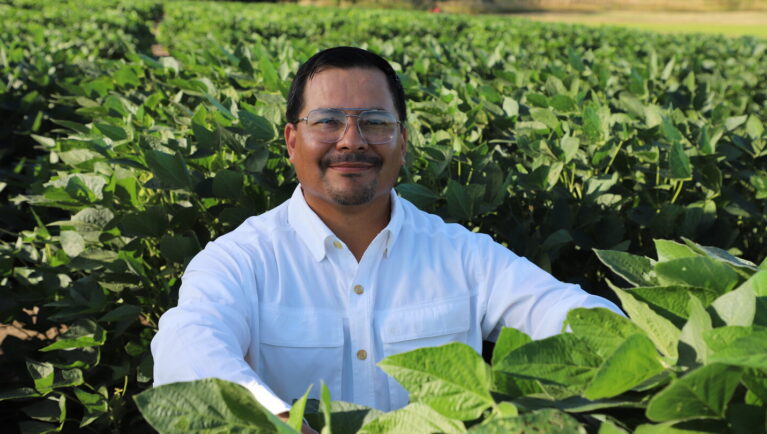
University of Nebraska–Lincoln researchers have made a significant breakthrough in agricultural science by developing a new soybean line with enhanced resistance to two major pests: soybean aphids and soybean mosaic virus. This groundbreaking achievement combines two key resistance genes, Rag2 and Rsv1-h, to create a genetically unique soybean variety that can better withstand these threats. The research, led by Luis Posadas Martinez, a research assistant professor in the Department of Agronomy and Horticulture, was published in the 2025 special issue of BMC Genomics.

Soybean aphids and soybean mosaic virus are notorious pests that have long posed challenges to soybean production. Soybean aphids, in particular, are common carriers of the soybean mosaic virus, and together they continue to evolve alongside their host plants, making it increasingly difficult for farmers to protect their crops. To address this issue, soybeans have developed natural defense mechanisms through resistance genes known as R-genes. Two of the most important R-genes are Rag2, which provides resistance to soybean aphids, and Rsv1, which offers protection against soybean mosaic virus. Both genes are located on chromosome 13.

Martinez and his team employed a novel approach by recombining these traits to create a soybean genotype that carries a closely linked Rag2-Rsv1-h haplotype. This innovative method involved using a tritrophic plant-insect-pathogen system to develop soybean germplasm with improved dual resistance. The term "tritrophic" refers to the three-level interaction between plants, insects, and pathogens, highlighting the complexity of the system and the need for a comprehensive approach to pest management.

This research represents the first time a plant-insect-pathogen system has been used to develop a soybean genotype with dual resistance to both soybean aphids and soybean mosaic virus. The newly developed genotype is expected to play a crucial role in future soybean breeding efforts, providing stronger protection against these pests and helping to safeguard soybean production.

In addition to its potential impact on soybean farming, the parent lines and recombined genotypes used in this research may also serve as valuable material for further studies examining the relationships among insect carriers, plant hosts, and viruses. By better understanding these interactions, researchers can continue to develop more effective strategies for managing and controlling pests that threaten agricultural productivity.

The development of this new soybean line with enhanced resistance to soybean aphids and soybean mosaic virus is a significant step forward in the fight against these persistent pests. By combining cutting-edge genetic research with a deep understanding of the complex interactions between plants, insects, and pathogens, the University of Nebraska–Lincoln team has created a valuable resource for the agricultural community. This achievement not only promises to improve soybean yields but also underscores the importance of investing in research that can help farmers adapt to the evolving challenges of pest management in the 21st century.

Source: Seed World
📰 Related News
The Rise and Sudden Fall of OpenAI’s Sora
OpenAI’s abrupt decision to shut down its AI video generation app, Sora, just 103 days after launch has sparked widespread debate about the company’s strategic direction and financial health. Despite a $1 billion partnership with Disney and a viral debut that…
13 Apr
St. Luke’s stays on track with massive expansion
St. Luke’s Medical Center continues to absorb higher costs brought about by the ongoing Middle East crisis as much as it can, with the company staying on track with massive investments for expansion and technology upgrades.
7 Apr
Granulated Lime vs. Bulk Lime: What’s the Difference?
Understanding the type of lime required for your soil can significantly impact your crop yield and overall soil health.
7 Apr
Can surgery used to treat fluid accumulation also help with Alzheimer’s? A Singapore trial is exploring this possibility
Early results from a small clinical trial at Changi General Hospital suggest the technique could lead to improvements in memory, mood and cognition.
7 Apr
Famers hear how to ‘Look after your health and your herd’ at latest meeting of Grassland Club
The members of Fermanagh Grassland Club were in for a treat in March when eminent qualified doctor and vet, Professor Patrick Wall, Dublin, was the speaker at their meeting in the Killyhevlin Hotel, Enniskillen.
7 Apr
ICMSA: HSA rules on telescopic telehandlers ‘way over the top’
The vast majority of farmers are completely unaware that training is now required under Health and Safety Authority (HSA) telescopic telehandlers rules, according to farm organisation. Pat O’Brien, chairperson of the farm business committee for the Irish Creamery Milk Suppliers Association (ICMSA) has criticised requirements for training from the Health and Safety Authority (HSA). Under […] The post ICMSA: HSA rules on telescopic telehandlers ‘way over the top’ appeared first on Agriland.ie .
7 Apr
ICSA: ‘Additional support’ needed for bluetongue vaccination
Bluetongue vaccination must be supported as “an additional measure” and not at the expense of core animal health actions, the Irish Cattle and Sheep Farmers’ Association (ICSA) has warned. Last month the Minister for Agriculture, Food and the Marine, Martin Heydon said that vaccination against bluetongue virus would be included as an “option” for farmers […] The post ICSA: ‘Additional support’ needed for bluetongue vaccination appeared first on Agriland.ie .
7 Apr
AWS Weekly Roundup: Amazon Connect Health, Bedrock AgentCore Policy, GameDay Europe, and more (March 9, 2026)
Fiti AWS Student Community Kenya! Last week was an incredible whirlwind: a round of meetups, hands-on workshops, and career discussions across Kenya that culminated with the AWS Student Community Day at Meru University of Science and Technology, with keynotes from my colleagues Veliswa and Tiffany, and sessions on everything from GitOps to cloud-native engineering, and […]
7 Apr
Farm accident survivor welcomes requirements for use of telehandlers
A farm accident survivor originally from Co. Sligo has welcomed the stringent requirements outlined by the Health & Safety Authority for the use of telehandlers, sometimes called teleporters. It follows comments made earlier this week by the Irish Creamery Milk Suppliers’ Association (ICMSA) claiming that the requirements were “over the top”. Such commentary has been […] The post Farm accident survivor welcomes requirements for use of telehandlers appeared first on Agriland.ie .
7 Apr
Sabah bans export and import of some local freshwater fish, including koi, after virus outbreak
Mr Jamawi said such actions violated biosecurity principles and caused infections among native species.
7 Apr