Researchers at CERN transport antiprotons by truck in world‑first experiment
A cloud of 92 antiprotons have been on a journey around CERN’s campus The post Researchers at CERN transport antiprotons by truck in world‑first experiment appeared first on Physics World .
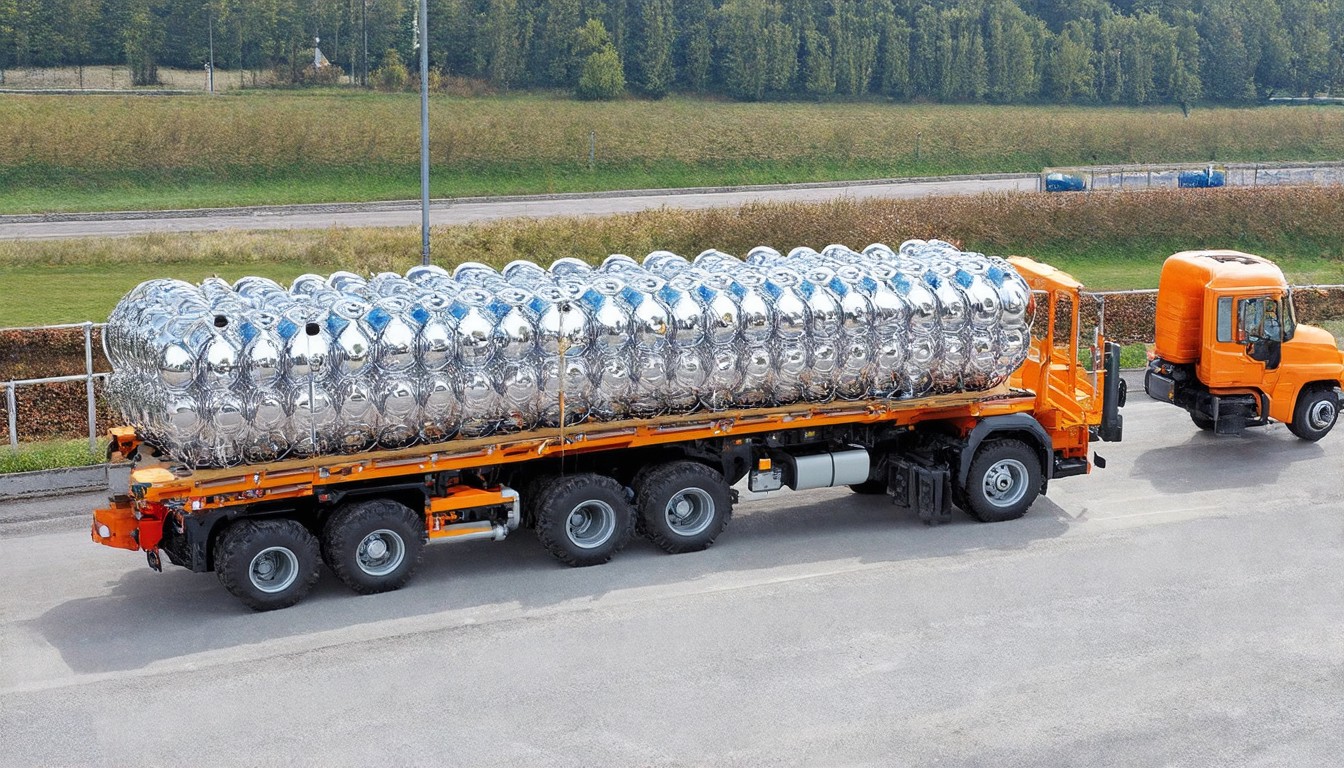
Researchers at CERN have achieved a groundbreaking milestone in the world of particle physics by successfully transporting antiprotons in a truck across the lab’s main site. This world-first experiment, which follows a similar test with protons in 2024, marks a significant step towards enabling the transportation of antimatter between laboratories across Europe.
Antimatter, which is almost identical to ordinary matter except that its electric charge and magnetic moment are reversed, holds great scientific intrigue. According to widely accepted theories, equal amounts of matter and antimatter were created in the Big Bang. However, these two forms of matter would have annihilated each other, leaving an empty universe. This contradiction has led physicists to suspect that there are hidden differences between matter and antimatter that explain why the latter all but disappeared.
CERN’s Baryon-Antibaryon Symmetry Experiment (BASE) is dedicated to measuring the magnetic moment, or charge-to-mass ratio, of protons and antiprotons to search for such differences. These measurements require extreme precision, but achieving them at CERN’s “Antimatter Factory” – the facility that produces antiprotons – is challenging due to interference from nearby equipment. To overcome this obstacle, the BASE team developed a device called BASE-STEP (for Symmetry Tests in Experiments with Portable Antiprotons) in 2020.
BASE-STEP works by trapping particles in a Penning trap, which is composed of gold-plated cylindrical electrode stacks made from oxygen-free copper. This setup is surrounded by a superconducting magnet bore operated at cryogenic temperatures. The device also contains a carbon-steel vacuum chamber to shield the particles from stray magnetic fields. Mounted on an aluminum frame, BASE-STEP can be transported using standard forklifts and cranes, and it is designed to withstand the bumps and vibrations of transport.
In 2024, BASE researchers successfully transported a cloud of approximately 105 trapped protons using this innovative device. Now, the team has taken the next giant leap by transporting 92 antiprotons in a truck around CERN’s campus. This achievement not only validates the feasibility of moving antimatter but also paves the way for future experiments that require precise measurements of antiprotons’ properties.
The ability to transport antimatter between laboratories is crucial for advancing our understanding of the fundamental differences between matter and antimatter. By overcoming the logistical challenges of moving these delicate particles, researchers at CERN are opening new avenues for exploration in particle physics. This world-first experiment not only highlights the cutting-edge technology developed by the BASE team but also underscores the importance of international collaboration in scientific research. As the field progresses, the potential applications of antimatter – from advanced medical treatments to revolutionary energy sources – continue to captivate the imagination and drive further innovation.