Republican leaders announce two-track plan to end the DHS shutdown
House and Senate Republican leaders jointly announced a plan Wednesday to end the shutdown of the Department of Homeland Security.
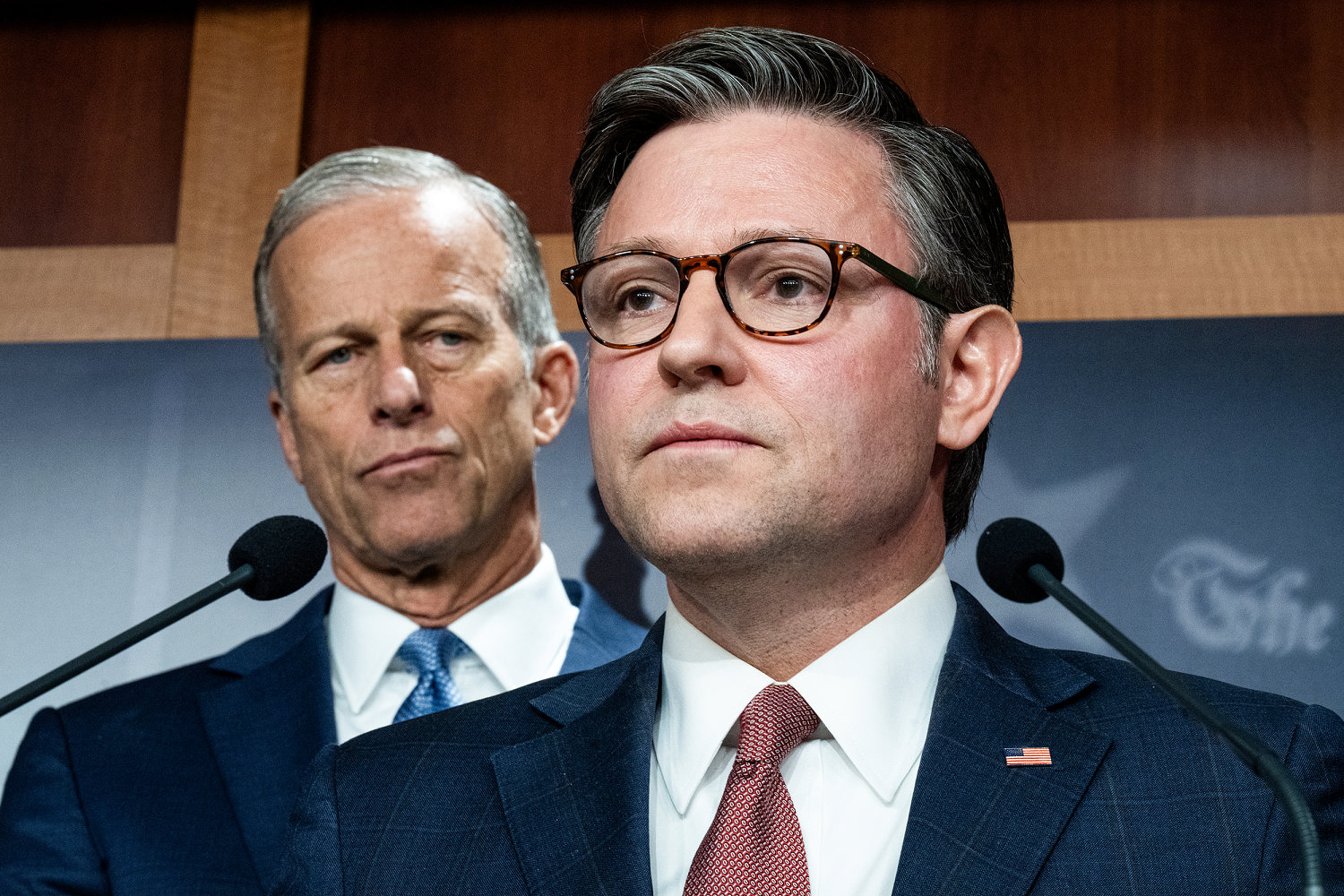
Republican leaders announce two-track plan to end the DHS shutdown
In a bid to resolve the ongoing shutdown of the Department of Homeland Security (DHS), House and Senate Republican leaders have unveiled a two-track plan to restore operations. The announcement, made jointly by Senate Majority Leader John Thune, R-S.D., and House Speaker Mike Johnson, R-La., aims to address both immediate and long-term challenges while ensuring the safety and security of the nation.
The two-track approach outlined by the Republican leaders includes a phased reopening of DHS facilities and the allocation of emergency funding to critical operations. The first track focuses on reopening essential services, such as border security, aviation security, and disaster response, to minimize disruptions to public safety. The second track involves a comprehensive review of the agency's budget and operations to identify inefficiencies and propose reforms.
In a joint statement, Thune and Johnson emphasized the urgency of ending the shutdown, which has already caused significant delays at airports and border crossings. They highlighted that the plan is designed to prioritize the most critical functions while also addressing the root causes of the financial impasse.
The immediate reopening of DHS facilities will be contingent on securing emergency funding, which the Republican leaders pledged to pursue through bipartisan negotiations. They stressed the importance of bipartisan cooperation to ensure a sustainable resolution that avoids future shutdowns.
The second track of the plan involves a detailed examination of DHS's budget and organizational structure. Republican leaders have long criticized the agency for excessive spending and bureaucratic inefficiencies. By conducting a thorough review, they hope to identify areas where costs can be reduced and services streamlined. This could include restructuring the agency or consolidating certain functions to improve efficiency.
Thune and Johnson also acknowledged the need for bipartisan input in the review process. They invited Democratic leaders to participate in discussions on DHS reform, emphasizing that the ultimate goal is to create a more effective and cost-efficient agency.
The two-track plan is expected to face scrutiny from both Democrats and DHS employees, who have been impacted by the shutdown. Critics argue that the Republican-led review may lead to further cuts in essential services, particularly those related to immigration and border security. However, Thune and Johnson maintained that their priority is to ensure the agency's fiscal responsibility while maintaining public safety.
The announcement of the two-track plan comes as tensions remain high between Republicans and Democrats over budgetary issues. The shutdown of DHS, which began in October, has been a contentious issue, with both parties blaming each other for the impasse. The Republican leaders' plan represents an attempt to break the deadlock by offering a structured approach to resolving the crisis.
As negotiations continue, the success of the two-track plan will depend on the ability of both parties to reach a compromise. The immediate challenge is securing the necessary funding to reopen DHS facilities, while the longer-term goal is to implement meaningful reforms that address the agency's operational and financial challenges.
In conclusion, the Republican leaders' two-track plan to end the DHS shutdown reflects a commitment to addressing both the immediate and systemic issues plaguing the agency. While the plan faces skepticism from some quarters, its success could pave the way for a more efficient and effective Department of Homeland Security. The next steps will involve bipartisan negotiations and a careful balance between fiscal responsibility and public safety.