Relics of an ancient sandstorm on Mars point to Earth-like winds
Curiosity rover finds what may be the first direct evidence that Mars once had a thick atmosphere
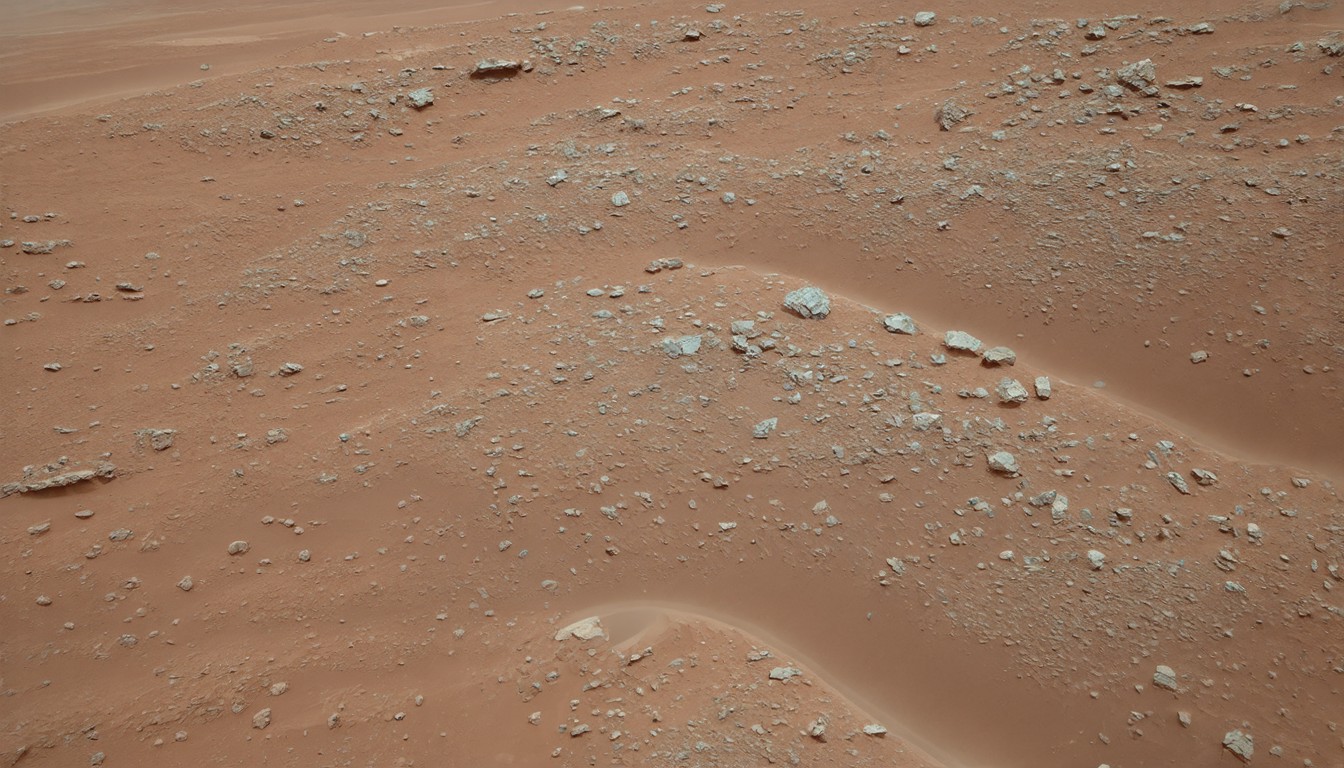
The Curiosity rover, a NASA mission to Mars, has made a groundbreaking discovery that could rewrite our understanding of the Red Planet's history. The rover, which has been exploring the Martian landscape for over a decade, has uncovered what scientists believe to be the first direct evidence that Mars once had a thick atmosphere. This revelation, based on the analysis of ancient sandstorm deposits, suggests that the planet may have experienced conditions similar to those on Earth in the past.
The key to this discovery lies in the analysis of rock layers and sedimentary deposits found in the Gale Crater, where Curiosity is stationed. The rover's instruments, including the ChemCam and SAM (Sample Analysis at Mars) instruments, have identified unique patterns in the rocks that indicate the presence of a once-thick atmosphere. These patterns include the deposition of wind-blown sand, which has been preserved over billions of years.
One of the most intriguing aspects of this finding is the similarity between the Martian wind patterns and those observed on Earth. The sandstorm deposits show a distinct layering that is characteristic of strong, sustained winds. Such winds would have been possible only if Mars once had a substantial atmosphere capable of generating and maintaining such conditions. This atmosphere, now largely depleted, would have played a crucial role in shaping the planet's climate and geology.
Scientists have long speculated about Mars' atmospheric history, but this discovery provides the first concrete evidence to support their theories. Previous missions, such as the Viking landers and the Mars Global Surveyor, have suggested that Mars once had a thicker atmosphere, but they lacked the capability to directly observe the geological evidence. The Curiosity rover's findings, however, offer a tangible link to Mars' past, providing a clearer picture of how the planet evolved over time.
The implications of this discovery are far-reaching. If Mars once had a thick atmosphere with conditions similar to Earth's, it raises the possibility that the planet may have supported liquid water and potentially even life in the past. This could mean that Mars was once habitable, and the search for signs of ancient microbial life takes on new significance. The discovery also has broader implications for our understanding of planetary evolution and the potential for life elsewhere in the solar system.
The team behind the Curiosity mission has hailed the discovery as a major breakthrough. "This is the first time we've found direct evidence of a thick atmosphere on Mars," said Ashwin Vasavada, a planetary geologist at NASA's Jet Propulsion Laboratory. "It's like finding a piece of the missing puzzle that has been eluding us for decades."
As the analysis of the data continues, scientists are eager to uncover more details about Mars' atmospheric history. The discovery of these ancient sandstorm deposits opens up new avenues for research, offering insights into the planet's past climate and the processes that shaped its surface. With future missions, such as the planned Mars 2020 rover and the ExoMars mission, scientists hope to delve deeper into Mars' history and potentially discover signs of ancient life.
In conclusion, the Curiosity rover's discovery of ancient sandstorm deposits pointing to Earth-like winds offers the first direct evidence of a thick atmosphere on Mars. This groundbreaking find not only reshapes our understanding of the planet's past but also rekindles the search for signs of ancient life on Mars. As we continue to explore the Red Planet, this discovery serves as a testament to the power of scientific inquiry and the potential for unexpected revelations in the study of other worlds.