Relics of an ancient sandstorm on Mars point to Earth-like winds
Curiosity rover finds what may be the first direct evidence that Mars once had a thick atmosphere
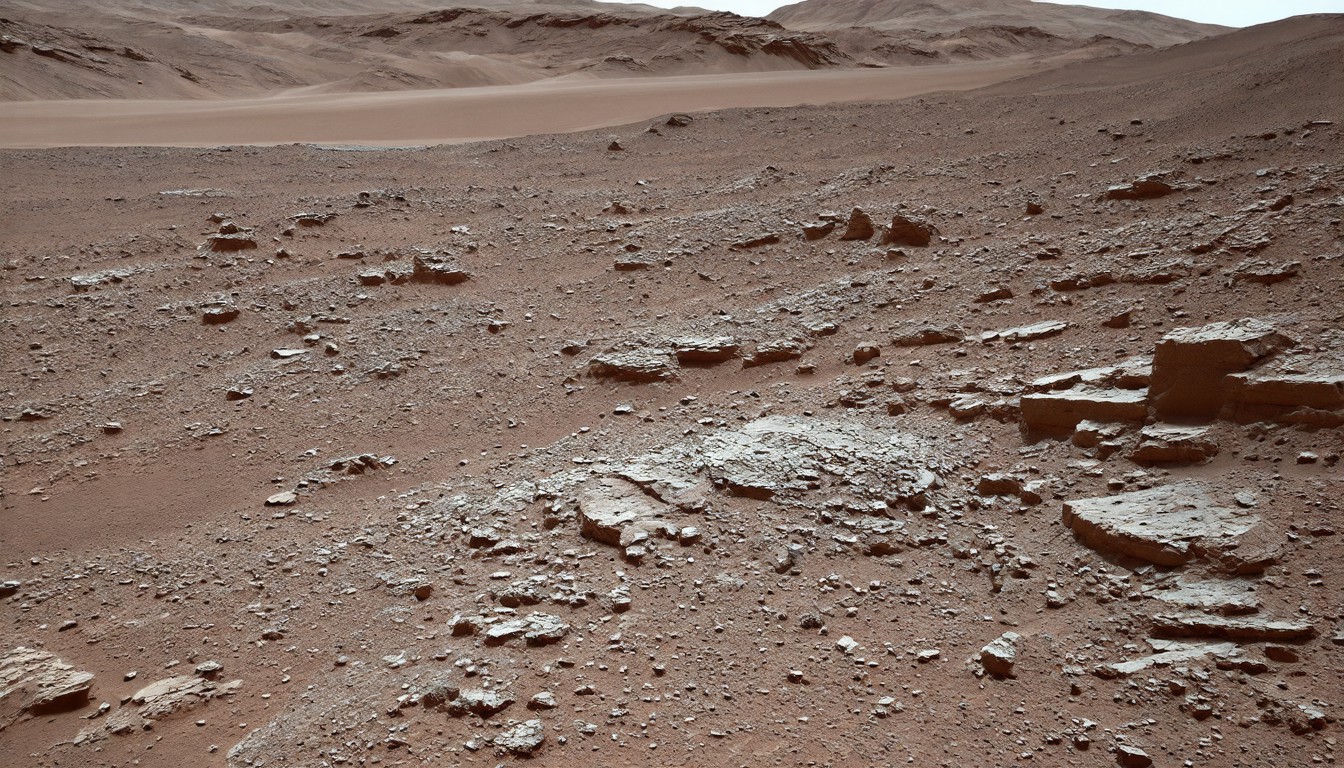
The Curiosity rover, a NASA mission to Mars, has made a groundbreaking discovery that could rewrite our understanding of the Red Planet's history. The rover has uncovered what appears to be the first direct evidence of a thick atmosphere on Mars, suggesting that the planet once experienced conditions similar to Earth's. This revelation comes from the analysis of ancient sandstorm deposits, which have been preserved in the Gale Crater for billions of years.
The discovery was made possible by the rover's advanced instruments, including the Chemistry and Camera (ChemCam) system, which uses a laser to vaporize rock particles and analyze their composition. By studying the layers of sediment in the crater, scientists have identified patterns that indicate a once-thick atmosphere capable of generating powerful winds. These winds would have swept across the Martian surface, carving out the features that Curiosity is now examining.
One of the key pieces of evidence is the presence of wind-blown sand dunes, which are remarkably similar to those found on Earth. These dunes, known as barchans, are characterized by their crescent shapes and are formed by the interaction of wind and sand. The fact that such features exist on Mars, preserved in their original state, provides compelling evidence that the planet once had the atmospheric conditions necessary to sustain them.
Scientists have also analyzed the isotopic ratios of certain elements in the Martian soil, such as argon and oxygen, to determine the atmospheric pressure and composition. The data suggests that Mars once had a much denser atmosphere, with a pressure level approximately 100 times greater than it is today. This would have allowed for the existence of liquid water on the planet's surface, further supporting the idea that Mars could have once been habitable.
The discovery of these ancient sandstorm deposits has significant implications for our understanding of Mars' climate and geological history. It challenges the long-held belief that the planet has always been devoid of a substantial atmosphere, suggesting instead that it once had a dynamic and potentially habitable environment. This newfound evidence could also help explain the presence of other features on Mars, such as the Valles Marineris canyon system, which may have been shaped by powerful winds and water flows.
NASA scientists are eager to explore this discovery further, as it could provide valuable insights into the potential for life on Mars. If Mars once had a thick atmosphere and liquid water, it raises the possibility that the planet could have supported microbial life in the past. Future missions, such as the planned Mars 2020 rover, will continue to investigate these ancient environments to uncover more clues about Mars' past and its potential for sustaining life.
In conclusion, the Curiosity rover's discovery of ancient sandstorm deposits on Mars represents a significant breakthrough in our understanding of the planet's history. The evidence points to a time when Mars had a thick atmosphere capable of generating Earth-like winds, potentially creating conditions that could have supported life. As we continue to explore the Red Planet, these findings underscore the importance of studying Martian geology and climate to unlock the secrets of its past and the possibility of its future.