Read-out of Majorana qubits reveals their hidden nature
Mechanism could pave the way for more robust quantum computation, but questions remain over scalability The post Read-out of Majorana qubits reveals their hidden nature appeared first on Physics World .
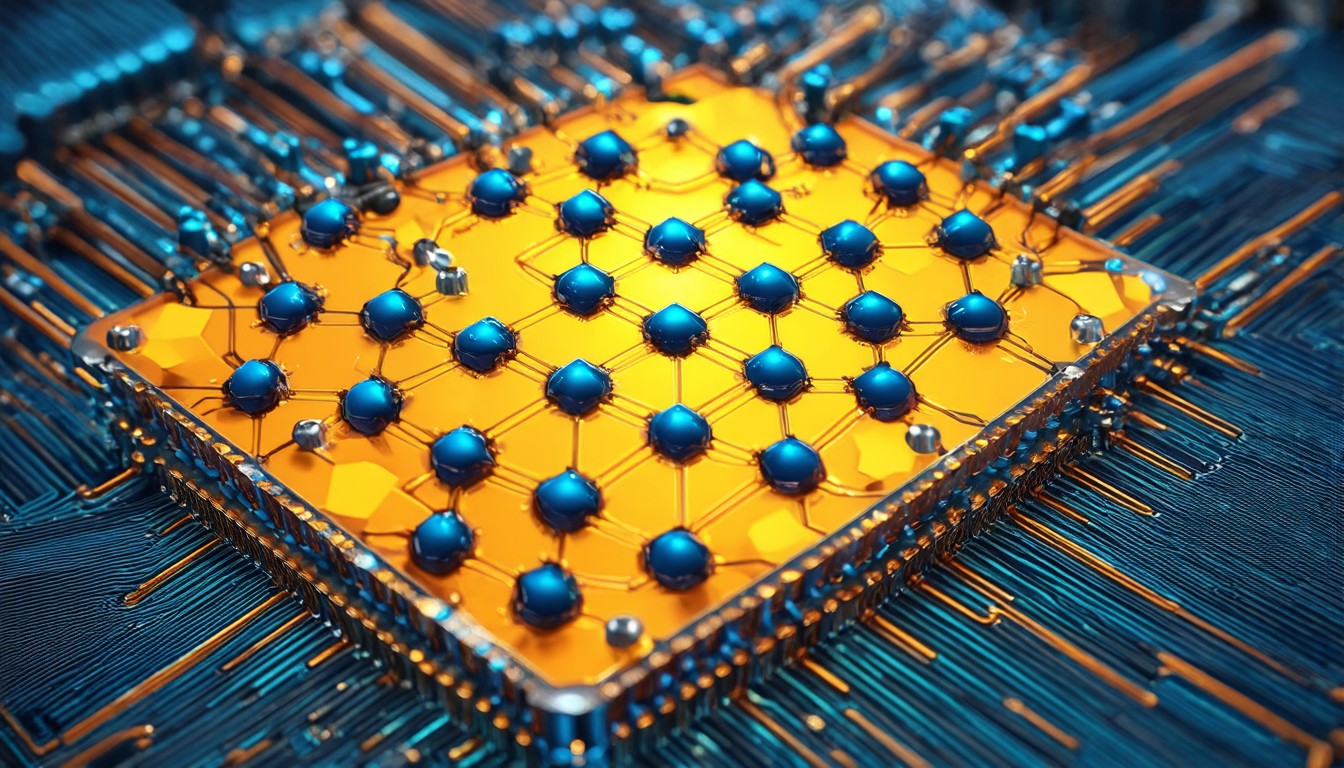
The read-out of Majorana qubits has revealed their hidden nature, offering a potential breakthrough in the field of quantum computation. Scientists at QuTech in the Netherlands, in collaboration with researchers from the Madrid Institute of Materials Science (ICMM) in Spain, have discovered a method to measure the parity of Majorana zero mode (MZM) systems, a critical step towards more robust quantum computers.
Majorana qubits, constructed from quasiparticle states known as Majorana zero modes, hold promise for overcoming the challenge of decoherence, which causes quantum systems to lose their quantum information due to local noise. However, a significant hurdle in utilizing these qubits for computation lies in the ability to measure their states. The new research, published in Physics World, proposes a solution by measuring a property called quantum capacitance, enabling the read-out of the parity of MZM systems.
This breakthrough follows an earlier demonstration from a team at Microsoft Quantum Hardware on a different Majorana platform. The QuTech/ICMM researchers generated their MZMs across two quantum dots – semiconductor structures that can confine electrons – connected by a superconducting nanowire. Electrons can tunnel between the quantum dots through this wire. Majorana-based qubits store their quantum information across these separated MZMs, with both elements in the pair required to encode a single "parity" bit. A pair of parity bits, combining four MZMs in total, forms a qubit.
A parity bit has two possible states: even parity (a "0") and odd parity (a "1"). Even parity occurs when the two quantum dots are in a superposition of both having one electron and both having none. Odd parity, on the other hand, arises when the system is in superposition of only one of the quantum dots having an electron. Crucially, these even and odd parity states have the same average value of electric charge, making it impossible for a charge sensor to distinguish between them.
The key to measuring parity lies in the interaction between the quantum dots and the superconducting nanowire. By measuring the quantum capacitance – a property that reflects the ability of a system to store electric charge – the researchers were able to determine the parity of the MZM system. This method provides a viable pathway for reading out the states of Majorana qubits, which is essential for performing computations.
While this discovery is a significant step forward, questions remain about the scalability of Majorana qubits. As quantum computers continue to evolve, the ability to read out qubit states accurately and efficiently will be crucial for their practical application. The QuTech/ICMM team's work, along with the earlier demonstration from Microsoft, highlights the potential of Majorana qubits to revolutionize quantum computation, but further research is needed to address scalability challenges and optimize the read-out process.
In conclusion, the read-out of Majorana qubits through the measurement of quantum capacitance has unveiled their hidden nature, offering a promising solution for overcoming the decoherence problem in quantum systems. This breakthrough, though not without its challenges, paves the way for more robust quantum computers capable of solving complex problems beyond the reach of classical machines. As the field continues to advance, the ability to read out qubit states accurately will be key to unlocking the full potential of Majorana qubits and other quantum technologies.