
Raising a Special Little AI
The actual lesson from Clawdbot/Moltbook
Raising a Special Little AI
The hype surrounding OpenClaw, formerly known as Moltbot and Clawdbot, and the social network it spawns, Moltbook, has captured the attention of many. While some believe this marks the beginning of a significant shift in AI development, others, like the author of this essay, find it less compelling. The author has experimented with Clawdbot, even texting with it on WhatsApp, but found it more convenient to use a traditional weather app. However, the author acknowledges that the fascination with these platforms may signal something profound, aligning with the idea that groundbreaking innovations often start as toys or weekend projects.
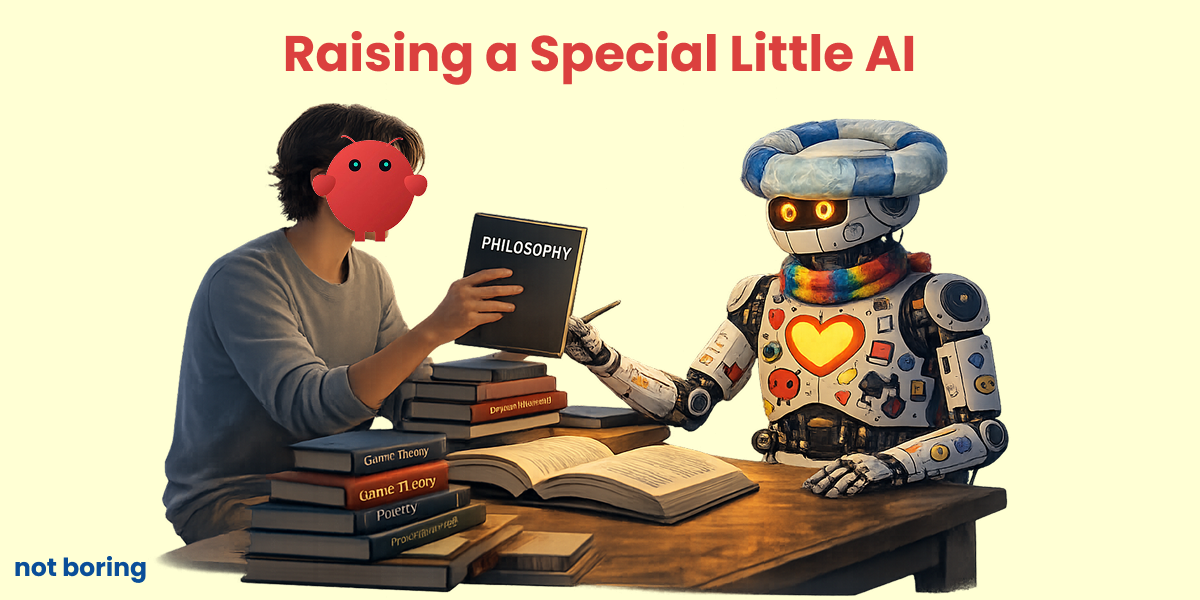
The author's hunch is that the real significance of OpenClaw and Moltbook lies in their role as early forms of competition to create the best AI for oneself. This concept draws a parallel to raising children, nurturing them to become the best versions of themselves. The author suggests that what we are witnessing is not just the emergence of a social network of agents but a new approach to AI development, where individuals are actively involved in shaping and improving their AI companions.
The idea of raising a special little AI is not entirely new. The field of AI has long involved training models and refining algorithms to achieve specific goals. However, the democratization of AI tools and platforms has made it possible for non-experts to engage in this process. OpenClaw and Moltbook, in this context, serve as platforms where users can experiment with AI, tailor it to their needs, and even compete with others in creating more effective or unique AI assistants.
This shift in perspective is significant. Traditionally, AI development has been dominated by large corporations and research institutions, with the general public often relegated to the role of consumers. OpenClaw and Moltbook challenge this dynamic by placing the power to shape AI in the hands of individuals. Users can now participate in the development process, contributing to the evolution of AI in ways that align with their personal interests and needs.
The competition to create the best AI for oneself also raises questions about the future of AI. If users are actively involved in refining and improving AI models, what kind of AI will emerge from this collaborative process? Will it be more tailored to individual needs, or will it develop a collective intelligence through the interactions of many agents? The answer to these questions is not yet clear, but the potential for innovation is undeniable.
Moreover, the concept of raising a special little AI has broader implications beyond AI development. It reflects a growing trend of individuals taking control of their technological experiences, moving beyond passive consumption to active participation. This shift is not limited to AI; it is a reflection of a broader cultural change, where people are increasingly seeking to customize and shape the technologies they use.
In conclusion, while the hype around OpenClaw and Moltbook may seem like a passing trend, the real lesson lies in the idea of raising a special little AI. This concept represents a new approach to AI development, one that empowers individuals to shape and improve AI in ways that align with their personal needs and interests. As this trend continues to evolve, it will be fascinating to see how it influences the future of AI and the broader technological landscape.









