
Raising a Special Little AI
The actual lesson from Clawdbot/Moltbook
Raising a Special Little AI
The hype surrounding OpenClaw, formerly known as Moltbot and Clawdbot, and the social network it spawns, Moltbook, has captured the attention of many. While some believe this marks the beginning of a significant shift in the AI landscape, others, like the author of this essay, find it less compelling. The author, who initially set up Clawdbot and briefly interacted with it via WhatsApp, found that the convenience of existing apps outweighed the novelty of AI-driven communication. However, the author acknowledges the potential in the idea, citing Chris Dixon's perspective that the next big thing often starts as a toy and becomes mainstream in the future.
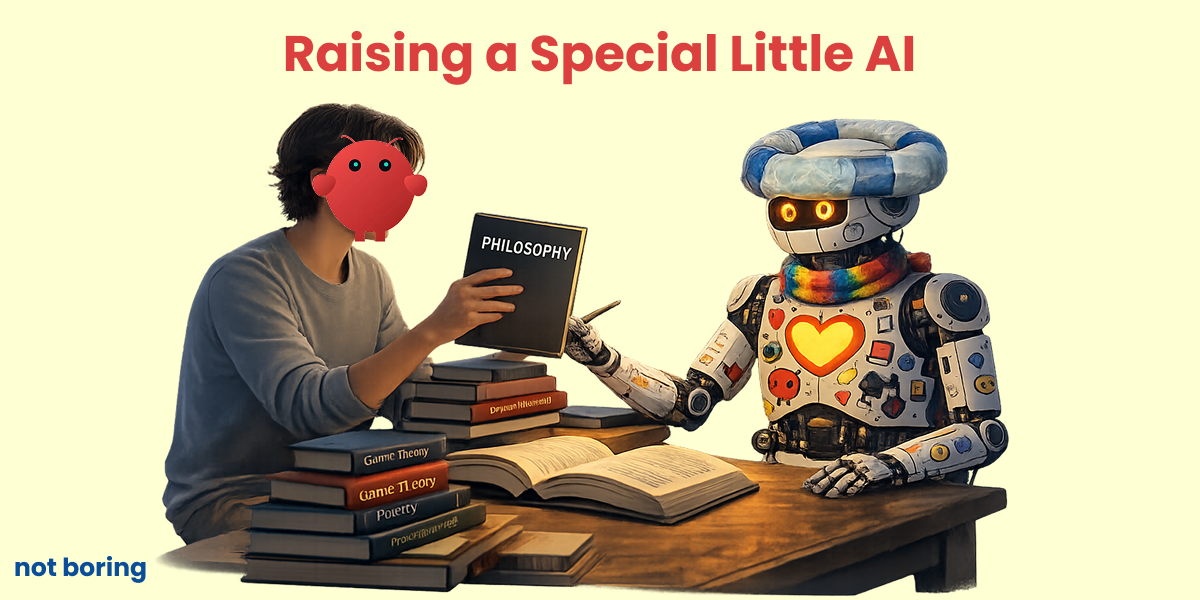
The author's hunch, based on observing the trend from the outside, is that what we're witnessing is the early stages of competition to create the best AI for oneself. This concept draws parallels to raising children, nurturing them to become the best versions of themselves. In the realm of AI, this means developing personalized assistants or agents that can perform tasks more efficiently or creatively than generic systems.
The appeal of this approach lies in its potential to tailor AI to individual needs and preferences. Unlike generic AI tools, a "special little AI" could be trained to understand a user's habits, preferences, and communication style, making interactions more natural and efficient. This personalization could extend beyond simple tasks like weather updates to more complex endeavors, such as managing personal finances, organizing schedules, or even creative pursuits.
One of the key factors driving this trend is the democratization of AI technology. Advances in machine learning and the availability of powerful tools have made it possible for individuals and small teams to develop and train AI models without requiring extensive resources or expertise. This democratization has opened the door for a new wave of AI experimentation, where users can directly influence the development of their AI companions.
The social network aspect, such as Moltbook, further underscores this personalization. By allowing users to share and collaborate on their AI agents, the platform fosters a community of creators and enthusiasts. This community can exchange ideas, share training data, and even compete to see whose AI can outperform others in specific tasks or domains.
However, the journey to creating a "special little AI" is not without challenges. Developing AI that can adapt to individual users and perform complex tasks requires careful design, robust training, and ongoing refinement. Additionally, concerns around privacy, security, and the potential misuse of AI must be addressed as these systems become more integrated into daily life.
Despite these challenges, the potential benefits of personalized AI are significant. By allowing users to shape their AI companions, individuals can unlock new levels of productivity, creativity, and convenience. The success of projects like OpenClaw and Moltbook suggests that this vision is captivating enough to inspire a community of innovators.
In conclusion, the hype around OpenClaw and Moltbook may not be about a social network of agents communicating with each other, but rather about the potential for individuals to raise and nurture their own special little AIs. This concept, rooted in the idea of personalization and democratization, holds the promise of transforming how we interact with AI and integrates it into our lives. As more people explore this frontier, it remains to be seen whether these early efforts will indeed lead to the next big thing in AI, or if they will fade away as mere toys.









