Rahul Gandhi: BJP-RSS Hold Anti-Adivasi Mindset
In a pointed political move, Congress leader Rahul Gandhi, the Leader of Opposition in the Lok Sabha, has reportedly accused the Bharatiya Janata Party (BJP) and the Rashtriya Swayamsevak Sangh (RSS) of possessing an anti-Adivasi mindset, sparking a fresh roun
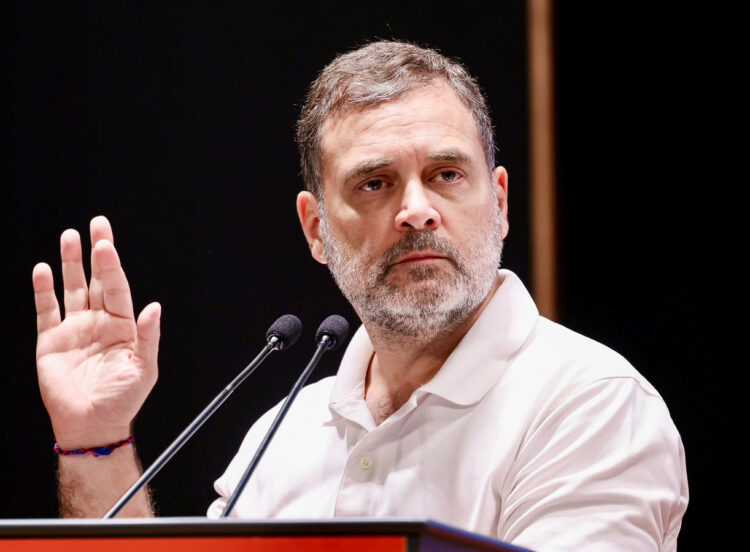
In a significant political development from New Delhi, Congress leader Rahul Gandhi, who holds the crucial position of Leader of Opposition in the Lok Sabha, has reportedly launched a direct and sharp critique against the Bharatiya Janata Party (BJP) and the Rashtriya Swayamsevak Sangh (RSS). According to reports, Gandhi's accusation centres on the assertion that both organisations harbour an "anti-Adivasi mindset," a claim that immediately resonated across political circles and is poised to fuel extensive debate on tribal welfare and the broader ideological landscape of Indian politics.
Rahul Gandhi, a prominent figure in India's political arena and a scion of the Nehru-Gandhi family, has consistently been vocal on issues concerning marginalised communities. His current role as Leader of Opposition provides him a significant platform to articulate the Congress party's stance and challenge the ruling dispensation. A statement of this nature, coming from such a high-profile opposition leader, naturally draws considerable attention and is often seen as a strategic move to highlight perceived governmental shortcomings or ideological differences.
The allegation of an "anti-Adivasi mindset" is a serious charge, implying a fundamental disregard or even opposition to the interests, culture, and rights of India's indigenous tribal populations. Such a claim, if widely accepted, could have profound implications for public perception and political discourse, especially in regions with substantial Adivasi populations. It suggests that, according to the Congress leader, the policies and philosophies of the BJP and RSS are not aligned with the welfare and empowerment of these communities, but rather work against them in some fundamental way.
India's Adivasi communities, often referred to as Scheduled Tribes, constitute a significant portion of the country's population, with their unique cultures, traditions, and ways of life deeply intertwined with the nation's heritage. Despite constitutional safeguards and numerous governmental schemes aimed at their upliftment, these communities often face persistent challenges related to land rights, displacement, access to education and healthcare, and socio-economic marginalisation. Their welfare and integration into the national mainstream remain critical aspects of India's development agenda.
Given their demographic strength and historical vulnerabilities, Adivasi communities are a crucial electoral constituency, and their concerns frequently feature prominently in political campaigns and policy debates. Political parties across the spectrum often vie for their support by promising better governance, protection of rights, and inclusive development. Therefore, an accusation like the one reportedly made by Rahul Gandhi directly impacts the narrative surrounding tribal welfare and can shape the political discourse leading up to future elections.
The BJP and RSS, on their part, have often articulated their commitment to the welfare of all sections of Indian society, including tribal communities. The RSS, through its various affiliates, has historically engaged in social work in tribal areas, focusing on education, healthcare, and cultural preservation. Similarly, the BJP-led governments have implemented numerous schemes and policies aimed at the socio-economic development and empowerment of Scheduled Tribes, often emphasizing their integration into the national development framework under the broader philosophy of 'Sabka Saath, Sabka Vikas' (Together, for everyone's growth). These efforts are often highlighted by the organisations as evidence of their inclusive approach.
Rahul Gandhi's reported statement, therefore, sets the stage for an intensified political exchange, where the Congress party will likely seek to underscore its commitment to Adivasi rights, while the BJP and RSS will likely defend their track record and ideological positions. This political dynamic is crucial for understanding the evolving landscape of Indian politics, particularly concerning how different parties address the needs and aspirations of historically disadvantaged groups. The debate is not merely about specific policies but also about the underlying philosophical approaches to national integration and social justice.
The broader context of this allegation is the ongoing national dialogue about inclusive growth and equitable development. Ensuring that Adivasi communities are not left behind in India's rapid progress is a paramount concern for policymakers and civil society alike. Challenges such as resource exploitation, cultural assimilation pressures, and inadequate representation continue to demand concerted efforts and sensitive policy interventions from all stakeholders, irrespective of their political affiliations.
In conclusion, Rahul Gandhi's reported direct attack on the BJP and RSS, accusing them of an "anti-Adivasi mindset," marks a significant moment in the current political discourse. This strong allegation from the Leader of Opposition is expected to intensify the national conversation surrounding tribal rights, welfare policies, and the ideological foundations of major political entities in India. As the debate unfolds, the focus will remain on how these powerful statements influence public opinion and shape future strategies concerning the nation's indigenous communities.