
Quantum Progress Runs Through the Data Center – AWS Shows Why
Researchers have simulated a 97–qubit surface code with hardware-level noise on cloud HPC – highlighting the growing role of classical infrastructure in quantum system design.
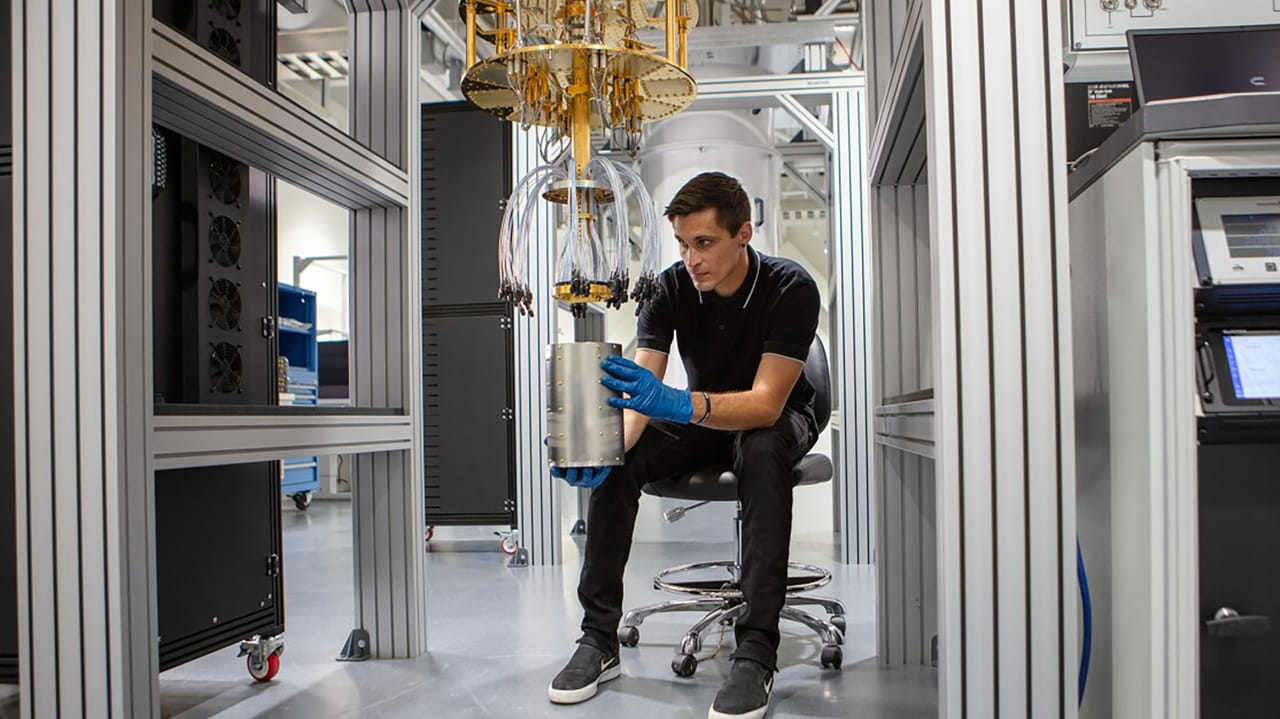
In a significant leap forward in the development of quantum computing, researchers have successfully simulated a 97-qubit surface code using hardware-level noise on cloud-based high-performance computing (HPC) systems. This achievement underscores the critical role that classical infrastructure continues to play in the design and optimization of quantum systems, as companies like Amazon Web Services (AWS) invest heavily in bridging the gap between classical and quantum computing.
The simulation, conducted on AWS's cloud HPC platforms, demonstrates the ability of classical systems to handle the complex calculations required to model and refine quantum algorithms. The 97-qubit surface code, a type of quantum error-correcting code, is a cornerstone of many quantum computing architectures, as it helps protect against errors caused by noise and decoherence. By incorporating hardware-level noise into the simulation, researchers have made a crucial step toward understanding how real-world quantum systems will perform.
AWS's involvement in this project highlights the company's commitment to supporting quantum research and development. By providing access to powerful cloud-based HPC resources, AWS enables researchers to tackle large-scale simulations that would be infeasible on traditional supercomputers. This collaboration between AWS and the research community is pivotal in accelerating the pace of quantum progress, as it allows scientists to focus on algorithm design and optimization rather than the logistical challenges of managing computational resources.
The growing role of classical infrastructure in quantum system design is a testament to the interdependence of these two fields. While quantum computers promise unprecedented computational power, they are still in their early stages of development. Classical systems, on the other hand, are well-established and can be leveraged to support quantum research in various ways. For instance, classical computers can be used to optimize quantum algorithms, simulate quantum systems, and even assist in the calibration and error correction of quantum hardware.
This simulation of a 97-qubit surface code is just one example of how classical infrastructure is playing a vital role in the quantum computing landscape. As researchers continue to push the boundaries of quantum technology, the reliance on classical systems will likely only grow. AWS's investment in cloud HPC is a testament to the company's recognition of this trend and its commitment to being at the forefront of quantum innovation.
Moreover, the use of cloud-based HPC in quantum research offers several advantages. Cloud platforms provide scalable resources that can be accessed on-demand, allowing researchers to allocate computational power as needed without the need for significant upfront investment. This flexibility is particularly important in the early stages of quantum development, where the unpredictable nature of research can lead to rapid changes in resource requirements.
In conclusion, the successful simulation of a 97-qubit surface code with hardware-level noise on AWS's cloud HPC systems is a landmark achievement that highlights the essential role of classical infrastructure in the quantum computing revolution. As quantum technology continues to evolve, the collaboration between classical and quantum systems will be crucial in driving innovation and ensuring the eventual success of quantum computing. AWS's leadership in this area is a clear indication of the company's foresight and dedication to advancing the field, positioning it as a key player in the quantum computing landscape.









