Quantum Cryptography Pioneers Win Turing Award
Charles Bennett and Gilles Brassard were recognized for their foundational work in quantum information science. The post Quantum Cryptography Pioneers Win Turing Award first appeared on Quanta Magazine
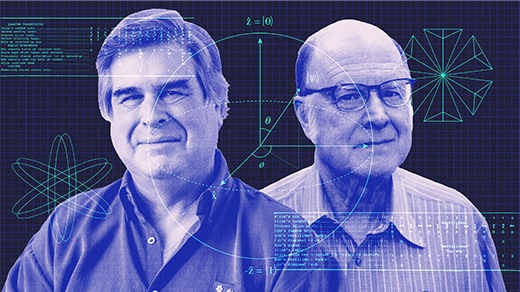
Charles Bennett and Gilles Brassard have been awarded the Turing Award, widely regarded as the Nobel Prize of computer science, for their pioneering work in quantum cryptography and foundational contributions to quantum information science. This recognition celebrates their groundbreaking research that has laid the groundwork for secure communication and quantum computing technologies.
The story of their achievements began on a sunny afternoon in October 1979, when Gilles Brassard, a computer scientist at the University of Montreal, was swimming off the coast of a beachfront hotel in San Juan, Puerto Rico. As he enjoyed the warm waters, a stranger swam up to him and initiated a conversation about a novel method for creating unforgeable currency. The stranger's proposal was based on the principles of quantum physics, a field that Brassard had not previously explored in depth.
Intrigued by the idea, Brassard decided to delve deeper into the subject. This chance encounter marked the beginning of his fascination with quantum mechanics and its potential applications in computer science. Brassard's interest eventually led him to collaborate with Charles Bennett, a physicist and computer scientist at IBM's Thomas J. Watson Research Center. Together, they began exploring the possibilities of using quantum mechanics to develop secure communication protocols.
One of their most significant contributions was the invention of quantum key distribution (QKD), a method for sharing cryptographic keys between two parties that is theoretically immune to eavesdropping. QKD relies on the principles of quantum mechanics, specifically the Heisenberg Uncertainty Principle and the no-cloning theorem, to ensure that any attempt to intercept the communication will be detected. This breakthrough demonstrated that it is possible to achieve unconditional security in communication, a concept that had previously been considered unattainable.
Bennett and Brassard's work on quantum cryptography also laid the foundation for other groundbreaking discoveries in quantum information science. Their research on quantum teleportation, which allows the transfer of quantum states between particles without physically moving them, has paved the way for advancements in quantum computing and quantum networks.
The duo's work has had a profound impact on the field of cryptography, challenging traditional notions of security and paving the way for the development of post-quantum cryptographic algorithms. As quantum computers continue to advance, the need for secure communication protocols that can withstand attacks from these powerful machines becomes increasingly urgent. Bennett and Brassard's pioneering efforts have provided the necessary tools to ensure the future of secure communication in the quantum era.
In addition to their work on quantum cryptography, Bennett and Brassard have made significant contributions to the field of quantum computing. They have explored the theoretical underpinnings of quantum algorithms and have developed protocols for quantum error correction, which are essential for building robust quantum computers. Their research has helped to advance our understanding of the potential and limitations of quantum computing, shaping the direction of this rapidly evolving field.
The Turing Award, presented by the Association for Computing Machinery (ACM), recognizes exceptional contributions to the computing community. Bennett and Brassard's award citation highlights their "fundamental contributions to quantum information science, including the invention of quantum cryptography, quantum teleportation, and the development of quantum error-correcting codes." This prestigious honor underscores the profound impact of their work on both theoretical and applied aspects of computer science.
Their achievements have not only transformed the field of cryptography but have also inspired a new generation of researchers to explore the boundaries of quantum mechanics and its applications. As quantum technologies continue to advance, the foundational work of Bennett and Brassard will remain a cornerstone of the field, ensuring the security of communication in an increasingly interconnected world.
In conclusion, the Turing Award awarded to Charles Bennett and Gilles Brassard is a testament to their groundbreaking contributions to quantum cryptography and quantum information science. Their pioneering research has not only redefined the landscape of secure communication but has also paved the way for the development of quantum computing and quantum networks. As the world moves towards a future where quantum technologies will play a crucial role, the legacy of Bennett and Brassard will continue to inspire and shape the field for years to come.