
Prayers, verses and holy books: How have religious symbols been used in the ongoing war in the Middle East?
The messages exchanged in the Middle East reflect a different face of warfare. Religious rhetoric is being employed in an uncommon and increasing way, with symbols of the three major monotheistic religions overlapping: Judaism, Christianity, and Islam in the middle of war.
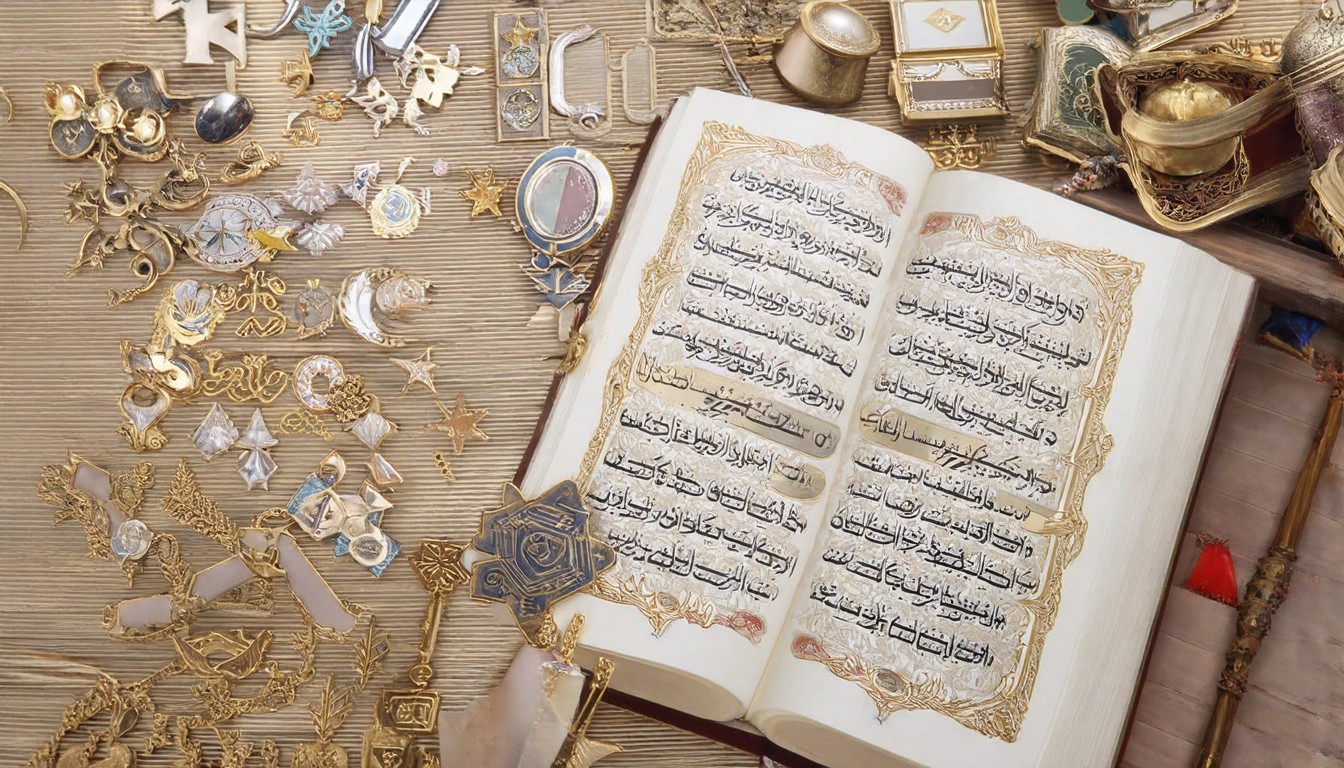
In the midst of the ongoing conflicts in the Middle East, a subtle yet significant shift has taken place in the way warfare is conducted. While traditional military strategies and geopolitical tensions remain central to the region's instability, a new dimension has emerged: the strategic use of religious symbols and rhetoric. This unconventional approach to conflict has drawn attention from analysts and scholars, who are increasingly recognizing the role of religious language in shaping the narrative of the war.
The Middle East, a region deeply rooted in the traditions of Judaism, Christianity, and Islam, has long been a battleground for both literal and symbolic battles. However, in recent years, the frequency and intensity of religious rhetoric in political and military discourse have reached unprecedented levels. This development is not limited to any single group or ideology but rather reflects a complex interplay of religious identity, historical grievances, and strategic calculations among various factions.
One of the most striking aspects of this religious turn in warfare is the overlapping of symbols from the three major monotheistic religions. For instance, the use of the Quranic verses to legitimize military actions has become a common tactic among some groups, while others have invoked biblical texts to rally support for their cause. Similarly, references to Jewish scripture have been employed to assert historical rights to certain territories. This strategic manipulation of religious texts serves to galvanize support, delegitimize opponents, and frame the conflict within a sacred narrative.
The use of religious symbols also extends to the physical spaces of conflict. Holy sites such as mosques, churches, and synagogues have often been targeted or repurposed as battlefields. In some cases, these sites have been used as propaganda tools, with images of destroyed or defiled holy places circulating widely to provoke outrage and mobilize public opinion. Conversely, the preservation or restoration of these sites has also been used as a means of asserting cultural and religious identity in the face of adversity.
Moreover, the intersection of religion and warfare in the Middle East is not limited to the battlefield. It has permeated diplomatic engagements, international relations, and even social media discourse. Religious leaders and figures have been called upon to mediate conflicts, offer moral guidance, or lend their authority to specific causes. In some instances, their involvement has helped de-escalate tensions, while in others, it has exacerbated divisions.
The strategic use of religion in the Middle East's conflicts raises several complex questions. First and foremost, it challenges the notion that religion and politics are distinct spheres. In the region's volatile landscape, these domains are frequently intertwined, with religious identity often serving as a powerful tool for mobilizing support or justifying actions.
Secondly, the manipulation of religious symbols raises concerns about the commodification of faith. As various factions appropriate verses, prayers, and holy books to advance their agendas, the sacred is increasingly subject to political instrumentalization. This raises ethical questions about the legitimacy of such actions and the potential for religious language to be weaponized.
Furthermore, the religious dimension of the conflict complicates efforts to achieve lasting peace. While religious leaders and scholars have called for dialogue and reconciliation, the entrenchment of religious narratives in the conflict has made it difficult to disentangle the sacred from the political. This intertwining of faith and conflict has the potential to perpetuate cycles of violence and division, as each side clings to its interpretation of religious truth as a basis for legitimacy.
In conclusion, the ongoing war in the Middle East is not just a clash of nations or ideologies but also a struggle over the meaning and use of religious symbols. The strategic employment of religious rhetoric and symbols has become a defining feature of the region's conflicts, shaping the way warfare is conducted and complicating efforts to achieve peace. As the complexities of this religious turn in warfare continue to unfold, it remains a critical challenge for those seeking to navigate the region's volatile landscape.








