
Powell sees inflation outlook in check, no need to hike rates because of oil shock
Federal Reserve Chair Jerome Powell spoke Monday at Harvard University.
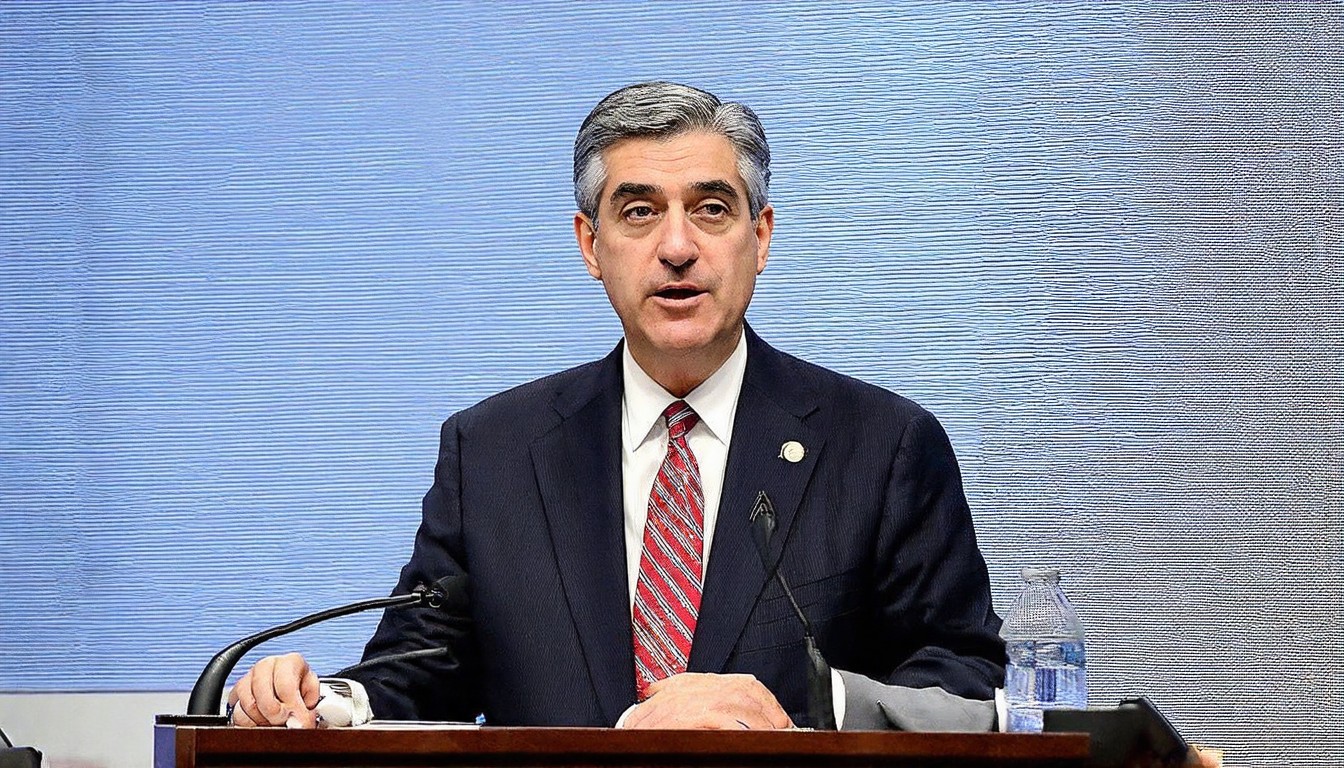
Federal Reserve Chair Jerome Powell addressed a packed audience at Harvard University on Monday, offering insights into the central bank's stance on inflation and interest rates amid ongoing economic challenges. In his remarks, Powell emphasized that the Federal Reserve's outlook for inflation remains on track, and there is no immediate need to raise interest rates due to the recent oil shock.
Powell began by acknowledging the significant uncertainties facing the global economy, particularly the impact of the Russia-Ukraine conflict and its effects on energy markets. He noted that the sharp rise in oil prices has contributed to elevated inflationary pressures, but the Fed's projections indicate that these pressures are expected to subside over time. "While the oil shock has added to inflationary pressures, we believe that these will be temporary," Powell stated. "Our models suggest that inflation will return to its target range as energy prices stabilize and supply chains adjust."
The central bank's chair reassured the audience that the Fed remains committed to achieving its dual mandate of maximizing employment and stabilizing prices. Powell underscored that the Fed's primary tool for managing inflation is its monetary policy framework, which has been effective in steering the economy through past recessions and inflationary periods. He emphasized that the Fed's decisions are guided by a thorough analysis of economic data and market conditions, ensuring a balanced approach to economic stability.
Despite the oil shock, Powell maintained that there is no urgent need for the Fed to tighten its monetary policy by raising interest rates. He argued that the central bank's current stance allows for flexibility in responding to evolving economic conditions. "We are not in a situation where we need to act hastily," Powell said. "Our focus remains on ensuring a sustainable recovery while keeping inflation in check."
Powell also addressed concerns about the potential for prolonged inflation, particularly in the context of supply chain disruptions and labor market tightness. He acknowledged that these factors have contributed to higher-than-expected inflation, but he remained optimistic about the economy's resilience. "While there are challenges, the strength of the labor market and the adaptability of businesses give us confidence in the economy's ability to navigate these difficulties," he remarked.
The Fed chair's remarks at Harvard University highlighted the delicate balance the central bank must maintain in its pursuit of economic stability. Powell's message was clear: the Fed is attentive to the economic landscape, but it will not act precipitously in response to short-term shocks. Instead, the Fed will continue to monitor data closely and adjust its policies as needed to ensure a stable and prosperous economy.
In conclusion, Jerome Powell's address at Harvard University provided a reassuring update on the Federal Reserve's inflation outlook and its current stance on interest rates. While acknowledging the challenges posed by the oil shock and other economic uncertainties, Powell reaffirmed the Fed's commitment to a measured approach to monetary policy. His remarks underscored the importance of patience and careful analysis in navigating the complexities of today's global economy.









